
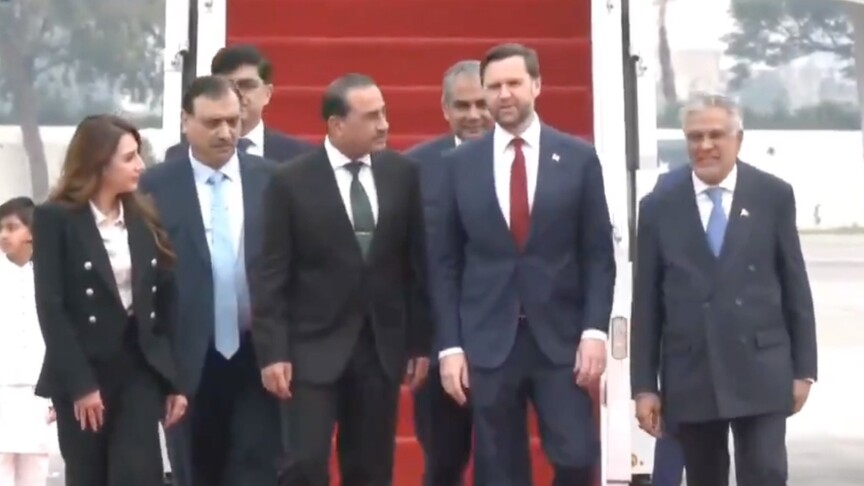
The diplomatic effort to halt the escalating conflict in the Middle East has collapsed, as the U.S. Delegation departed Islamabad following the failure of direct negotiations with Iran. In a swift and severe escalation, President Donald Trump announced on Sunday, April 12, 2026, that the United States will implement a naval blockade of the Strait of Hormuz, a critical maritime artery for global energy supplies La Presse.
The decision comes after a high-stakes diplomatic push in Pakistan, where a U.S. Delegation led by Vice President JD Vance engaged in talks with Iranian representatives for more than 20 hours. Whereas President Trump described the discussions as having gone “well” and noted that most points of agreement were reached, the talks ultimately failed given that Tehran refused to compromise on its nuclear ambitions TF1 Info.
This naval blockade of the Strait of Hormuz marks a drastic shift in strategy, threatening to disrupt the flow of approximately one-fifth of the world’s crude oil TV5MONDE. The move effectively ends the hope for a peaceful resolution to a war that began on February 28, when the U.S. And Israel launched an offensive against Iran, citing Tehran’s pursuit of atomic weapons—a claim that Iran denies La Presse.
The Collapse of the Islamabad Negotiations
The talks in Islamabad were viewed as a final attempt to establish a lasting ceasefire and resolve the nuclear standoff. According to reports, the American delegation spent over 20 hours in discussions, attempting to secure a commitment from Iran to abandon its nuclear program in exchange for an end to the hostilities La Presse.

Despite the length of the talks, the primary sticking point remained the Iranian nuclear program. President Trump stated on Truth Social that Tehran remained “intransigent” and refused any compromise on the nuclear issue TF1 Info. This deadlock prompted the immediate departure of the U.S. Delegation and the subsequent announcement of military measures.
The failure of these talks also casts a shadow over a two-week truce that was currently in effect, leaving the international community uncertain about whether the ceasefire will be respected or if the region is sliding toward a full-scale naval war TF1 Info.
The Strategic Impact of the Strait of Hormuz Blockade
The Strait of Hormuz is one of the world’s most vital chokepoints, as it is the primary route for the transit of 20% of the global supply of crude oil TV5MONDE. By announcing a “process of BLOCKADE of all ships attempting to enter or leave the Strait of Hormuz,” the U.S. Is leveraging global economic pressure to force Iranian compliance La Presse.
The President’s rhetoric accompanying the announcement was stark. He warned that “any Iranian who shoots at us, or at peaceful ships, will be PULVERIZED!” TF1 Info. He also indicated that other unnamed countries might be involved in the operation, further complicating the geopolitical landscape.
In response, the Iranian Revolutionary Guard has claimed it maintains control over the strait and has threatened to “trap” its enemies within the waters TF1 Info. This reciprocal threat suggests that any attempt by the U.S. Navy to enforce the blockade could lead to immediate direct combat.
Human and Economic Cost of the Conflict
The current escalation is the latest chapter in a war that has already caused thousands of deaths, primarily in Iran and Lebanon, since the joint U.S.-Israeli offensive began on February 28 La Presse. The conflict has been characterized by six weeks of intense Israeli-American bombardments, leaving civilians in Tehran exhausted and desperate La Presse.
Beyond the immediate loss of life, the instability is severely disrupting the global economy. The threat to oil shipments via the Strait of Hormuz is expected to create volatility in energy markets, potentially impacting fuel prices and industrial production worldwide La Presse.
Key Timeline of Recent Events
| Date | Event |
|---|---|
| February 28 | U.S. And Israel launch offensive against Iran over nuclear ambitions La Presse |
| April 11-12 | 20+ hour negotiations in Islamabad led by VP JD Vance La Presse |
| April 12 | Failure of talks; U.S. Delegation departs Islamabad TF1 Info |
| April 12 | Donald Trump announces naval blockade of the Strait of Hormuz TV5MONDE |
As the U.S. Navy begins the process of blocking all ships entering or exiting the strait, the world awaits to see if Iran will attempt to break the blockade or if the pressure will eventually force a return to the negotiating table. For now, the region remains on a knife-edge, with the potential for a wider maritime conflict that could engulf other regional powers.
The next critical checkpoint will be the official implementation of the blockade and the reaction of the Iranian Revolutionary Guard to the arrival of U.S. Naval assets in the strait.
We invite our readers to share their perspectives on the global economic implications of this blockade in the comments below. Please share this report to retain others informed on these developing geopolitical events.