Trump’s Pardon of Honduran Ex-president Juan Orlando Hernández: A Deep Dive into Controversy and US Influence
The recent pardon granted by former President Donald Trump to Juan Orlando Hernández, the ex-president of Honduras, has ignited a firestorm of controversy. Hernández, convicted of drug trafficking and sentenced to 45 years in prison just months prior, was released from federal custody in West Virginia following the clemency. This decision raises serious questions about US drug policy, foreign interference in Honduran elections, and the implications for regional stability. Let’s break down the key elements of this complex situation.
From Defender of law and Order to Convicted Trafficker
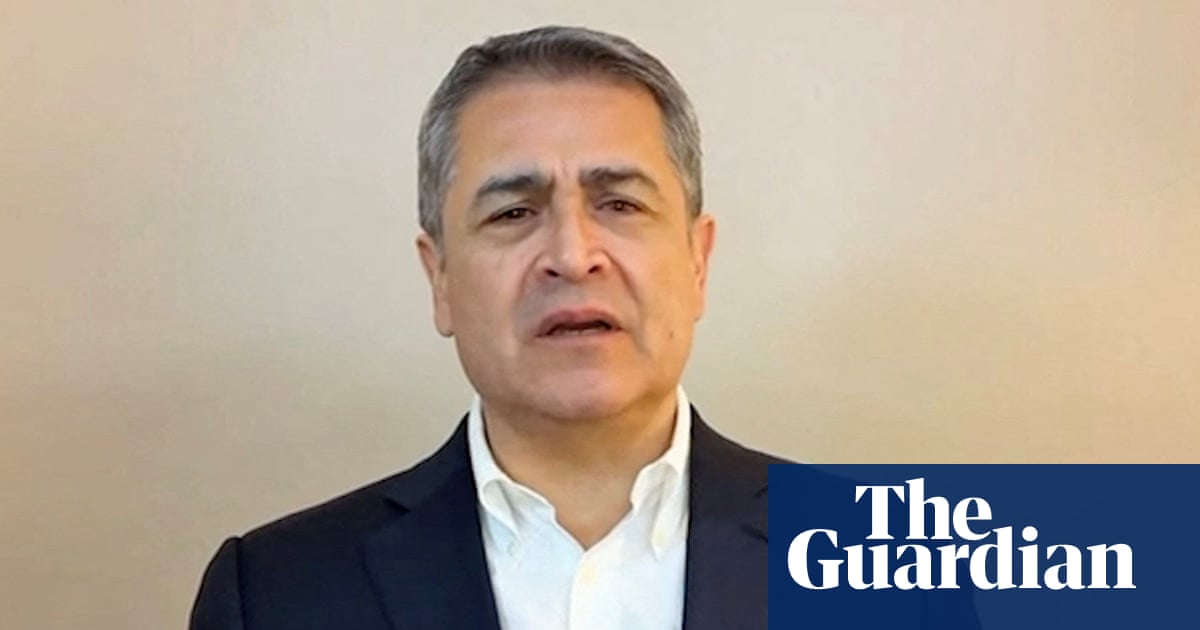
Hernández, who served as Honduras’s president from 2014 to 2022, vehemently maintains his innocence. In a recent video posted to X (formerly Twitter), he claimed he was the target of a smear campaign designed to “erase my name” and “sully my legacy.” He positioned himself as a leader who championed ”law and order.”
However, the US justice Department paints a drastically different picture. Prosecutors successfully argued that Hernández accepted a $1 million bribe from Joaquín “el Chapo” Guzmán in 2013, during his initial presidential campaign. Furthermore, they demonstrated that his governance facilitated Honduras’s conversion into a crucial transit point – a “superhighway” – for cocaine flowing from South American countries like Colombia and Venezuela.
* Key evidence: The case hinged on evidence linking Hernández to the Los Valles cartel and his alleged protection of drug shipments in exchange for financial gain.
* The Trial: A jury convicted Hernández on March 8, 2024, after a three-week trial, highlighting the strength of the prosecution’s case.
The Unexpected Pardon and its Repercussions
Trump’s decision to pardon Hernández is especially jarring given his administration’s stated “war on drugs.” This included military actions like airstrikes targeting alleged traffickers in the Pacific and Caribbean, alongside increased naval presence off the Venezuelan coast.
critics, like Senator Chris Coons (D-Delaware), argue the pardon sends the “wrong message” to leaders involved in narco-trafficking. It undermines US efforts to combat the drug trade and potentially emboldens corrupt officials. You might be wondering why such a controversial move was made. The motivations remain largely opaque, but the timing and context are crucial.
US Interference in the Honduran Election
the pardon wasn’t an isolated event. It coincided with a highly contested Honduran presidential election where Trump actively intervened. He endorsed Nasry “Tito” Asfura, a close ally of Hernández, and explicitly stated that US aid to Honduras depended on Asfura’s victory.
This level of US involvement is deeply concerning. Salvador Nasralla, asfura’s main rival, told Reuters that Trump’s endorsement considerably damaged his campaign.
* The Stakes: The election outcome will have a profound impact on Honduras’s future, particularly its relationship with the United States.
* A Pattern of Interference?: This situation raises questions about the extent to which the US is willing to influence democratic processes in Latin America.
The Power of Community Notes and the Fight for Truth
Interestingly, even with Hernández restricting replies to his X post, the platform’s community note feature quickly appended a correction in Spanish. It accurately stated Hernández’s conviction and 45-year sentence for drug trafficking, linking to the Justice Department’s official news release.
This demonstrates the power of crowdsourced fact-checking and the difficulty of completely suppressing data in the digital age. It also underscores the importance of verifying information, especially when it comes from sources with a vested interest in shaping the narrative.
What Dose This Mean for You?
This situation isn’t just about Honduran politics.It has broader implications for:
* US Foreign Policy: The pardon and election interference signal a potentially shifting approach to Latin America, prioritizing political alliances over anti-drug efforts and democratic principles.
* the War on Drugs: The case challenges the effectiveness of current strategies and raises questions about the role of US-backed governments in facilitating the drug trade.
* Trust in institutions: The controversy erodes public trust in both the US justice system and the integrity of foreign elections.
Ultimately, the Hernández case serves as a stark reminder of the complex interplay between politics, power, and the fight