
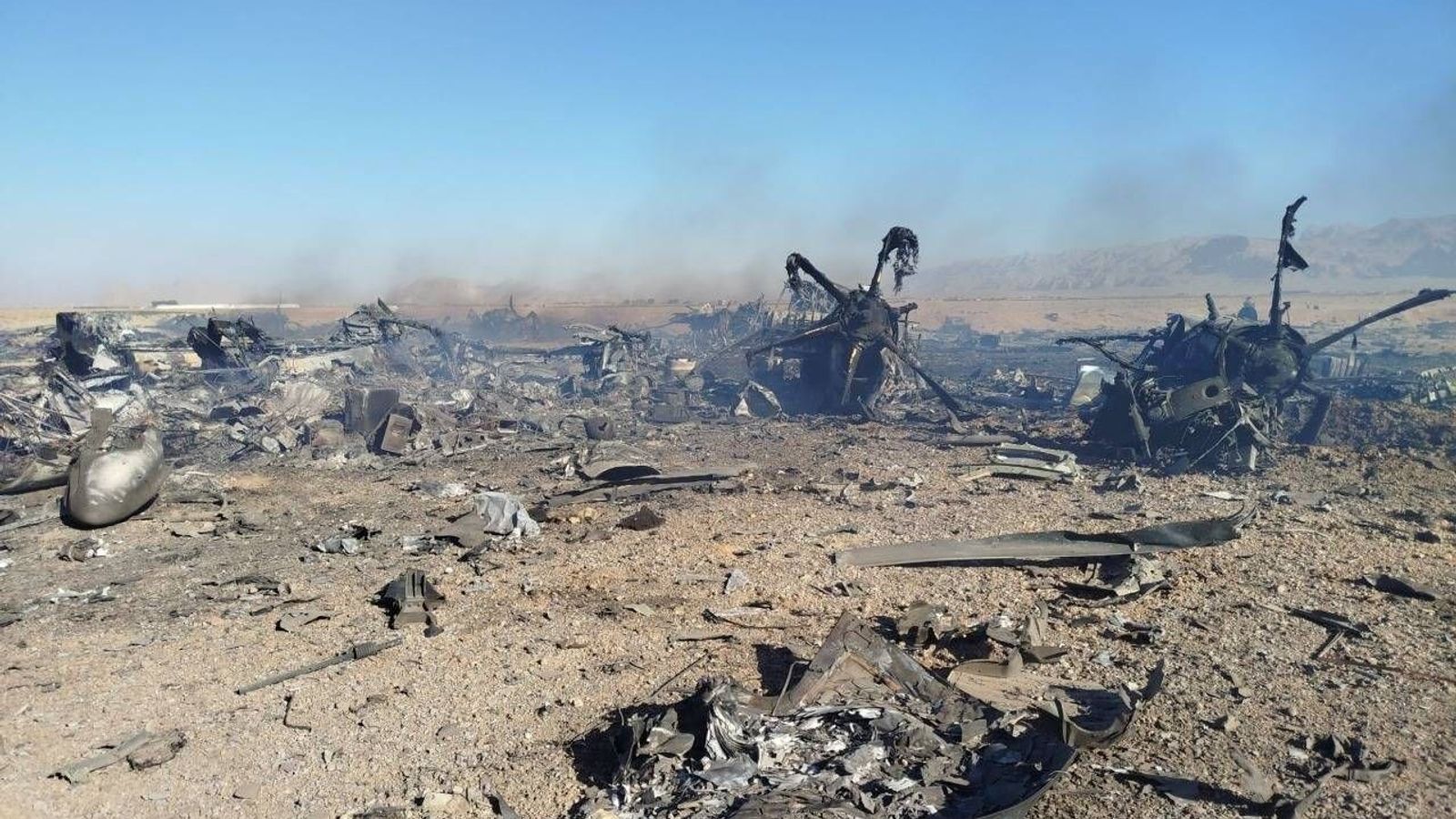
In a high-stakes military operation that underscores the escalating volatility in the Middle East, U.S. Special Operations forces have successfully rescued an Air Force officer from a remote mountainous region deep inside Iran. The daring mission, which took place over the weekend, brought home a crew member whose F-15E fighter jet had been shot down earlier in the week.
The operation concluded early Sunday local time, following a perilous period where the officer remained missing in hostile territory. President Donald Trump confirmed the success of the mission on Truth Social, declaring, “WE GOT HIM!” while noting that the rescued American was “seriously wounded” during the ordeal according to reports from CBS News.
The rescue marks a critical moment in the ongoing confrontation between Washington and Tehran, coming at a time when the U.S. Is threatening significant strikes against Iranian infrastructure. The mission follows the prior rescue of the pilot of the two-person aircraft, leaving this second officer as the final remaining member of the downed crew to be recovered from the Iranian interior.
Daring Special Operations Mission in Remote Terrain
The incident began on Friday, when a U.S. F-15E fighter jet was shot down over a remote area of Iran. While the pilot was recovered shortly after the crash, the second crew member remained missing in the rugged terrain of the Iranian mountains. The rescue operation was executed by U.S. Special Operations forces in a risky Saturday night mission as detailed by The New York Times.
President Trump described the operation as a “daring mission” conducted deep within Iranian territory. In a subsequent address, the President reflected on the operation, stating that “God was watching us” as security forces deployed to retrieve the wounded airman.
Condition of the Rescued Officer
While the U.S. Government has not released the name of the officer, the President has confirmed that the individual was “seriously wounded” prior to their extraction. The specific nature of the injuries has not been disclosed, though the rescue was carried out under extreme conditions in a remote mountainous region, complicating both the recovery and the immediate medical evacuation of the service member.
Escalating Tensions and the Strait of Hormuz Ultimatum
The rescue occurs against a backdrop of severe geopolitical friction. President Trump has used the momentum of the rescue to issue a stark ultimatum to Tehran regarding the Strait of Hormuz. The U.S. President warned that Iranian bridges and power plants could be targeted on Tuesday, April 7, 2026, unless Iran reopens the strategic waterway to international shipping as reported by CBS News.
Iran has so far rejected these ultimatums. The threat to strike civilian infrastructure has drawn a sharp response from Tehran. Iran’s Deputy Foreign Minister, Kazem Gharibabadi, asserted that targeting power plants and bridges would constitute war crimes. Gharibabadi specifically cited Article 8(2)(b) of the Rome Statute of the International Criminal Court in a social media post, arguing that the American president has publicly threatened to commit such acts.
The Human and Legal Cost of the Conflict
The volatility of the current operations is reflected in newly released Pentagon figures, which state that a total of 365 American service members have been wounded as part of U.S. Operations against Iran according to CBS News.
Beyond the military engagements, the conflict has extended into legal and diplomatic spheres. In a related development, the niece and grand-niece of the late Iranian Revolutionary Guard Major Gen. Qasem Soleimani were arrested in Los Angeles. U.S. Officials stated that their lawful permanent resident status had been terminated prior to their arrest.
Key Takeaways of the Rescue and Escalation
- The Rescue: A seriously wounded U.S. Air Force officer was recovered from the mountains of Iran by Special Operations forces on Sunday.
- The Aircraft: The incident involved an F-15E fighter jet shot down on Friday; the pilot had been rescued previously.
- The Ultimatum: President Trump has threatened strikes on Iranian bridges and power plants by Tuesday if the Strait of Hormuz is not reopened.
- Legal Conflict: Iran claims U.S. Threats violate the Rome Statute and amount to war crimes.
- Casualties: The Pentagon reports 365 wounded U.S. Service members in operations against Iran.
The international community now looks toward Tuesday to spot if the U.S. Follows through on its threats against Iranian infrastructure or if a deal is reached to reopen the Strait of Hormuz. Further updates on the condition of the rescued officer are expected as they receive medical treatment.
We invite our readers to share their perspectives on these developments in the comments below. Please share this report to keep others informed on the evolving situation in the Middle East.