
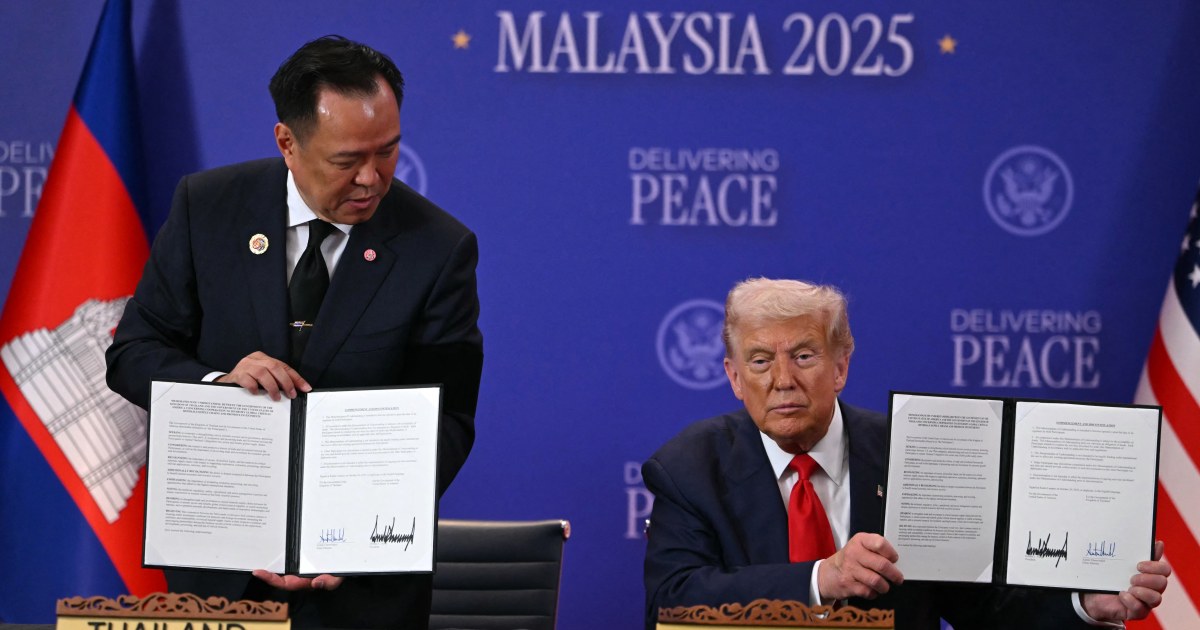
Trump Bolsters Trade Ties & Secures Critical Minerals in Southeast Asia Swing
Former President Donald Trump recently concluded a series of trade agreements and strategic partnerships in Southeast Asia, signaling a renewed U.S. focus on the region and a direct response to China’s growing economic influence. This trip, encompassing Cambodia, Thailand, and Malaysia, centered on reciprocal trade deals and, crucially, securing access to vital critical minerals. Let’s break down the key developments and what they mean for you and the global landscape.
Trade Agreements: A New Era of Reciprocity
Initially, Trump leveraged the potential for tariffs to encourage cooperation. He had previously threatened harsh tariffs on both Thailand and Cambodia if they didn’t reach an agreement. Ultimately, the result was a series of reciprocal trade agreements.
* Cambodia: A reciprocal trade agreement was signed, opening doors for increased commerce.
* Thailand: A framework for a reciprocal trade agreement was established, paving the way for future deals.
* Both Nations: Both Thailand and Cambodia are considerably lowering trade barriers for U.S. goods. Thailand will eliminate tariffs on 99% of U.S. products, while Cambodia is removing them on all U.S. goods.
* U.S. Tariffs Remain: The U.S. will maintain a 19% tariff rate on imports from both countries, creating a balanced trade dynamic.
A similar agreement was also reached with Malaysia, with U.S.trade Representative Jamieson Greer noting the deal will involve “modifying its tariffs and non-tariff barriers.” Malaysia, like the other nations, is also subject to the 19% U.S. tariff.
The Critical Minerals Push: Countering China’s Dominance
Beyond customary trade, a meaningful focus of Trump’s trip was securing access to critical minerals. These materials are essential components in everything from smartphones and electric vehicles to advanced defense technologies. Finding alternative sources has become a matter of urgency for the U.S.
China currently holds a near-monopoly on the production and processing of these minerals. Recently, China announced export controls as part of the ongoing U.S.-China trade war, raising concerns about supply chain vulnerabilities. This prompted the U.S. to actively seek new partnerships.
* Malaysia & Thailand Agreements: Trump signed deals with both Malaysia and Thailand specifically focused on critical minerals.
* Supply Chain Security: Greer emphasized the importance of securing these supply chains “for our people and security of our economies.”
* Malaysia as a First Step: Malaysia is the first stop on Trump’s Asia trip,which also includes visits to Japan and south Korea.
A Broader Regional Strategy: re-Engaging with ASEAN
Trump’s presence at the annual ASEAN (Association of Southeast Asian Nations) summit is especially noteworthy.During his first term, he only attended the summit onc, leading to questions about his administration’s commitment to the region.
Now, with East Timor formally admitted as the 11th member, ASEAN represents a strategically vital bloc being actively courted by both the U.S. and China.
* Sending a Message: Analysts like Collins Chong Yew Keat at Universiti Malaya believe Trump’s attendance “sends the enduring message that the U.S. is back.”
* Countering China: The U.S. aims to provide “strong countermeasures and deterrence against China in economic and security capacities.”
What does This Mean for You?
These developments signal a potential shift in global trade dynamics. You can expect:
* Increased Availability of Goods: Lower tariffs could lead to more affordable products from Southeast Asia.
* Stronger U.S. Economy: Securing critical mineral supplies strengthens U.S. manufacturing and national security.
* Geopolitical Stability: A more engaged U.S. presence in the region can contribute to regional stability and balance.
Ultimately, Trump’s trip represents a proactive effort to diversify supply chains, strengthen economic ties, and reassert U.S. influence in a critical region of the world. It’s a move that could have significant implications for businesses, consumers, and the global balance of power for


