
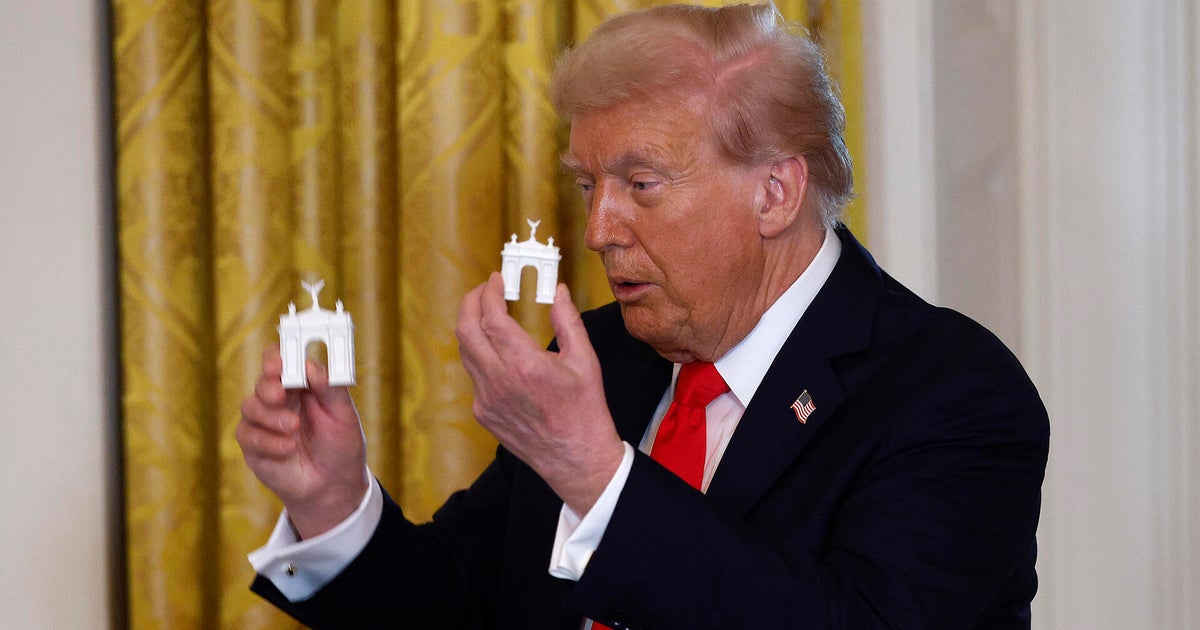
Plans for a massive latest triumphal arch in Arlington, Virginia, known as the Independence Arch or the “Arc de Trump,” will be supported by American taxpayer funds, according to a recently released spending plan from the National Endowment for the Humanities (NEH).
The project, intended to commemorate the 250th anniversary of the United States, involves a significant allocation of federal resources. According to the spending plan approved by the Office of Management and Budget in September, $2 million in special initiative funds and $13 million in matching funds have been reserved for the construction of the arch.
The proposed monument is designed to resemble France’s Arc de Triomphe and is planned to sit on the Virginia side of the Potomac River, directly across from the Lincoln Memorial. President Trump has expressed a desire for the structure to be the “biggest one of all” in the world, despite the site’s location along a flight path for Reagan National Airport.
Funding Structure and Federal Involvement
The use of taxpayer money for the Independence Arch marks a distinct shift in funding strategy compared to other recent presidential projects. While the arch will utilize federal dollars via the NEH—an independent agency that frequently pairs federal grants with private contributions—other projects have been framed as entirely privately funded.
Specifically, the president has stated that a massive ballroom addition to the White House, estimated to cost between $300 million to $400 million, will be funded entirely by private donors. In contrast, the arch will rely on the $15 million total reserved from the National Endowment for the Humanities.
It remains unclear exactly how much private funding will supplement the federal allocation for the arch. Yet, the president has previously indicated that leftover private funds from the White House ballroom project could potentially be diverted to the Independence Arch.
The Vision for a “World-Class” Monument
The ambition behind the project is rooted in the president’s belief that Washington is the only city of “great importance” in the world that lacks a triumphal arch. During comments made in December, the president stated, “And this one is going to blow them all away. The one that people know mostly is the Arc de Triomphe in Paris, France. And we’re going to top it by I think a lot.”
To visualize the project, the president has previously displayed a model of the arch in the Oval Office. Renderings indicate a scale and style intended to surpass existing global monuments, though the White House has not yet disclosed a total estimated cost for the completed structure.
Logistical and Administrative Challenges
The proposed location of the arch presents potential aviation challenges. Since the site is situated in Arlington, Virginia, it falls within the flight path of Reagan National Airport, which could complicate the president’s goal of creating the world’s largest triumphal arch due to height restrictions and safety regulations.

Administratively, the funding has moved through the Office of Management and Budget (OMB). Despite the release of the spending plan, both the OMB and the NEH did not immediately respond to requests for comment regarding the specific allocation of these funds.
Key Takeaways of the Independence Arch Plan
- Total Taxpayer Allocation: $15 million ($2 million in special initiative funds and $13 million in matching funds) via the NEH.
- Purpose: To commemorate the 250th anniversary of the United States.
- Location: Arlington, Virginia, facing the Lincoln Memorial across the Potomac River.
- Design Influence: Modeled after the Arc de Triomphe in Paris, France.
- Private Funding: Potential use of leftover funds from the $300 million to $400 million White House ballroom project.
As the administration moves forward with the 250th-anniversary commemorations, the final cost and the full extent of private versus public funding for the Independence Arch remain the primary outstanding details.
We will continue to monitor official filings from the National Endowment for the Humanities and the Office of Management and Budget for further updates on the project’s timeline and budget. We invite our readers to share their thoughts on the use of federal funds for national monuments in the comments below.