
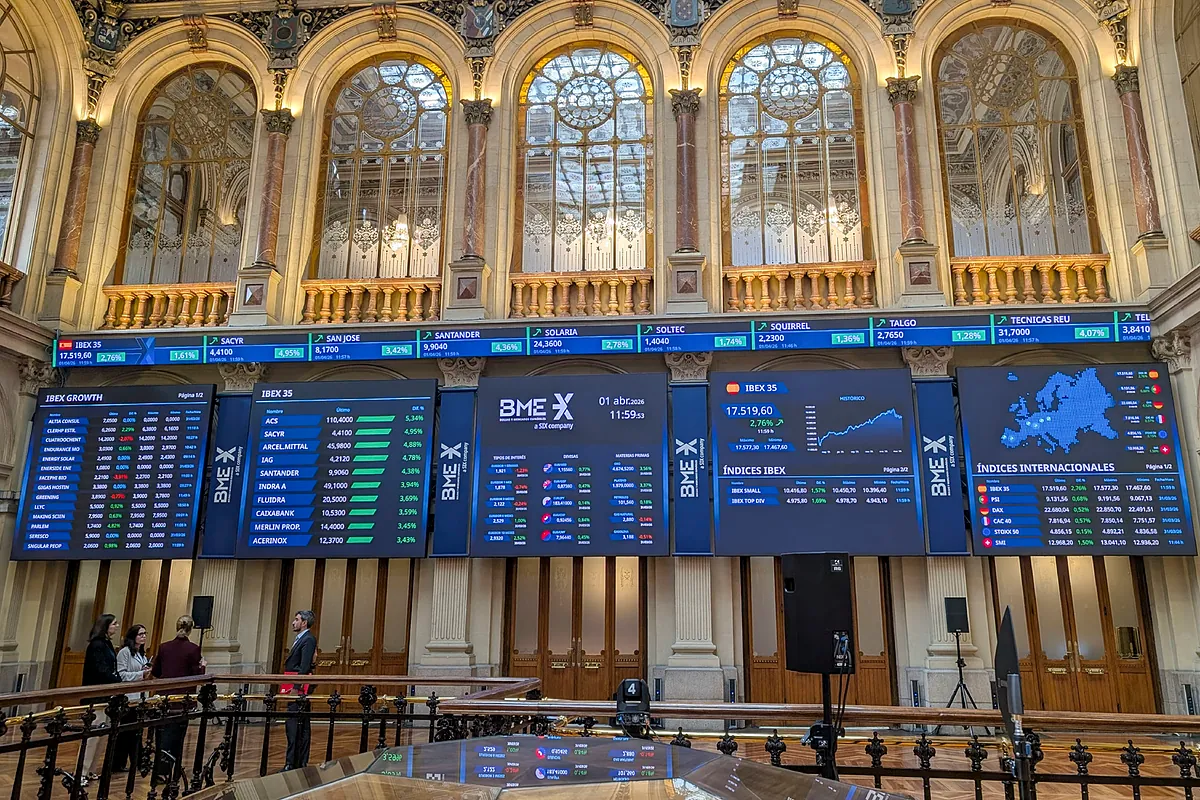
London, UK – Global markets experienced a turbulent Thursday as escalating geopolitical tensions in the Middle East, coupled with shifting rhetoric from former U.S. President Donald Trump, sent shockwaves through international financial centers. The Ibex 35, Spain’s benchmark stock index, led the decline, falling sharply amidst rising oil prices and increased investor anxiety. This downturn underscores the sensitivity of global markets to developments in the ongoing conflict and the unpredictable nature of political statements that can rapidly alter investor sentiment.
The immediate catalyst for Thursday’s market slide was a series of statements made by Donald Trump, suggesting a more aggressive approach to the conflict in the Middle East. Whereas details remain fluid, Trump indicated the potential for a significant escalation of military action against Iran in the coming weeks. This pronouncement effectively reversed the cautious optimism that had briefly buoyed markets on Wednesday, following initial hopes for a de-escalation of tensions. The resulting uncertainty prompted a flight to safety, driving up the price of oil and triggering sell-offs in stock markets worldwide.
Ibex 35 Plunges as Oil Prices Surge
The Ibex 35 experienced a significant drop, falling 1.6% in early trading on Thursday, settling at 17,305 points. According to reports from El Plural, the decline was directly linked to the surge in oil prices, which climbed above $107 per barrel. This increase in oil prices is a direct consequence of the heightened geopolitical risk, as investors anticipate potential disruptions to supply from the region. The situation is further complicated by retaliatory threats from Iran, promising a “devastating” response to any attacks supported by the United States and Israel. This escalating rhetoric has injected a palpable sense of fear into the investor community.
The impact wasn’t limited to Spain. Broader European markets too suffered losses, with most major indices experiencing declines of around 1%. Futures markets in the United States mirrored this trend, indicating a negative opening for Wall Street. Asian markets had already closed with substantial losses, reflecting the overnight impact of Trump’s statements. The interconnectedness of global financial markets means that geopolitical events in one region can quickly reverberate across the world, impacting investors and economies everywhere.
Trump’s Rhetoric and Market Volatility
The recent volatility highlights the significant influence of political rhetoric on financial markets. As reported by Cinco Días, Trump’s initial calming message on Wednesday had briefly spurred a market rally, but this was quickly undone by his subsequent, more hawkish statements. This demonstrates the sensitivity of investors to perceived shifts in policy and the difficulty of accurately predicting future developments in a rapidly evolving geopolitical landscape. The lack of clarity regarding the potential duration and scope of the conflict is a major source of concern for market participants.
The situation is particularly concerning given the ongoing nature of the conflict between the United States and Israel with Iran, now entering its fifth week. The initial expectation of a swift resolution had fueled a temporary surge in market confidence, but this optimism has now been replaced by a more cautious outlook. Investors are keenly aware that the potential for escalation remains high, and that any miscalculation could have severe consequences for the global economy.
Oil Prices Reach Multi-Year Highs
The price of Brent crude, the international benchmark, surged to over $107.80 per barrel in the opening of European markets, representing a 6.57% increase. El Plural notes that this marks the largest monthly increase in the history of oil prices, driven by fears of supply disruptions. The potential for a wider conflict in the Middle East, a region responsible for a significant portion of global oil production, is a major driver of this price increase. The impact of higher oil prices is far-reaching, affecting everything from transportation costs to consumer prices, and potentially contributing to inflationary pressures.
The volatility in the oil market is further exacerbated by the uncertainty surrounding the future of the conflict. While a diplomatic resolution remains the preferred outcome, the escalating rhetoric and the potential for military action have raised concerns about a prolonged period of instability. This uncertainty is likely to continue to weigh on market sentiment in the coming days and weeks.
Broader Market Impact and Investor Sentiment
The downturn in global markets reflects a broader shift in investor sentiment. The initial optimism that had characterized the early stages of the year has been replaced by a more cautious and risk-averse approach. Investors are increasingly concerned about the potential for a slowdown in global economic growth, driven by the combination of geopolitical tensions, rising inflation, and tightening monetary policy. This has led to a decline in risk appetite and a preference for safer assets, such as government bonds and gold.
The impact of the market decline is being felt across a wide range of sectors. Energy companies are benefiting from the higher oil prices, but other sectors, such as tourism and transportation, are facing headwinds due to the increased uncertainty and the potential for disruptions to travel. The overall economic outlook remains highly uncertain, and the situation is likely to remain volatile in the near term.
Disappointment Following Trump’s Address
According to Cinco Días, the disappointment surrounding Trump’s address stemmed from the lack of concrete details regarding a potential end to the conflict. Investors had hoped for a clear timeline for de-escalation, but instead received a reiteration of threats and a commitment to continued military pressure. This lack of clarity has fueled concerns about a prolonged conflict and its potential impact on the global economy. Jumpei Tanaka, director of strategy at Pictet Asset Management Japan, stated that the intervention was not what the market expected, lacking signals pointing towards a resolution.

The market’s reaction underscores the importance of clear and consistent communication from political leaders during times of crisis. Uncertainty is often more damaging to markets than bad news, and investors need to have a clear understanding of the potential risks and rewards before making investment decisions. The current situation highlights the challenges of navigating a complex geopolitical landscape and the need for careful risk management.
Looking Ahead: Key Factors to Watch
The immediate future of the markets will likely depend on several key factors. First and foremost is the evolution of the geopolitical situation in the Middle East. Any further escalation of the conflict could trigger another sell-off in global markets, while a diplomatic breakthrough could provide a much-needed boost to investor confidence. Second, investors will be closely watching for any further statements from Donald Trump, as his rhetoric continues to have a significant impact on market sentiment. Third, economic data releases will be crucial in assessing the health of the global economy and the potential for a slowdown.
The next key event to watch is the upcoming meeting of OPEC+ on April 8th, where discussions regarding oil production levels are expected to take place. Any decision to increase production could assist to alleviate some of the pressure on oil prices, but this is unlikely given the current geopolitical climate. Investors will also be closely monitoring the upcoming earnings season, which will provide further insights into the health of corporate America.
The current market environment is characterized by a high degree of uncertainty and volatility. Investors should remain cautious and focus on managing risk. Diversification, a long-term investment horizon, and a disciplined approach to asset allocation are all essential for navigating these challenging times.
What are your thoughts on the current market volatility? Share your insights and predictions in the comments below. Don’t forget to share this article with your network to keep them informed about the latest developments in the global financial landscape.