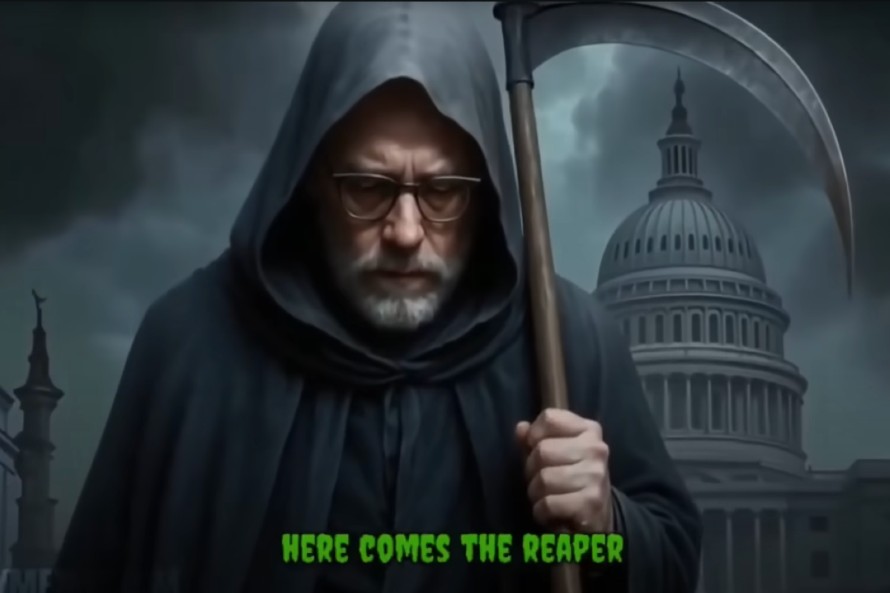
Decoding Trump’s AI Video: A Deep dive into the “Don’t Fear the Reaper” Parody & Political Messaging
the ongoing US government shutdown, coupled with stalled funding negotiations, has taken a bizarre turn. Former President Donald trump, amidst the political gridlock, has released a perplexing AI-generated video on his Truth social account. This isn’t just any political statement; it’s a surreal parody of Blue Öyster Cult’s iconic song, “Don’t Fear the Reaper,” and it’s sparking intense debate about its intended message. Understanding this political dialogue requires unpacking its symbolism, context, and the implications of its creation.
The Video: A Breakdown of the Bizarre Imagery
The video features Russell Vought, Director of the U.S. Office of Management and Budget, portrayed as the “reaper” from the Blue Öyster Cult song. Trump himself appears, awkwardly playing a cowbell off-beat, while J.D. Vance seemingly takes on the role of the drummer. The visuals are jarring,the editing is amateurish,and the overall effect is… unsettling.
The lyrics, altered to fit the current political climate, are equally confusing. Lines like “Here the power’s gone,” juxtaposed with images of the White House, suggest a loss of governmental authority. Other phrases, like “Won’t be able to fly,” lack any clear connection to the narrative. Is this a threat? A critique? Or simply a chaotic expression of frustration?
The Intent Behind the AI-Generated message
The video’s meaning remains deliberately ambiguous. It references Vought wielding “the pen, the funds and the brain,” seemingly a compliment, yet simultaneously depicts him as an agent of death. This duality raises questions about whether Trump intends to empower Vought or subtly criticize him. Some speculate it’s a veiled threat to Democrats, leveraging the reaper imagery to instill fear.
According to a statement provided to Axios by Blue Öyster Cult spokesperson Steve Schenck, the band “were not contacted about this in advance.” This lack of consultation highlights a growing trend: the use of artists’ work without permission in increasingly unconventional political messaging.
The Rise of AI in Political Campaigns & Its Implications
This incident isn’t isolated. The use of Artificial Intelligence in political campaigns is rapidly escalating. According to a recent report by the Pew Research Center (October 2024), 68% of Americans are concerned about the potential for AI to spread misinformation during elections.This video exemplifies that concern.
Here’s why this is notable:
* Rapid Content Creation: AI allows for the fast and inexpensive production of political content, even if it’s low quality.
* targeted Disinformation: AI can personalize messaging to exploit individual vulnerabilities and spread targeted disinformation.
* Erosion of Trust: The proliferation of AI-generated content can erode trust in legitimate news sources and political institutions.
* Copyright Concerns: As seen with Blue Öyster Cult, the use of copyrighted material without permission is a growing legal and ethical issue.
Practical Tip: Be critical of the political content you consume online. Verify information from multiple sources and be wary of emotionally charged or sensationalized claims.
Understanding the ”Dilley Meme Team” & Online War Machines
The video is credited to the “Dilley Meme Team,” who self-describe as ”Trump’s online war machine.” This highlights the increasing importance of online communities in shaping political narratives. These teams often operate outside conventional campaign structures, utilizing memes, viral videos, and social media manipulation to influence public opinion. This form of digital strategy is becoming increasingly sophisticated and challenging to counter.
Addressing Common Questions About Trump’s AI Video
* Is this video legal? The legality is complex. Copyright infringement is a concern, and the potential for inciting violence is being debated.
* What is the purpose of using AI in this way? The goal is likely to generate attention, rally supporters, and perhaps intimidate opponents.
* How can I spot AI-generated political content? Look for inconsistencies, unnatural phrasing, and a lack of source attribution.
* Will this type of content become more common? Absolutely. Expect to see a significant increase in AI-generated political content in the coming months.
* What is the impact of this on the government shutdown? While the video doesn’t directly resolve the shutdown, it underscores the chaotic political habitat contributing to the impasse.