
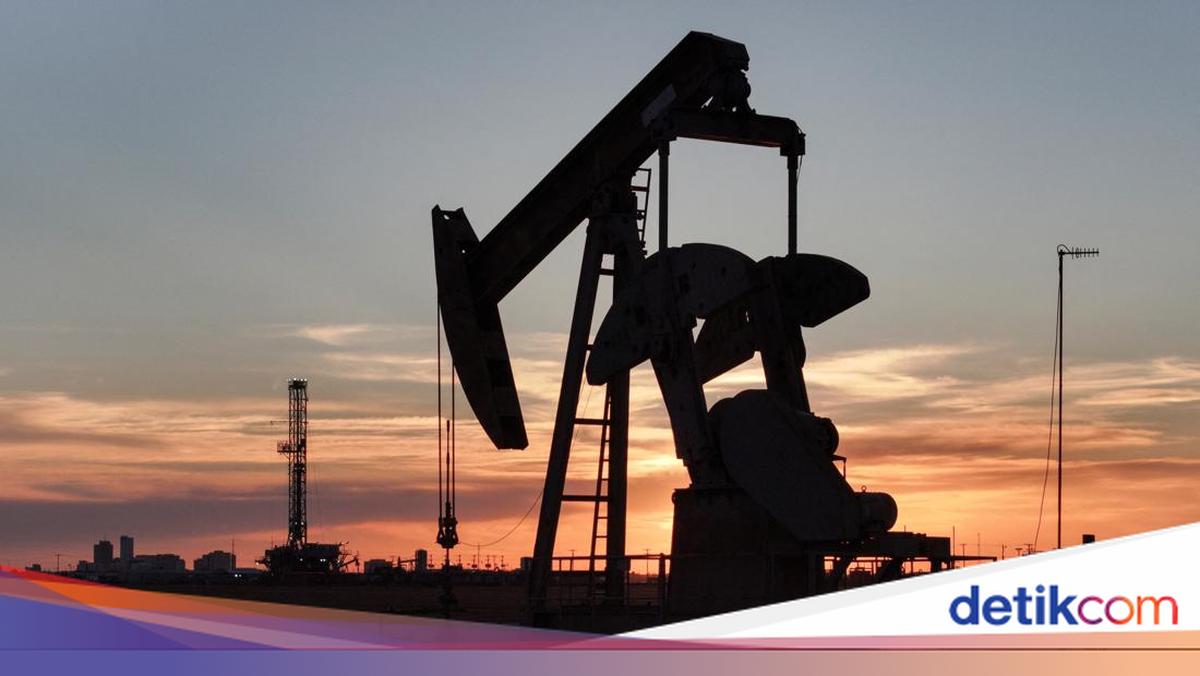
Global energy markets are reacting with volatility as tensions escalate between the United States and Iran, sending crude oil prices on a sharp upward trajectory. The surge is primarily driven by aggressive rhetoric from U.S. President Donald Trump and the strategic instability surrounding the Strait of Hormuz, a critical artery for the world’s energy supply.
The market witnessed a significant spike as oil prices climbed toward 110 dollars per barrel following hardline threats directed at Tehran. This price movement reflects deep-seated investor anxiety over potential supply disruptions and the possibility of a prolonged military conflict in the Middle East.
The current instability is the result of a series of escalations that began on Feb. 28, when the U.S. And Israel launched strikes on Iran, which in turn sparked retaliatory actions across the Gulf. These events led to the effective closure of the Strait of Hormuz, a move that severely constricted the flow of oil to global markets and contributed to Brent crude prices skyrocketing by more than 60% throughout March marking the biggest monthly price gain since records began in the 1980s.
As Chief Editor of Business at World Today Journal, I have observed that the intersection of geopolitical volatility and energy dependence often creates these “price shocks.” In this instance, the market is struggling to reconcile President Trump’s claims that the conflict is nearing an end with the visible increase of U.S. Military assets in the region.
The Impact of Trump’s Rhetoric on WTI and Brent Crude
The immediate reaction to President Trump’s sharpened rhetoric has been felt across both major oil benchmarks. West Texas Intermediate (WTI) crude oil futures opened with a jump of more than US$ 1, fueled by threats that the U.S. Would grab “harder” actions if Iran fails to reopen the Strait of Hormuz supporting the upward trend in WTI prices.
Brent crude, the global benchmark, has seen similar volatility. Following a 19-minute address by the President on Wednesday evening, Brent crude was trading more than 6.5% higher, reaching approximately $107.79 per barrel in London trading as analysts noted the continued arrival of U.S. Troops and aircraft in the Middle East. Simultaneously, WTI crude added around 6%, settling at just over $106 a barrel.
This price action highlights a “credibility gap” in the markets. Even as the administration suggests a diplomatic or military resolution is imminent, the physical movement of military hardware suggests a preparation for sustained engagement, which typically leads traders to hedge against supply shortages by buying oil futures.
The Strait of Hormuz and Global Energy Security
The central point of contention is the Strait of Hormuz. As one of the world’s most important shipping routes, any closure or restriction of this waterway immediately threatens the stability of global energy prices. The effective closure of this route following the Feb. 28 strikes created a supply vacuum that drove the historic price gains seen in March.
The risk is not merely the price of the raw commodity but the “demand destruction” that occurs when prices become unsustainable. Market analysts are currently grappling with concerns over potential energy rationing and the long-term impact on global economic growth if oil remains at these elevated levels as fears for oil supply linger.
Key Market Drivers and Timelines
President Trump has provided a specific, albeit contested, timeline for the resolution of the conflict. In his recent communications, he stated that he expects the war in Iran to end within two to three weeks whether a deal is reached or not. However, he also warned that during this window, U.S. Forces will hit Iran “extremely hard.”

For the global business community, this “three-week window” creates a period of extreme uncertainty. If the conflict resolves quickly, prices may retreat; however, if the “extremely hard” strikes lead to further retaliatory closures of shipping lanes, the $110 mark may only be a baseline for further increases.
Economic Implications for Global Markets
The ripple effects of this energy crisis extend beyond the oil patches of Texas and the North Sea. High energy costs act as a regressive tax on global consumers, increasing the cost of transportation, manufacturing, and heating. This often leads to inflationary pressures that force central banks to reconsider interest rate policies.
Investors are currently monitoring the situation with a mix of caution and opportunism. While some are hedging with oil futures, others are watching how the volatility impacts broader equity markets. The tension is creating a fragmented landscape where energy-exporting nations may observe short-term gains, while energy-importing economies face significant fiscal strain.
Summary of Current Market Status
| Benchmark | Recent Price Movement | Primary Driver |
|---|---|---|
| Brent Crude | Over 6.5% increase (approx. $107.79) | U.S. Military build-up and Hormuz closure |
| WTI Crude | Over 6% increase (over $106) | Trump’s rhetoric regarding the Strait of Hormuz |
| Global Peak | Touching $110 per barrel | Hardline threats toward Iran |
The current situation underscores the fragility of the global energy supply chain. When a single geopolitical flashpoint—such as the Strait of Hormuz—is threatened, the resulting price volatility can disrupt economic planning for months. The market is now waiting to see if the President’s predicted three-week timeline will materialize or if the region is entering a new phase of prolonged instability.
The next critical checkpoint for markets will be the conclusion of the three-week window cited by President Trump to end the conflict. Investors will be looking for concrete evidence of the reopening of the Strait of Hormuz or a formal ceasefire agreement to signal a price correction.
We invite our readers to share their perspectives on how these energy fluctuations are affecting their businesses in the comments below.