
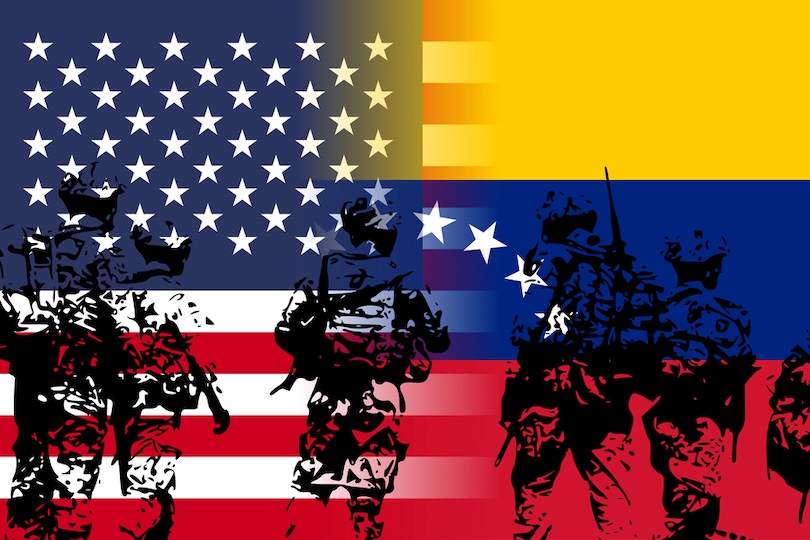
The Shifting Sands of US Foreign Policy: A Look at Trump’s Approach and Potential Consequences
Donald Trump’s recent foreign policy maneuvers, particularly regarding Venezuela, signal a potentially meaningful departure from traditional American diplomatic strategies. This shift warrants careful examination, as it could reshape global alliances and introduce new levels of uncertainty into international relations. Understanding these changes is crucial for anyone seeking to navigate the evolving geopolitical landscape.
A Departure from Traditional Diplomacy
Traditionally,the United States has relied heavily on institutional frameworks – like NATO and the United Nations – to project power and influence. However, Trump appears to favor a more transactional approach, prioritizing bilateral “deals” and circumventing established international norms. This strategy has several key characteristics:
* Avoiding Binding Agreements: He consistently shies away from long-term commitments and legally binding treaties.
* Prioritizing Short-term Gains: The focus is on extracting immediate benefits, even if it means sacrificing long-term stability.
* Limited reciprocity: Trump often demands concessions without offering equivalent benefits in return.
you’ll notice this pattern in recent trade negotiations wiht the European Union and the United Kingdom, where agreements are often contingent and subject to change.
The Precarious Nature of Bilateral Deals
While seemingly efficient, relying solely on bilateral agreements presents inherent risks. These deals are often:
* Context-Dependent: Their success hinges on the specific circumstances and personalities involved.
* Contingent: They can be easily overturned by shifts in political winds or changes in leadership.
* Tough to Enforce: Without the backing of international institutions,ensuring compliance can be challenging.
Consider the ceasefires brokered between Cambodia and Thailand, or the stalled negotiations between russia and Ukraine – these illustrate the fragility of Trump’s preferred approach.The outcomes are unpredictable, and lasting peace remains elusive.
Venezuela: A Case Study in Intervention
The situation in Venezuela offers a stark example of this new approach. Unlike the intervention in Panama during the 1980s, which aligned with a broader regional trend, Venezuela faces a more complex scenario. A potential civil war looms, pitting supporters of the current government against exiled opposition leaders like Marina Corina Machado and Edmundo González Urrutia.
The question isn’t if the US will intervene, but how. This uncertainty is compounded by the lack of a clear,long-term strategy. You might see a more limited, targeted intervention, or a complete hands-off approach – the outcome remains unclear.
Echoes of Iraq and the Risk of Pyrrhic Victory
Looking back, parallels can be drawn between Trump’s approach and that of George W. Bush. Bush’s declaration of “mission accomplished” in iraq ultimately proved premature,and the subsequent instability continues to reverberate today.
Trump, like Bush, promised to end costly wars. However, a fast victory in Venezuela, achieved through unilateral action, could easily devolve into a prolonged and destabilizing conflict. This could ultimately prove to be a Pyrrhic victory – a win that comes at too high a cost. The shadow of the war on terror looms large, reminding us that good intentions don’t always translate into positive outcomes.
The Need for Vigilance and Strategic Foresight
The evolving nature of US foreign policy under Trump demands careful observation and strategic foresight. You need to understand that the traditional rules of the game are changing. A reliance on short-term gains, a disregard for international institutions, and a willingness to embrace uncertainty all pose significant challenges to global stability.
Navigating this new landscape requires a nuanced understanding of the risks and opportunities involved, and a commitment to seeking long-term solutions rather than quick fixes.


![Quebec Park’s Predator-Prey Game: A Science Lesson in Nature | [Park Name]](https://i0.wp.com/www.sciencenews.org/wp-content/uploads/sites/2/2025/12/120825_DB_predatorprey_feat.jpg?resize=150%2C100&ssl=1 "Quebec Park’s Predator-Prey Game: A Science Lesson in Nature | [Park Name]")