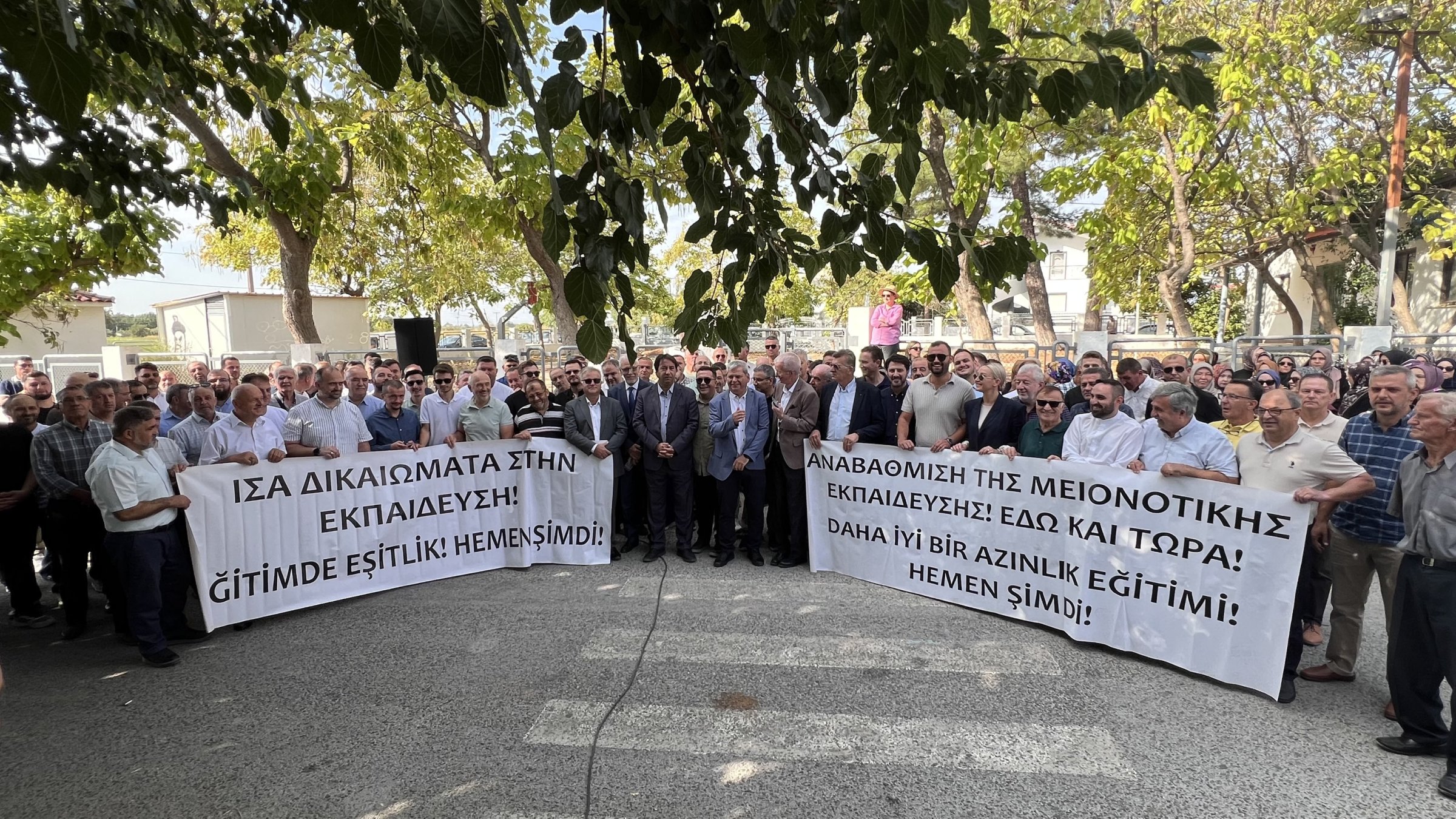
The Erosion of Minority Rights in Western Thrace: A Persistent Challenge to International Law and Regional Stability
For over a century, the Turkish Muslim minority of Western Thrace, Greece, has faced systemic discrimination and violations of internationally guaranteed rights. This ongoing situation, rooted in historical animosities and perpetuated by contemporary Greek policies, demands urgent attention and a robust response from the international community. This analysis will detail the legal foundations protecting this minority,the specific breaches of those protections,and the necessary steps to ensure their essential rights are upheld.
The Legal Framework: A Century of Guarantees
The rights of the Muslim Turkish minority in Western Thrace are firmly anchored in a series of treaties and protocols stemming from the dissolution of the Ottoman Empire and the subsequent redrawing of European borders.The foundation lies in the 1913 Treaty of athens between Greece and the Ottoman Empire (later Türkiye).Crucially,Article 11 of this treaty explicitly guarantees Muslims the freedom to practise their religion openly,without interference in the autonomy of their communities,or the management of their property and funds. it further stipulates the right of the Muslim community to elect their own muftis - a cornerstone of religious self-governance.
Further bolstering these protections,the 1920 Treaty of Sèvres,and its subsequent 1923 Protocol,concerning the protection of minorities in Greece,placed specific obligations on Greece to safeguard the rights of its Muslim population,including the protection of mosques,cemeteries,religious establishments,and wakfs (religious endowments).While the Treaty of Lausanne in 1923 ultimately superseded the Treaty of Sèvres, it reaffirmed the principle of minority protection, referring to a “Muslim minority” in Western Thrace. Importantly, the 1923 convention and protocol on population exchange explicitly recognized both Turks and Greeks, and, historically, Greece itself officially designated minority schools as “Turkish schools” and required the minority to identify as ”Turks.” This historical context underscores the evolving and ofen contradictory approach taken by Greece towards recognizing the minority’s identity.
Systematic Violations: A Pattern of Discrimination
Despite these clear treaty obligations, Greece has consistently and demonstrably violated the rights of the Turkish Muslim minority in Western Thrace. These violations are not isolated incidents but rather a sustained pattern of discriminatory practices.
* Denial of ethnic Identity: A central issue is Greece’s persistent refusal to officially recognise the minority’s Turkish identity, clinging to the broad “Muslim minority” designation despite historical evidence and the community’s self-identification. This denial impacts all other aspects of minority rights, hindering their ability to advocate for their specific cultural and linguistic needs.
* Education Rights Under Assault: Access to education in the Turkish language has been systematically curtailed.Under the guise of austerity measures and declining enrollment (often artificially induced by restrictive policies),Greek authorities have closed Turkish minority primary schools,limiting opportunities for cultural preservation and linguistic development.
* Religious Freedom Suppressed: The Mufti Crisis: Perhaps the most egregious violation concerns the appointment of muftis. The Treaties of Lausanne and Athens guarantee the minority’s right to elect their own religious leaders. Though, for decades, the Greek government has unilaterally appointed muftis, disregarding the results of community elections. This interference undermines religious autonomy and creates a parallel, state-appointed religious hierarchy that lacks legitimacy within the community. Numerous cases brought before the European Court of Human Rights (ECHR) have repeatedly ruled against Greece on this issue, yet the Greek government continues to defy these rulings, demonstrating a blatant disregard for international law.
* Restrictions on Association and Political Participation: Subtle but significant restrictions are placed on the minority’s ability to organize and participate fully in political life,further marginalizing their voice and hindering their ability to advocate for their rights.
The Root of the Problem: Historical Grievances and Societal Bias
Understanding the current situation requires acknowledging the historical context. Greece’s modern statehood dates back to 1832, but for over three centuries prior, Hellenic-speaking Orthodox Greeks lived as subjects of the Ottoman Empire alongside Muslims. This history has fostered a deeply ingrained narrative within Greek society, frequently enough framing the Ottoman Empire as the “Turkish Ottoman Empire” and associating “Turk” with historical dominance. Unluckily, this narrative has contributed to a pervasive anti-Turkish sentiment, where the notion of ”the Turk as the enemy of the Greek” remains surprisingly prevalent.
This historical baggage fuels the exclusionary and assimilationist policies directed towards the Turkish minority in Western Thrace, reflecting a broader societal bias that makes genuine integration and respect for minority rights challenging.
A Path Forward: Diplomacy, Documentation, and Accountability
The situation in Western Thrace demands a concerted and sustained response. The following steps are crucial: