
The British military has successfully exposed and deterred a sophisticated, month-long covert Russian submarine operation conducted in and around UK waters. According to the Ministry of Defence, the operation was designed to maintain secrecy while Russian vessels targeted critical undersea infrastructure, but a coordinated effort by the Royal Navy and the Royal Air Force (RAF) forced the fleet to retreat to Russia.
The operation, which spanned several weeks, involved a calculated “bluff” by the Kremlin. British aircraft and warships first identified a Russian Akula-class attack submarine entering international waters in the High North. While this high-profile vessel drew significant attention, UK service personnel quickly determined that the attack submarine was being used as a distraction. The primary objective was to mask the movements of other specialized undersea naval units from the Main Directorate of Deep Sea Research, commonly known as GUGI, which were conducting “nefarious activity” over critical undersea infrastructure published April 9, 2026.
To counter the threat, the UK worked in close coordination with international allies, including Norway, to monitor and identify the GUGI units. The British military deployed a combination of maritime surveillance aircraft and the Type 23 frigate HMS St Albans, using sonobuoys to track the Russian vessels around the clock. Once the UK and its allies launched a campaign of overt action, signaling to the Russian units that their presence was known, both the GUGI units and the Akula-class submarine retreated to their base at Olenya Guba in Russia.
Prime Minister Keir Starmer emphasized the economic stakes of the encounter, stating, “I am determined to protect the British people from paying the price for Putin’s aggression in their household bills.” He further noted that the government would not shy away from exposing destabilizing activities that seek to test British resolve.
The Tactical Divide: Akula Class vs. GUGI Spy Vessels
The Russian strategy relied on a dual-layered approach to undersea warfare. The deployment of an Akula-class attack submarine served as a visible deterrent and a distraction, intended to occupy the attention of NATO surveillance assets. This allowed the more clandestine GUGI units—specialized spy submarines and surface vessels—to operate with less scrutiny near the seabed.

GUGI, the Main Directorate of Deep Sea Research, is a highly secretive branch of the Russian military focused on deep-sea exploration and the manipulation of underwater infrastructure. By utilizing the Akula submarine as a shield, Russia attempted to conduct intelligence gathering or potential sabotage operations without detection. However, the persistence of the RAF and the Royal Navy’s tracking capabilities rendered the operation “no longer covert,” according to official reports.
Critical Infrastructure and National Security
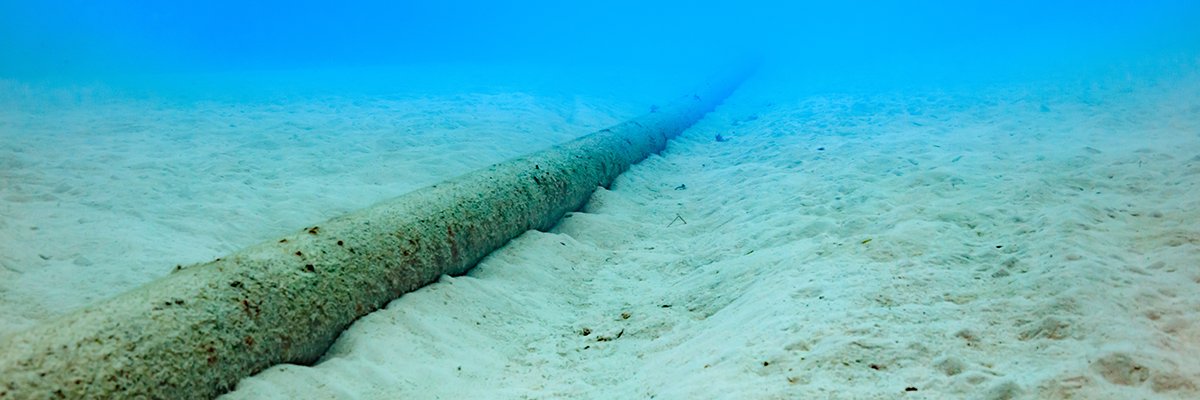
The primary concern for the UK government during this month-long operation was the safety of underwater cables and pipelines. These assets are vital for global communications and energy security, making them high-priority targets for hybrid warfare. Defence Secretary John Healey confirmed during a Downing Street press conference that the spy vessels spent time positioned over “critical infrastructure relevant to us and our allies” reported April 9, 2026.
While the presence of these vessels was alarming, Secretary Healey stated there is currently “no evidence that there has been any damage” to UK cables or pipelines. Despite the lack of immediate damage, the event highlights a significant vulnerability in how the UK and its allies depend on these undersea networks. Healey warned that any attempt to damage such infrastructure would not be tolerated and would result in “serious consequences.”
Key Takeaways of the Russian Submarine Operation
- Duration: The clandestine Russian activity lasted for nearly a month.
- Assets Involved: One Akula-class attack submarine and two GUGI spy submarines.
- UK Response: Deployment of HMS St Albans, RAF maritime surveillance, and sonobuoys.
- Ally Support: Norway played a key role in identifying and monitoring the GUGI units.
- Outcome: All Russian vessels retreated to the base at Olenya Guba after being exposed.
Expanding the Defence Shield: The Atlantic Bastion Programme
In response to the rising threat of Russian undersea activity, the UK is significantly increasing its investment in maritime security. Defence Secretary John Healey announced that the UK is “stepping up” its efforts by spending an additional £100 million on submarine hunting aircraft reported April 9, 2026.
the government is launching the “Atlantic Bastion” programme. This initiative is designed to create a “British built hybrid naval force” capable of detecting and deterring sophisticated undersea threats more effectively. The programme aims to integrate new technologies and platforms to ensure that the UK’s dependence on undersea cables does not remain a critical vulnerability.
Healey framed this increase in spending and capability as a direct message to Russian President Vladimir Putin, stating simply, “We see you.”
Geopolitical Implications in the High North
The encounter underscores a growing tension in the High North, a region increasingly viewed as a strategic frontier for both Russia and NATO. The apply of “distraction” tactics suggests a shift toward more sophisticated hybrid operations, where traditional military assets are used to mask specialized intelligence missions.
The success of the UK’s operation was largely attributed to the ability of service personnel to maintain “around the clock” surveillance in “extremely challenging and treacherous conditions.” The ability to coordinate with Norway demonstrates the strength of the current security architecture in the North Atlantic, which is essential for protecting the economic and national security of the region.
As the UK continues to monitor the Olenya Guba base and other Russian naval hubs, the Atlantic Bastion programme will be the primary vehicle for evolving the UK’s undersea defence capabilities. The government has made it clear that the protection of undersea infrastructure is now a top priority for national and economic security.
The UK Ministry of Defence is expected to provide further updates on the Atlantic Bastion programme as it moves into the implementation phase. We will continue to track official filings and announcements regarding these defence upgrades.
Do you think the current investment in undersea security is sufficient to protect global communications? Share your thoughts in the comments below.