The Drone Revolution in modern Warfare: Ukraine, European Security, and the Future of Conflict
The battlefield has fundamentally shifted.What was once defined by tanks and infantry is now increasingly dominated by unmanned systems - drones. From the frontlines of Ukraine to the airspace over the Baltic states, the proliferation of drone technology is reshaping modern warfare and posing new challenges to European security. This article delves into the current state of drone warfare, the evolving tactics of both sides in Ukraine, and the urgent need for Europe to adapt and innovate.
Ukraine: A Crucible for Drone Warfare
The conflict in Ukraine has become a proving ground for drone technology, accelerating its development and deployment at an unprecedented rate. Ukrainian forces,facing a larger and better-equipped adversary,have become heavily reliant on drones for intelligence,surveillance,reconnaissance (ISR),and direct attack.
* A Shift in Tactics: Ukrainian soldiers are increasingly utilizing drones as a force multiplier,compensating for manpower shortages.
* Diverse Drone Arsenal: The Ukrainian arsenal includes:
* FPV (First-Person View) Kamikaze Drones: Small, agile drones used for precision strikes.
* ISR Drones: Providing crucial real-time intelligence on enemy positions and movements.
* Medium-Strike Kamikaze Drones: Offering a balance between range and payload.
Oleksandr voitko,Deputy Commander of the 413th Unmanned systems Forces Regiment,a veteran of the conflict since 2014,emphasizes this reliance. “We rely mostly on drones now,” he stated in an interview with Euronews. “Modern war is a war of drones now.”
However, this isn’t a one-sided evolution. Russia is rapidly adapting, improving its own drone capabilities and demonstrating a capacity for fast technological iteration. As Saarinen, a defense expert, points out, “The enemy is good as well. Their technology is good,and when they find something that works,they ramp it up really fast.” This constant cycle of innovation and counter-innovation defines the current conflict.
The Strategic Implications for Ukraine & Beyond
The widespread use of drones in Ukraine isn’t just about battlefield tactics; it has broader strategic implications. Voitko believes that drone technology strengthens Ukraine’s negotiating position, even if recapturing all lost territory proves difficult. ”At least we can kill so many Russians so Russia will agree to peace talks,” he asserts.
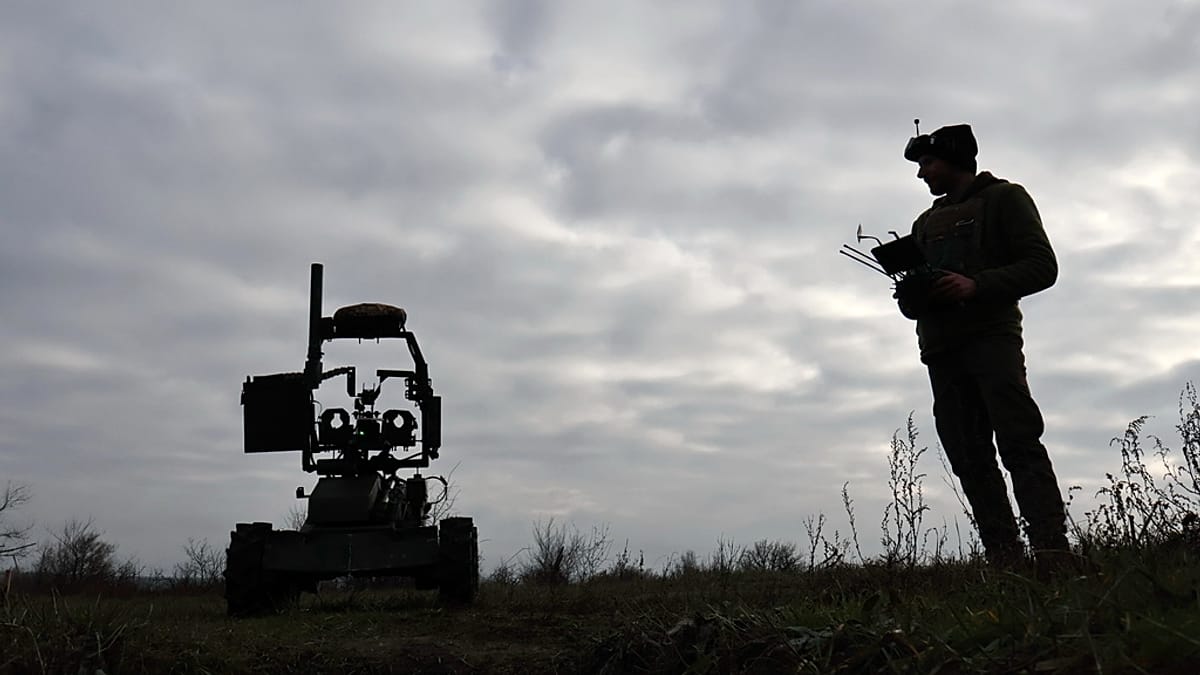
Looking ahead, voitko envisions a future where unmanned systems become even more elegant. “I think soon there’ll be flying drones with a ground robotic system. Maybe we will see some (humanoid) robots with rifles in several years.” This highlights the potential for a future battlefield dominated by autonomous and robotic warfare.
A Growing Threat to European Airspace
The implications of drone proliferation extend far beyond Ukraine. NATO’s eastern flank, particularly the Baltic states and Poland, has witnessed a surge in drone and weather balloon incursions into European airspace.
* Lithuania’s Experiance: Between October and November,Lithuanian airspace restrictions impacted a quarter of peak-hour operations at Vilnius and Kaunas airports.
* Belarusian Provocations: Lithuania declared a “nationwide emergency situation” in December following repeated incidents involving weather balloons carrying contraband from Belarus.
These incidents underscore a new form of hybrid threat, exploiting vulnerabilities in airspace monitoring and defense systems. Gediminus Guoba, CEO of Lithuanian drone tech company Granta Autonomy, warns of the danger. “Already in eastern countries, we see a danger of drones or balloons coming from Russia from Belarus.”
Building a “Drone Wall”: Defense and the Challenges of Interception
The response to these threats is evolving. Plans are underway to establish a “drone wall” – a layered defense system incorporating interceptors and ”destroyers” – to protect European airspace. Though, Guoba cautions against a purely reactive approach.
* The Risk of Collateral Damage: Simply shooting down drones or balloons poses significant risks. A falling payload, such as the 40-50 kilogram boxes carried by recent balloons, can cause substantial damage.
* The Need for Counter-Drone Technology: Europe must prioritize developing and deploying drones as countermeasures, capable of intercepting and neutralizing threats before they reach critical infrastructure.
Guoba emphasizes the urgency of the situation. “It’s a new challenge for everyone.” The current approach is largely reactive, responding to threats as they emerge rather than proactively anticipating them.