
Witnessing Resilience: Literature and Loss in Wartime Ukraine
The weight of conflict is palpable in Ukraine,extending far beyond the front lines. Recent attacks targeting energy infrastructure threaten a brutal winter, while daily tragedies unfold, impacting individuals and families irrevocably. It’s a reality I recently witnessed firsthand while attending the BookForum in Kyiv, an event that stands as a powerful testament to the enduring spirit of ukrainian culture.
The stories are heartbreaking. A six-year-old boy now faces a traumatic brain injury,a consequence of this relentless war. A family was tragically killed, including Anastasiia Hrytsiv – a young girl the same age as my daughter, with the same shining smile and flowing hair. Just hours before her death,she was checking on her father,who is fighting on the front lines.
A Defiant Cultural Hub
Despite the surrounding devastation, the BookForum thrived. It was a defiant celebration of Ukrainian literature, brimming with exquisitely produced books and a vibrant community. You could feel the determination to preserve and promote their rich literary heritage.
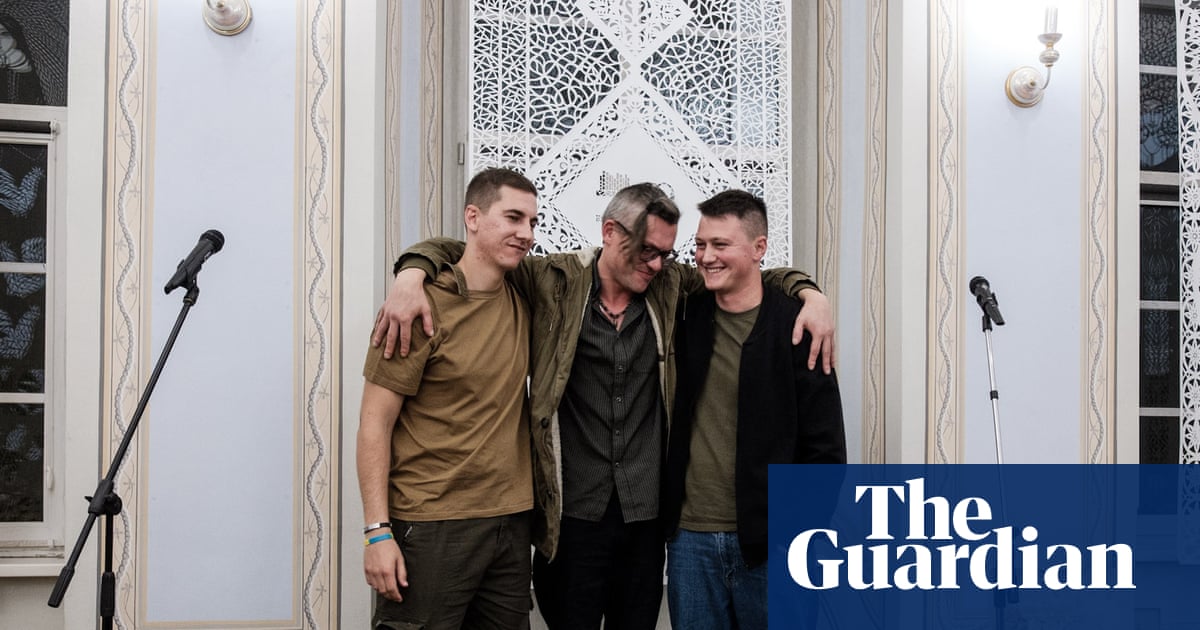
Our final event featured a bilingual reading with three soldier-poets: Dron’, Ihor Mitrov, and Fedir Rudyi. I had the honor of reading the English translations of Fedir’s poems. They were remarkably tender, grounded, and insightful – mirroring the sensitivity of the poet himself.
The Scars of War
The poets’ shared pain was evident. After the reading, they embraced, a silent acknowledgment of their collective trauma. These war poems are profoundly difficult to experiance, especially knowing the personal costs behind them.
Each poet carries the physical and psychological wounds of war. Artur Dron’ suffers from nerve damage in his left arm, a result of a Russian drone strike. A stark red scar now marks his sleeve, disrupting a beautiful tattoo of trees. He continues rehabilitation at the Unbroken Institute, while many of his fellow poets have been lost, including the incredibly talented Maksym Kryvtsov.
It’s a constant reminder of the sacrifices being made. I, along with so many others, am praying for an end to the Russian aggression and for the safety of the Ukrainian people.
A Powerful Plea: Artur dron’s “Prayer”
The following poem, “Prayer” by Artur Dron’, encapsulates the breadth of suffering and the enduring hope that permeates Ukrainian society. It’s a raw, unflinching look at the realities of war, translated beautifully by Yuliya Musakovska.
Prayer by Artur Dron’
With the swimmers, swim,
with the travellers, travel,
as they say in church.
With the one who was raped
and is expecting a child,
breathe, breathe, breathe.
With the child whose hair has gone gray,
prepare a backpack for school.
With the frostbitten, freeze,
with the shellshocked, vomit in the trench.
With the tank commander,
who’s been missing since October,
be found, be pieced together
from scattered body parts.
Consecrated particles
as they say in church.
And also be
with the one who eats pot noodles with cold water;
with the one who was captured but will never talk;
with the one who was conceived
but didn’t get born.
And be with the one
who didn’t get to give birth.
And also be
with the two girls
somewhere in the Rivne region, do you remember?
we were driving to the east, in a convoy,
and they stood watching at the roadside,
and put their hands on their hearts.
And then I understood everything.
Finding Strength in Storytelling
This poem, and the experiences surrounding it, underscore the vital role of art in times of crisis.Literature provides a space for mourning, for processing trauma, and for preserving memory. It’s a testament to the resilience of the human spirit, and a powerful call for peace.
You can find Artur Dron’s collection, We Were Here, through Jantar Publishing.Supporting Ukrainian voices is more notable now than ever.


