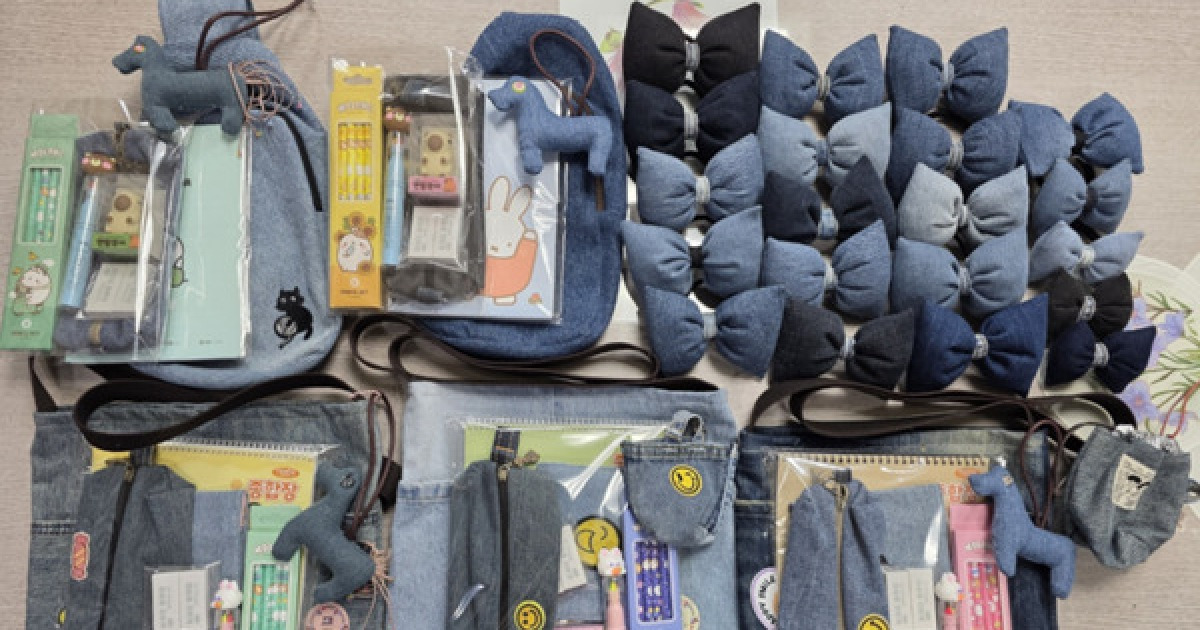
The drive towards a circular economy and carbon neutrality is gaining momentum globally, with innovative initiatives emerging at the local level. In Gyeryong City, South Chungcheong Province, South Korea, a volunteer center is demonstrating the power of upcycling, transforming discarded textiles into essential school supplies and extending a helping hand to youth in developing nations. This project, spearheaded by the Gyeryong City Volunteer Center and the ‘Onsweat Sharing Volunteer Group’, exemplifies a commitment to resourcefulness and international cooperation in the face of climate challenges.
The initiative, which began on February 19, 2026, focuses on collecting discarded clothing – specifically jeans and traditional Korean garments known as hanbok – and repurposing the materials into practical items for students. This approach not only reduces landfill waste but also contributes to lowering greenhouse gas emissions associated with the production of new materials. The project builds on the success of previous upcycling efforts, where the center produced household items from approximately 1,000 pairs of discarded jeans last year, earning recognition at the ‘Gyeryong City Carbon Neutrality Excellent Policy Selection Contest’.
From Waste to Worth: The Power of Upcycling in Gyeryong City
The core of this project lies in adding value to what is often considered waste. The ‘Onsweat Sharing Volunteer Group’, comprised of individuals with sewing skills, meticulously collects, cleans, and transforms these discarded textiles. This process directly addresses the growing concern of textile waste, a significant contributor to environmental pollution. According to the Ellen MacArthur Foundation, the fashion industry produces 92 million tonnes of textile waste annually globally, and less than 1% of material is recycled into new clothing. The Ellen MacArthur Foundation highlights the need for systemic change in the fashion industry to move towards a circular model.
The upcycled materials are then crafted into essential school supplies, including eco-bags, pouches, and pencil cases. These items aren’t solely intended for local use; a significant portion – enough for 100 youth – will be distributed to students in developing countries, fostering international goodwill and providing much-needed resources. This expansion of international sharing activities marks a new phase for the volunteer center, demonstrating a broader vision of global responsibility.
South Chungcheong Province Leads the Charge Towards Carbon Neutrality
Gyeryong City’s initiative is part of a larger, province-wide effort to combat climate change and achieve carbon neutrality. South Chungcheong Province has declared itself a ‘Special Province for a Carbon-Neutral Economy’ and is actively investing in renewable energy sources such as wind, solar, and hydrogen power. A report from the Chungnam Development Institute details the province’s comprehensive strategy, which includes the establishment of the Chungnam Carbon Neutrality Committee, comprised of 87 experts, civic organizations, and businesses, to oversee the implementation of climate action plans.
This commitment was further underscored by the 9th South Chungcheong Province Carbon Neutrality International Conference, held in Boryeong in September 2025. The conference, which drew over 1,500 participants from 11 countries, focused on “Transition to a Carbon-Neutral Economy and Expansion of Cooperation,” serving as a platform for discussing innovative solutions and forging concrete roadmaps for climate action. The province’s proactive approach positions it as a leader in South Korea’s efforts to meet its national carbon reduction targets.
Citizen Participation and Volunteer Opportunities
The success of the Gyeryong City Volunteer Center’s project relies heavily on community involvement. To encourage participation, the center offers volunteer hour recognition for citizens who contribute discarded jeans and hanbok. Washed jeans qualify for 1 hour of volunteer credit, even as washed hanbok earn 3 hours. This non-face-to-face volunteer opportunity provides a convenient way for residents to contribute to a sustainable future.
The center’s officials emphasize the importance of continued resource circulation volunteer activities with citizens. This collaborative approach not only reduces waste but also fosters a sense of collective responsibility towards environmental stewardship. The project serves as a model for other communities seeking to implement similar initiatives, demonstrating that even small-scale efforts can have a significant impact.
The Broader Context of Upcycling and the Circular Economy
The Gyeryong City initiative is part of a growing global trend towards upcycling and the circular economy. Upcycling, unlike recycling, focuses on transforming waste materials into products of higher value, reducing the need for virgin resources and minimizing environmental impact. The circular economy, a systemic approach to economic development, aims to eliminate waste and pollution, keep products and materials in use, and regenerate natural systems.
The benefits of embracing a circular economy are multifaceted. Beyond environmental advantages, it can stimulate innovation, create new economic opportunities, and enhance resource security. Governments and businesses around the world are increasingly recognizing the potential of the circular economy and are implementing policies and strategies to accelerate its adoption. The European Union, for example, has adopted a Circular Economy Action Plan with ambitious targets for waste reduction, reuse, and recycling. The European Commission’s website provides detailed information on the EU’s circular economy initiatives.
The Gyeryong City Volunteer Center’s project, while localized, contributes to this larger global movement. By demonstrating the feasibility and benefits of upcycling, it inspires others to adopt similar practices and embrace a more sustainable lifestyle. The initiative also highlights the crucial role of volunteerism in driving positive change and building a more resilient and equitable future.
Looking ahead, the Gyeryong City Volunteer Center plans to continue its resource circulation volunteer activities and explore new opportunities for collaboration and innovation. The center’s ongoing success will depend on continued community support and a steadfast commitment to environmental sustainability. The next update on the project’s progress is expected in November 2026, when the initial phase of the current initiative concludes.
What are your thoughts on this inspiring initiative? Share your comments below and help spread the word about the power of upcycling and community-driven sustainability!