
Beyond Ice: New Research Reveals the Surprisingly Rocky Hearts of Uranus adn Neptune
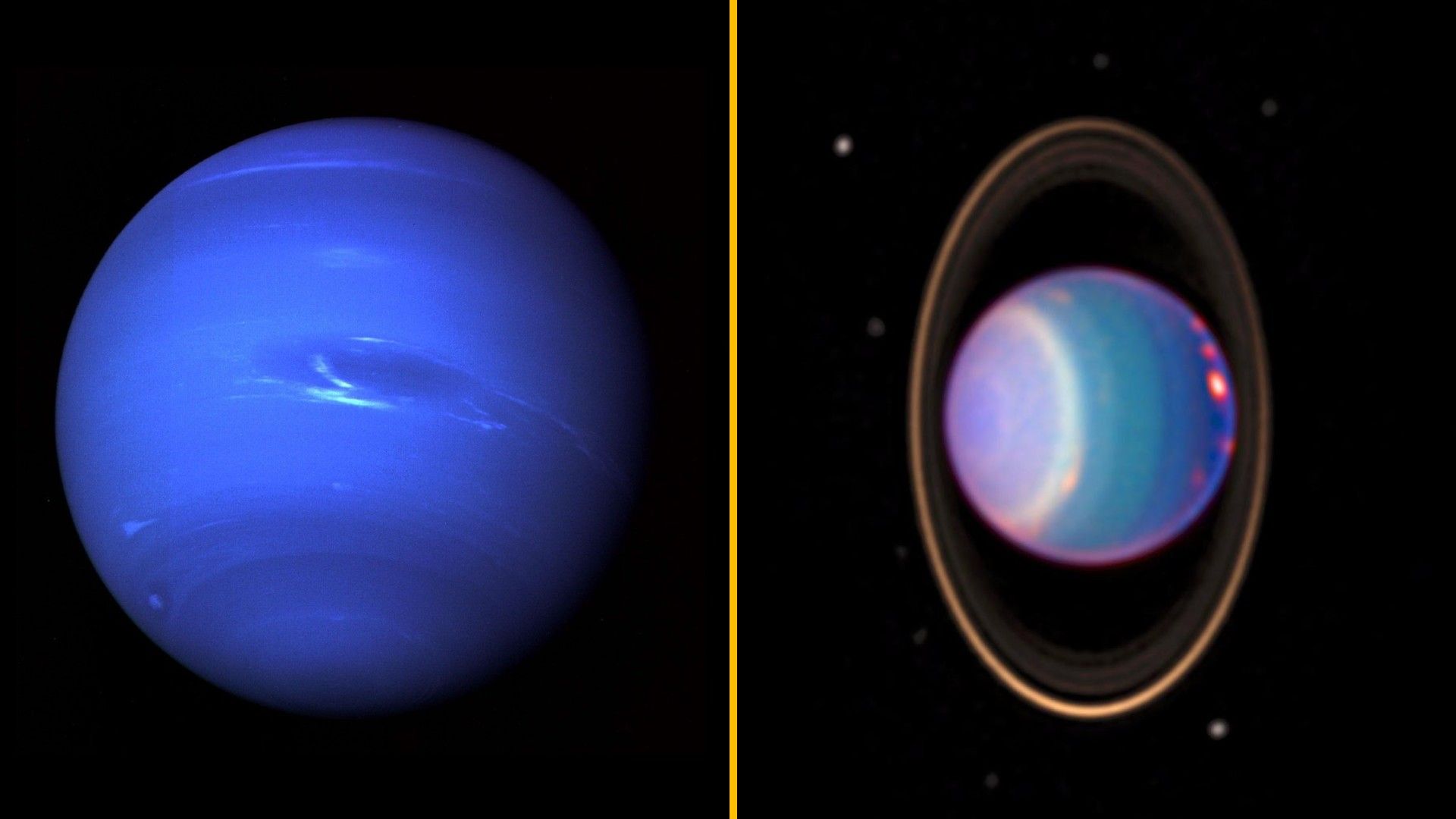
For decades, Uranus and Neptune have been labeled “ice giants.” But groundbreaking new research suggests these distant worlds might be more accurately described as “rock giants.” A team of scientists has developed a complex model of planetary interiors, revealing that both Uranus and Neptune could harbor considerable rocky cores – and challenging long-held assumptions about their composition.
Rethinking the Ice Giant Label
You might wonder why this matters. Understanding the internal structure of these planets isn’t just about semantics. It’s crucial for unraveling the mysteries of planetary formation and evolution within our solar system and beyond.
The study, published recently, utilized a novel method to simulate the possible compositions of Uranus and Neptune’s cores. This approach generated eight potential core structures for each planet. Interestingly, three of these models indicated a surprisingly high proportion of rock to water.
This finding suggests the interiors aren’t solely composed of the “ices” – water, ammonia, and methane – previously believed to dominate. instead, a notable rocky component could be present.
What the Model Reveals About Planetary Interiors
Here’s a breakdown of key insights from the research:
* Rocky Cores are Possible: The models demonstrate that substantial rocky cores are plausible for both Uranus and Neptune.
* Ionic Water Layers: All modeled cores featured convective regions containing water in its exotic “ionic phase.” This occurs under immense pressure and temperature, breaking water molecules into charged particles.
* magnetic Field Origins: These ionic water layers are theorized to be the source of the planets’ unusual magnetic fields, wich exhibit multiple poles – a stark contrast to Earth’s relatively simple magnetic field.
* Differing Magnetic Field Generation: The model also suggests uranus’ magnetic field is generated closer to its centre than Neptune’s.
The Mystery of Magnetic fields
The complex magnetic fields of Uranus and Neptune have long puzzled scientists. the presence of these ionic water layers offers a compelling explanation. These layers, acting as electrically conductive fluids, could generate the planets’ unique magnetic signatures.
“One of the main issues is that physicists still barely understand how materials behave under the exotic conditions of [high] pressure and temperature found at the heart of a planet,” explains Dr. Raymond Morf, a researcher involved in the study. “This could impact our results.”
Future Research and the Need for New Missions
The team plans to refine their model by incorporating other molecules, such as methane and ammonia, which are also likely present in the planetary cores. However,a definitive answer requires more data.
“Both Uranus and Neptune could be rock giants or ice giants depending on the model assumptions,” notes Professor Ravit Helled, lead author of the study. “Current data is insufficient to distinguish the two, and we therefore need dedicated missions to Uranus and Neptune that can reveal their true nature.”
Much of our current understanding relies on data collected by the Voyager 2 spacecraft during its flybys in the 1980s. While invaluable, this data is now decades old.
Why Dedicated Missions are Crucial
Dedicated missions to Uranus and Neptune are essential for several reasons:
* Confirming Core Composition: Direct measurements will help determine the true composition of the planetary cores.
* Understanding Magnetic Field Generation: Detailed observations of the magnetic fields will provide insights into their origin and dynamics.
* Refining Planetary Models: New data will allow scientists to refine and validate existing planetary models.
* Unlocking Planetary Evolution: A deeper understanding of these planets will shed light on the formation and evolution of our solar system.
This new research provides a valuable framework for interpreting data from future missions.It offers an unbiased tool for analyzing new findings and ultimately unraveling the mysteries of these engaging,distant worlds.
Image Credit: NASA / Voyager 2
Further Reading:
* Livescience: Earth’s Magnetic Field





