
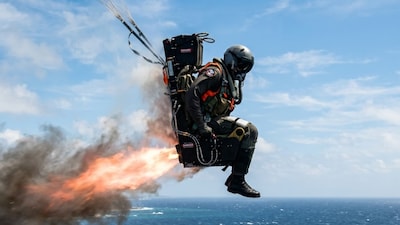
Unconfirmed reports have emerged regarding the alleged ejection of a US fighter pilot ejected in Iran, specifically within the southwest region of the country. Even as these claims have circulated via Iranian media channels, they have not been officially verified by the United States government or corroborated in current official military briefings.
According to reports attributed to Iranian media, a US aircraft incident occurred in southwest Iran, leading to the pilot exiting the aircraft. These reports suggest a chaotic scene on the ground, with local Iranian channels reportedly broadcasting appeals to the public. These broadcasts allegedly included announcements offering “valuable rewards” for citizens who could capture “enemy pilots” and hand them over to police or military forces.
Further claims indicate that some on-screen messaging went further, urging the public to use lethal force if they encountered the pilots. Reports also suggest that crowds of civilians in private vehicles rushed toward the site of the crash in an attempt to locate the pilot, with the Islamic Republic of Iran Broadcasting (IRIB) reportedly posting about the surge of citizens toward the accident location on the social media platform X.
The Role of State Media in Iran
The reports of the incident were heavily amplified by the Islamic Republic of Iran Broadcasting (IRIB), also known as Seda o Sima. As the state-controlled media corporation, the IRIB holds a complete monopoly over domestic radio and television services within Iran. The organization is one of the largest media entities in the Asia-Pacific region and operates under the direct authority of the supreme leader, who appoints its head.
The IRIB’s influence is central to the Iranian government’s communication strategy. Headquartered in Jaame Jam, Tehran, the organization manages all national broadcasting, ensuring that state narratives are delivered uniformly across the country. In times of military tension, the IRIB often serves as the primary vehicle for official government declarations and public mobilization efforts.
Broader Context of US-Iran Conflict
These unconfirmed reports surface amidst a period of intense volatility and active conflict between the United States and Iran. Recent AP News coverage on the Iran war highlights a complex military landscape, with U.S. President Donald Trump stating that American military objectives in Iran are “nearing completion.”
The regional tension has escalated significantly, characterized by several key developments:
- Troop Movements: Thousands of additional US troops have been deployed to the Middle East to bolster regional security and support military operations.
- Drone Warfare: The conflict has seen a surge in unmanned aerial activity, including reports of Iranian drone attacks causing smoke plumes at Kuwait Airport.
- Strategic Friction: Tensions remain high over the security of the Strait of Hormuz, a critical global oil transit point, which has remained a flashpoint for US and Iranian naval interactions.
- Economic Impact: The European Union has warned that global oil and gas prices may not return to normal immediately, even if the current conflict concludes.
The backdrop of this “Iran war” explains the high sensitivity surrounding any reports of downed aircraft or captured personnel. The conflict has already shaken global financial markets and prompted calls for dialogue from international figures, including Pope Leo XIV, who has urged for an end to the hostilities.
What So for Regional Stability
If the reports of a captured US pilot are eventually confirmed, it could significantly escalate the current conflict. The capture of military personnel often leads to diplomatic stalemates and increased military pressure. However, until the US Department of Defense or a verified international news agency provides confirmation, the incident remains a claim primarily driven by Iranian state-aligned sources.
The call for civilians to “shoot” or “capture” pilots reflects the high state of mobilization within Iran. Such directives, if verified, indicate a strategy of integrating civilian populations into the security apparatus during active hostilities.
| Key Factor | Current Status / Reported Detail |
|---|---|
| US Military Objectives | Reportedly “nearing completion” per President Trump |
| Troop Presence | Thousands of additional US troops heading to the Middle East |
| Iranian Activity | Drone attacks reported in Kuwait; strikes against Israel |
| Media Control | IRIB maintains monopoly on domestic Iranian broadcasting |
As of now, there is no official confirmation regarding the status of any US pilot in southwest Iran. The international community continues to monitor the region for signs of further escalation or potential diplomatic openings to resolve the conflict.
We will continue to track this story as more verified information becomes available. The next critical checkpoint will be any official statement from the US Pentagon or the US Embassy regarding personnel accountability in the region.
Do you believe diplomatic channels can still resolve the US-Iran conflict, or is military escalation inevitable? Share your thoughts in the comments below.