
Trump Announces Strikes in Nigeria Targeting Militants,Sparks Debate Over Religious Conflict
Former President Donald Trump announced on his Truth Social platform that the U.S. military conducted strikes against what he termed “Terrorist Scum” in Nigeria, alleging they were responsible for escalating violence against Christians. The strikes, he claimed, were a direct response to his prior warnings to these groups. This action has ignited a complex debate surrounding the nature of the conflict in Nigeria and the motivations behind the military intervention.
HereS a breakdown of what we certainly know:
* Trump’s Statement: The former president characterized the targeted groups as actively “targeting and viciously killing, primarily, innocent Christians,” at levels unseen in decades. He stated the strikes were a fulfillment of a promise to retaliate against continued violence.
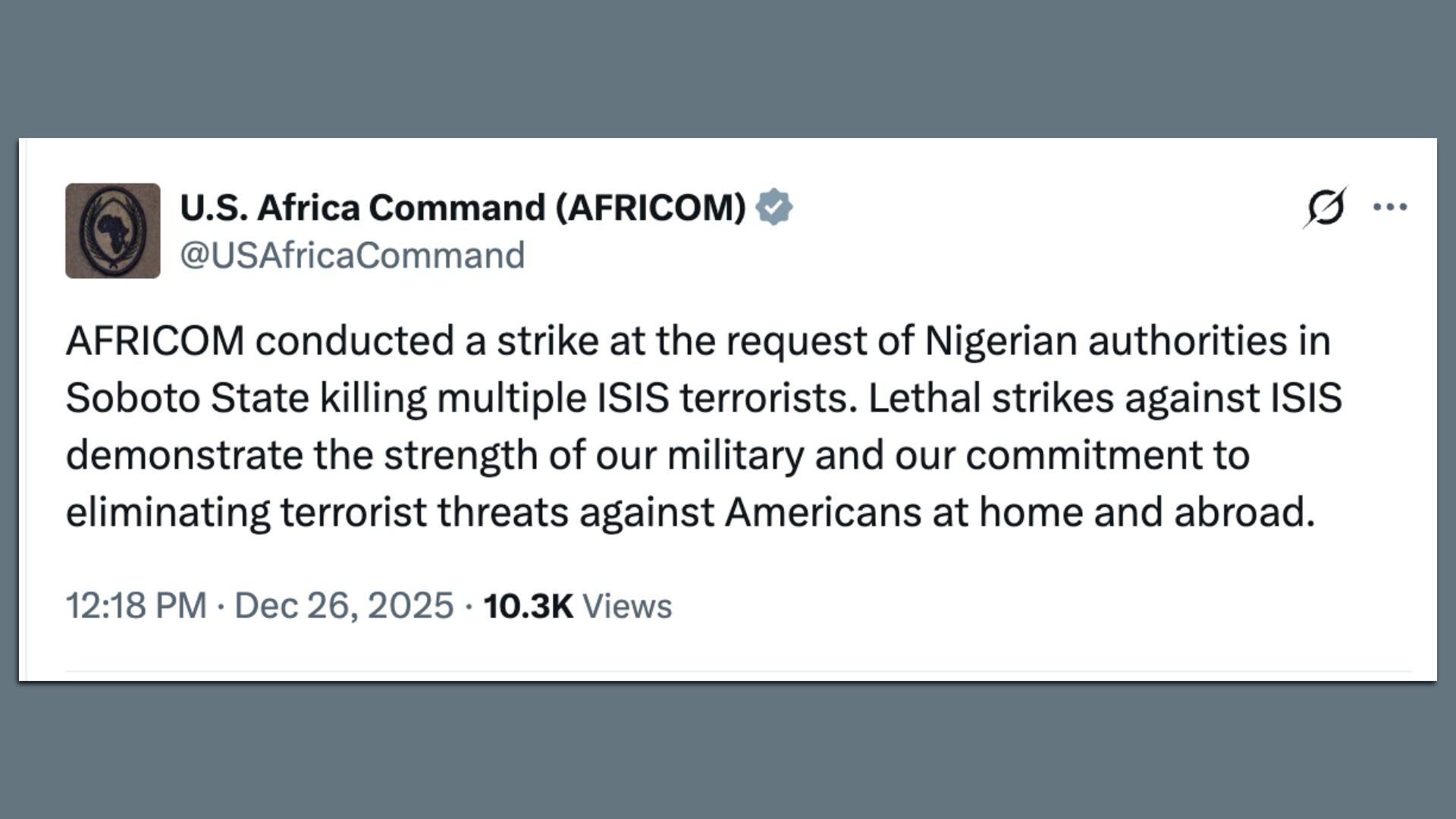
* Military Confirmation & Retraction: The Department of Defense confirmed “numerous perfect strikes,” highlighting U.S. capabilities. However, an initial post by U.S. Africa Command (AFRICOM) on X (formerly Twitter) stating the strikes were conducted “at the request of Nigerian authorities” was later deleted.
* Hegseth’s Commentary: Pete Hegseth, a frequent Trump ally, indicated on X that the operation benefited from “Nigerian government support & cooperation,” adding cryptically, ”More to come…”
* A Christmas Day operation: The timing of the strikes, occurring on Christmas Day, has drawn attention and commentary.
The Complex Reality of Violence in Nigeria
While Trump framed the situation as a targeted attack on those persecuting Christians, the reality on the ground is far more nuanced. understanding the religious and ethnic dynamics in Nigeria is crucial to grasping the full picture.
* Religious Demographics: Pew Research Center estimates Nigeria’s population of over 220 million is roughly 56% Muslim and 44% Christian. However, these figures are subject to debate, and the country is officially secular.
* Widespread Violence: Both Christian and Muslim communities have been victims of targeted attacks across Nigeria. A 2024 report from the U.S. Commission on International Religious Freedom details this widespread violence.
* Beyond Religious Conflict: Analysts emphasize that the conflict isn’t simply a religious war. It’s a complex web of factors, including:
* Boko Haram & ISWAP: These extremist groups have launched deadly attacks, but their victims aren’t exclusively Christian. Many Muslims have also been targeted.
* Farmer-Herder Clashes: A critically important portion of the violence stems from long-standing disputes over land between largely Christian farmers and predominantly Muslim herders.
* Ethnic Rivalries & Criminality: Underlying ethnic tensions and broader criminal activity further fuel the instability.
What Does This Mean for You?
This situation highlights the dangers of oversimplifying complex geopolitical issues. It’s easy to fall into narratives that reinforce existing biases, but a thorough understanding requires acknowledging multiple perspectives.
You should be aware that:
* Information is Evolving: The situation is fluid, and details are still emerging.
* Context Matters: Framing the conflict solely as religious persecution ignores the broader socio-economic and political factors at play.
* U.S. Involvement Raises Questions: The nature of U.S. involvement, particularly the initial claim of acting at Nigeria’s request and subsequent deletion of the AFRICOM post, warrants further scrutiny.
as a seasoned observer of international affairs, I can tell you that interventions like these frequently enough have unintended consequences. While addressing terrorism is a legitimate concern, it’s vital to proceed with caution and a deep understanding of the local context. The long-term stability of Nigeria depends on addressing the root causes of the conflict, not simply reacting to its symptoms.
Further Resources:
* Pew Research Center: Religion in Nigeria
* [U.S. Commission on International Religious Freedom: Nigeria Country Update](https://www.uscirf.gov/sites/default/files/2024-08/2024%20Nigeria%

![Boost Android Performance: Essential Settings & Hidden Features [Video]](https://i0.wp.com/9to5google.com/wp-content/uploads/sites/4/2025/12/Google-Pixel-10-Pro-XL-in-hand.jpg?resize=1200%2C628&quality=82&strip=all&ssl=1 "Boost Android Performance: Essential Settings & Hidden Features [Video]")



