
Counter-Space Warfare: How the US Military is Preparing too Jam Chinese and Russian Satellites
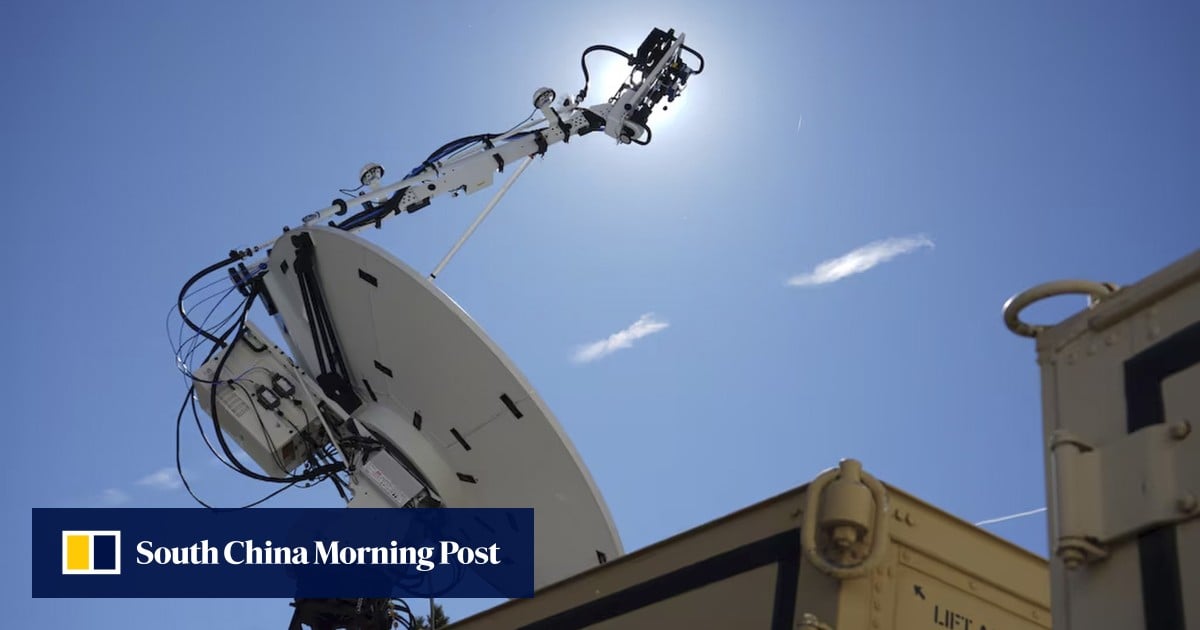
The landscape of modern warfare is rapidly expanding beyond traditional domains to include the vast expanse of space.The US military is actively developing and deploying advanced capabilities to protect its assets and maintain a strategic advantage in this critical arena. Recent developments reveal the imminent fielding of two new systems – Meadowlands and Remote Sensing Terminals - designed to disrupt the intelligence, surveillance, and reconnaissance (ISR) capabilities of potential adversaries, especially China and Russia. This builds upon an existing ”Counter Communications System” jammer, bringing the total to three dedicated counter-space capabilities for the Pentagon.
The Growing Threat from Space
For years, the US has acknowledged the increasing sophistication of China’s space-based capabilities.As of July, China operates over 1,189 satellites. A significant portion – over 510 – are dedicated to ISR, equipped with a diverse array of sensors including optical, multispectral, radar, and radio frequency technologies.
These satellites provide China with the ability to track and monitor US military assets, including:
* Aircraft carriers
* expeditionary forces
* Air wings
This intelligence gathering poses a substantial threat to US operational security and necessitates a robust counter-space strategy.Russia also maintains a significant satellite constellation, presenting a parallel challenge. The US military’s response isn’t about initiating conflict in space, but ensuring continued access and freedom of operation for its own vital satellite systems.
Introducing Meadowlands and Remote Sensing Terminals
The new systems represent a significant leap forward in US counter-space technology.Unlike the larger, less mobile “Counter Communications System” deployed in 2020, Meadowlands and Remote Sensing Terminals are designed for greater flexibility and global reach.
Here’s a breakdown of each system:
* Meadowlands: Developed by L3Harris Technologies, Meadowlands is a mobile, ground-based system intended to temporarily disrupt enemy satellite communications. After facing several technical hurdles and delays, it’s currently undergoing final testing, including live-fire exercises and tactical growth, with expected fielding within the current fiscal year.
* remote Sensing Terminals: Details surrounding these terminals are less publicly available,but they are understood to complement Meadowlands by targeting different aspects of enemy satellite operations. They likely focus on disrupting the data downlink capabilities of adversary satellites.
These systems will be strategically dispersed worldwide and, in some cases, operated remotely, allowing for a rapid and adaptable response to evolving threats.
How Do These Systems Work? (Temporally Jamming Explained)
“Temporally jamming” refers to disrupting the timing signals that satellites rely on for accurate positioning, navigation, and data transmission. By interfering with these signals, the US military can effectively ”blind” or degrade the functionality of enemy satellites, hindering their ability to provide reliable intelligence.
It’s vital to understand that this isn’t about destroying satellites.The goal is temporary disruption,creating windows of prospect for US forces to operate with reduced risk of detection or interference. This approach aligns with international norms and aims to avoid escalating conflict in space.
Implications for Global Security
The deployment of these counter-space capabilities signals a clear message to China and Russia: the US is prepared to defend its interests in space. This development is likely to accelerate the ongoing arms race in space, as both sides seek to develop more resilient and refined satellite systems.
However, it also creates an opportunity for dialog and the establishment of clear rules of engagement in space. A stable and predictable space environment is crucial for global security and economic prosperity.
Evergreen Section: The Future of Space Warfare
The evolution of space warfare is inextricably linked to advancements in technology. Expect to see continued development in areas like:
* Directed Energy Weapons: Lasers and high-powered microwaves capable of disabling satellite sensors.
* On-Orbit Servicing, Inspection, and Protection (OSIP): Technologies that allow for the repair, refueling, or even relocation of satellites. These could also be adapted for offensive purposes.
* Artificial Intelligence (AI): AI-powered systems for autonomous satellite operation, threat detection, and countermeasure deployment.
* Space-Based Sensors: Increased investment in sensors capable of tracking and characterizing adversary satellite activity.
The future of space warfare will be defined by a constant cycle of innovation and adaptation. Maintaining a technological edge will be paramount



![Best Online Ticket Sites: Find Deals & Avoid Scams [2024]](https://i0.wp.com/www.rollingstone.com/wp-content/uploads/2025/02/the-inferno-is-still.jpg?resize=330%2C220&ssl=1 "Best Online Ticket Sites: Find Deals & Avoid Scams [2024]")


![Best Online Ticket Sites: Find Deals & Avoid Scams [2024]](https://i0.wp.com/www.rollingstone.com/wp-content/uploads/2025/02/the-inferno-is-still.jpg?resize=150%2C100&ssl=1 "Best Online Ticket Sites: Find Deals & Avoid Scams [2024]")
