
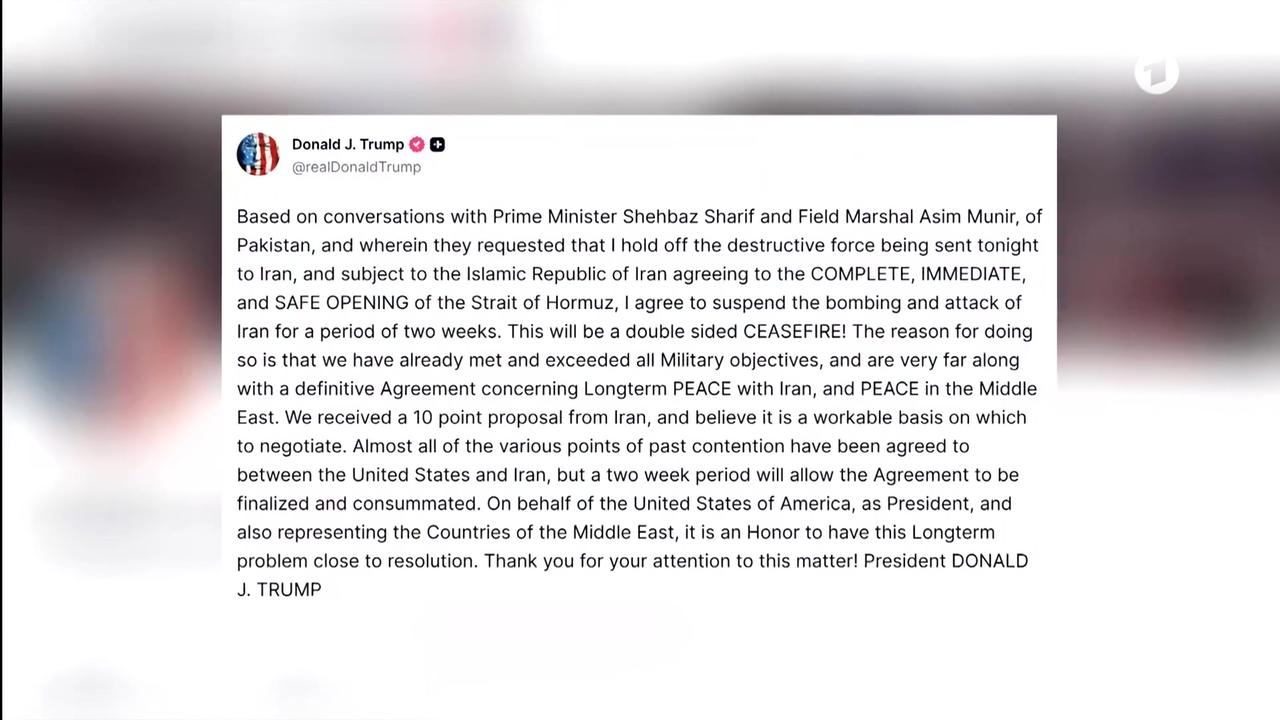
In a dramatic diplomatic pivot that has sent ripples through global energy markets and geopolitical corridors, the United States and Iran have reached an agreement for an immediate, two-week ceasefire. The announcement comes just moments before the expiration of a stern ultimatum delivered by U.S. President Donald Trump, who had threatened severe military action against Iranian infrastructure.
The agreement, characterized as a mutual cessation of hostilities, centers on a critical strategic exchange: the reopening of the Strait of Hormuz in return for the suspension of U.S. Aerial bombardments. This sudden de-escalation follows intense behind-the-scenes mediation and comes at a time when the threat of a full-scale regional war appeared imminent.
The ceasefire, which takes effect immediately, is designed to provide a narrow window for diplomatic engagement. Although the world breathes a collective sigh of relief, the stability of the truce remains fragile, with conflicting reports regarding its geographic scope and the specific conditions required for its maintenance.
The Terms of the De-escalation: Hormuz and Infrastructure
The core of the agreement is a “quid pro quo” involving one of the world’s most vital maritime chokepoints. According to reports, the Iranian government has agreed to open the Strait of Hormuz to shipping traffic, although Teheran has indicated this will be subject to certain restrictions. The Strait is essential for the global oil and gas market and its closure had served as a primary catalyst for the escalating tension as reported on April 8, 2026.
In exchange, President Donald Trump announced via his Truth Social platform that he is prepared to suspend planned bombings and attacks on Iranian territory. Prior to this agreement, the U.S. Administration had threatened to target the Iranian energy sector, including power plants and critical infrastructure such as bridges, should Teheran fail to open the strait or agree to a broader deal. The stakes had reached a fever pitch shortly before the deadline, with Trump warning that “a whole civilization will go down tonight, never to return” according to reports from the night of the agreement.
For the ceasefire to hold, the U.S. Has stipulated that Iran must immediately cease all attacks directed at the United States, Israel, and other nations within the region. The Iranian National Security Council has officially approved the truce, and Iran’s Foreign Minister, Abbas Araghtschi, confirmed that shipping traffic in the strait would be permitted once again.
Pakistan’s Role as Mediator and the Path to Islamabad
The breakthrough is largely attributed to the diplomatic intervention of Pakistan. Prime Minister Shehbaz Sharif played a pivotal role in the negotiations, personally requesting that President Trump refrain from the threatened strikes on Iranian power plants and infrastructure. Following this mediation, the ceasefire was announced to take effect immediately.
The diplomatic momentum is expected to shift to Pakistan’s capital, where delegations from both Washington and Teheran have been invited to meet this coming Friday in Islamabad. These talks aim to negotiate a final agreement to permanently resolve the conflict. U.S. Officials have expressed interest in a ten-point negotiation plan proposed by Iran, which Trump described as providing a “practicable basis for negotiations” per verified reports.
Key Takeaways of the USA-Iran Agreement
- Duration: A two-week ceasefire starting immediately (April 8, 2026).
- U.S. Commitment: Suspension of bombings and attacks on Iranian energy sectors and bridges.
- Iranian Commitment: Opening the Strait of Hormuz to shipping and ceasing attacks on the U.S., Israel, and regional allies.
- Mediation: Facilitated by Pakistani Prime Minister Shehbaz Sharif.
- Next Step: High-level diplomatic talks scheduled for Friday in Islamabad, Pakistan.
Regional Discrepancies: The Lebanon Conflict
Despite the general agreement, a significant point of contention has emerged regarding the geographic reach of the ceasefire. Prime Minister Shehbaz Sharif stated on X (formerly Twitter) that the truce extends to Lebanon and other regional flashpoints. However, this claim has been explicitly contradicted by the Israeli government.
The office of Israeli Prime Minister Benjamin Netanyahu issued a statement clarifying that “the two-week ceasefire does not apply to Lebanon.” While Israel has expressed support for President Trump’s decision to suspend direct attacks on Iran, it appears the conflict in Lebanon remains active and outside the scope of this specific agreement as confirmed by official statements.
Global Market Reaction and Public Sentiment
The announcement triggered an immediate and positive reaction in global financial markets. Because the Strait of Hormuz is so critical to the flow of global energy, the threat of its closure had driven oil prices upward. Following the news of the ceasefire, oil prices dropped significantly, and stock markets in Asia saw a sharp increase as the immediate risk of a wider war subsided per market data reports.

In Teheran, the news was met with public celebration. Thousands of people gathered at the city’s Revolution Square in the early hours of Wednesday morning. Reports from local outlets, including SNN TV, described scenes of cheering government supporters who viewed the ceasefire as a victory, with some claiming that President Trump had succumbed to Iranian demands.
On the international stage, the United Nations has urged both parties to strictly adhere to the pause. A spokesperson for UN Secretary-General António Guterres stated that the ceasefire is a necessary step to “pave the way for a lasting and comprehensive peace in the region.”
Timeline of the De-escalation (April 2026)
| Timeframe | Event | Key Action |
|---|---|---|
| Pre-April 8 | U.S. Ultimatum | Trump threatens strikes on Iranian energy sector and bridges. |
| April 8 (Early AM) | Pakistani Intervention | PM Shehbaz Sharif requests suspension of attacks. |
| April 8 (Before 2:00 AM CET) | Ceasefire Announcement | Mutual agreement for a 14-day pause; Hormuz to reopen. |
| April 8 (Morning) | Market Shift | Oil prices drop; Asian stock markets rally. |
| Upcoming Friday | Islamabad Summit | Delegations meet to discuss a permanent peace agreement. |
As the world watches, the focus now shifts to the upcoming diplomatic summit in Pakistan. The success of the Friday meetings in Islamabad will likely determine whether this two-week window leads to a sustainable peace or serves as a mere prelude to renewed hostilities. The primary objective for the delegations will be to refine the Iranian ten-point plan into a formal treaty that addresses the core security and economic concerns of both nations.
The next confirmed checkpoint for this developing story is the arrival of the U.S. And Iranian delegations in Islamabad this Friday for formal negotiations.
We invite our readers to share their thoughts on this development in the comments below. Do you believe a two-week window is sufficient for a lasting peace? Share this article to keep your network informed.