
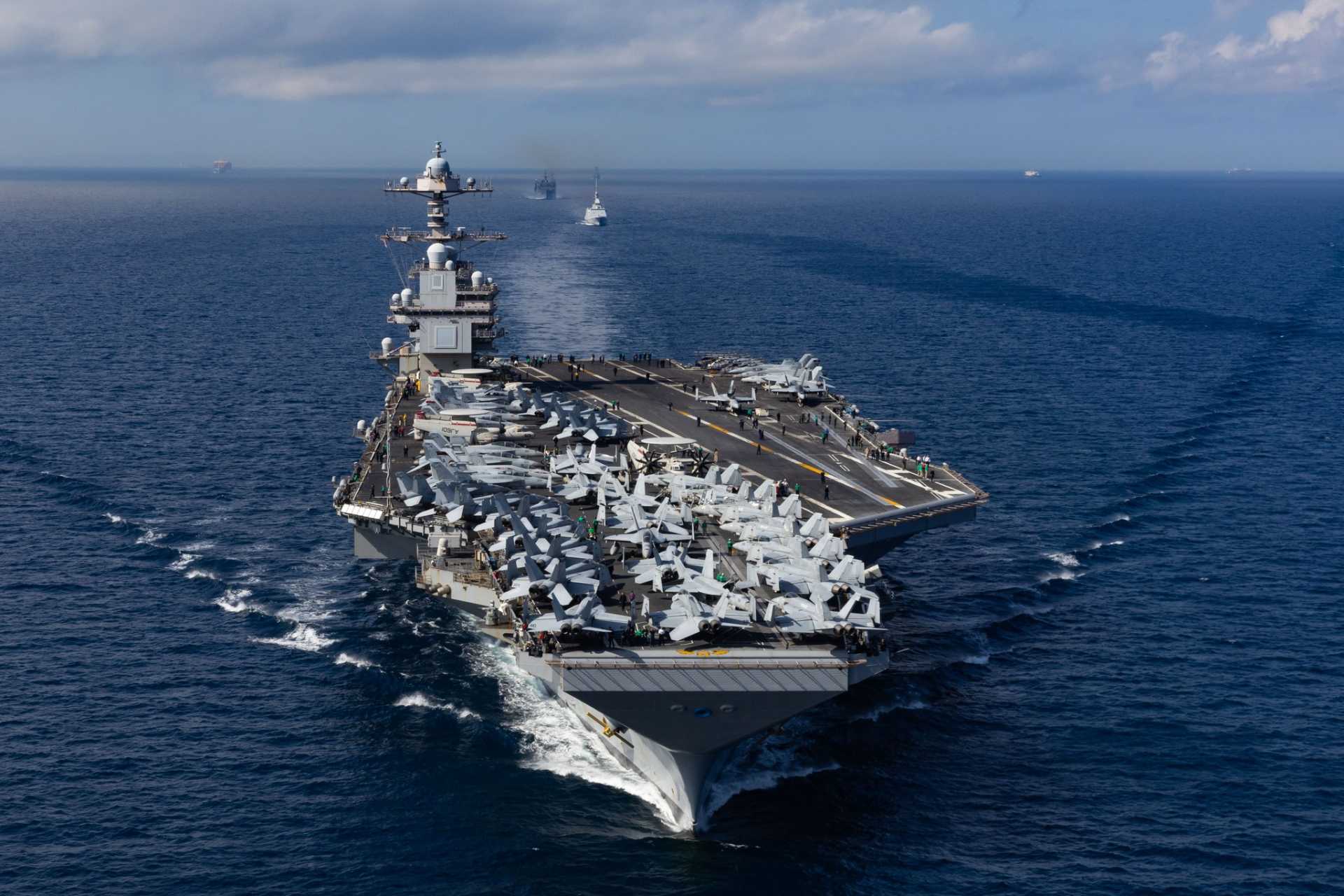
Crete, Greece – The USS Gerald R. Ford, the United States Navy’s newest and most advanced aircraft carrier, is poised to rejoin operations in the Middle East following a period of repairs in Greece and Croatia. The carrier’s return comes as tensions remain high in the region amid ongoing conflict involving Iran and its proxies, and as the U.S. Continues to demonstrate its commitment to regional security. The deployment of the Ford represents a significant show of force and a critical component of the U.S. Naval presence in a volatile geopolitical landscape.
The carrier’s recent journey has been marked by an unexpected interruption. Earlier this month, a fire broke out aboard the USS Gerald R. Ford while it was operating in the Mediterranean Sea. While the exact cause of the fire remains under investigation, it temporarily halted flight operations for two days, according to reports. The incident prompted a precautionary halt to sorties and necessitated repairs, initially conducted in Greece before further work was completed in Croatia. The Navy has not publicly detailed the extent of the damage, but officials have confirmed that the fire was contained and no serious injuries were reported.
Repairs and Return to Service
Following the fire, the USS Gerald R. Ford first arrived in Souda Bay, Crete, Greece for initial assessments and repairs. The Hill reported on March 29, 2026, that the carrier had reached Crete. Photos from the Agence France-Presse (AFP) documented the ship’s arrival and the commencement of repair work. After completing the initial phase of repairs in Greece, the Ford then proceeded to Croatia for additional work and a period of liberty for the crew. USNI News confirmed the carrier’s departure from Croatia on April 2, 2026, after a period of rest and recuperation for the sailors onboard.

The repairs undertaken in both Greece and Croatia were focused on restoring the ship’s full operational capabilities. While specific details regarding the nature of the repairs have not been released, it is understood that they involved addressing damage caused by the fire and ensuring all systems were functioning optimally. The Navy prioritized a swift but thorough repair process to minimize any disruption to the carrier’s deployment schedule. The successful completion of these repairs underscores the Navy’s ability to maintain and rapidly restore its critical assets even in challenging circumstances.
Strategic Implications in the Middle East
The return of the USS Gerald R. Ford to the Middle East is a significant development in the context of escalating tensions with Iran. With the U.S. And Israel continuing offensive operations against Iran, the presence of a U.S. Aircraft carrier serves as a powerful deterrent and a demonstration of resolve. Currently, with the Ford’s return, the Navy maintains one aircraft carrier in the Middle East, according to USNI News. The carrier’s air wing provides a crucial capability for conducting air strikes, providing air defense, and supporting ground forces, if required.
The USS Gerald R. Ford is a formidable warship, representing the latest generation of U.S. Aircraft carriers. Its advanced technologies, including its electromagnetic aircraft launch system (EMALS) and advanced arresting gear (AAG), significantly enhance its operational efficiency and capabilities. The carrier can carry over 75 aircraft, including fighter jets, attack aircraft, and helicopters, providing a versatile and potent air power platform. Its presence in the region sends a clear message to Iran and its allies regarding the U.S.’s commitment to maintaining stability and protecting its interests.
Potential for Prolonged Deployment
The ongoing situation in the Middle East suggests that the USS Gerald R. Ford could face a prolonged deployment. WAVY.com reported on March 29, 2026, that the carrier could potentially be deployed for a year or more, given the current geopolitical climate. This extended deployment would require significant logistical support and a sustained commitment from the Navy to maintain the carrier’s operational readiness. The possibility of a year-long deployment as well highlights the seriousness of the situation and the U.S.’s determination to address the challenges posed by Iran’s actions.
The deployment also comes as thousands of Marines and sailors arrive in the Mideast, as reported by Stars and Stripes. This influx of personnel further reinforces the U.S. Military presence in the region and demonstrates a broader commitment to bolstering security and deterring aggression. The combined presence of the USS Gerald R. Ford and these additional forces underscores the U.S.’s multifaceted approach to addressing the complex challenges in the Middle East.
Impact on Regional Dynamics
The return of the USS Gerald R. Ford is likely to have a significant impact on regional dynamics. Iran has consistently viewed the U.S. Naval presence in the Persian Gulf as a provocation, and the carrier’s return could escalate tensions further. However, the U.S. Maintains that its presence is solely intended to deter aggression and protect its allies in the region. The carrier’s presence also serves as a reassurance to countries like Israel and Saudi Arabia, which rely on U.S. Security guarantees.
The situation remains fluid and unpredictable. The potential for miscalculation or escalation is high, and the U.S. Navy is prepared to respond to any threats to its forces or its allies. The USS Gerald R. Ford’s return to the Middle East is a clear signal of the U.S.’s commitment to maintaining stability and protecting its interests in a critical region of the world. The carrier’s advanced capabilities and the dedication of its crew will undoubtedly play a vital role in shaping the future of the region.
Key Takeaways
- The USS Gerald R. Ford has completed repairs in Greece and Croatia following a fire onboard.
- The carrier is returning to the Middle East amid ongoing tensions with Iran.
- The deployment of the Ford represents a significant show of force and a commitment to regional security.
- The carrier could potentially be deployed for a year or more, given the current geopolitical climate.
- Thousands of Marines and sailors are also arriving in the Mideast to bolster U.S. Military presence.
The Navy is expected to provide further updates on the USS Gerald R. Ford’s operational schedule and activities in the coming days. Continued monitoring of the situation in the Middle East is crucial, as the region remains highly volatile. We encourage readers to share their thoughts and perspectives on this important development in the comments section below.