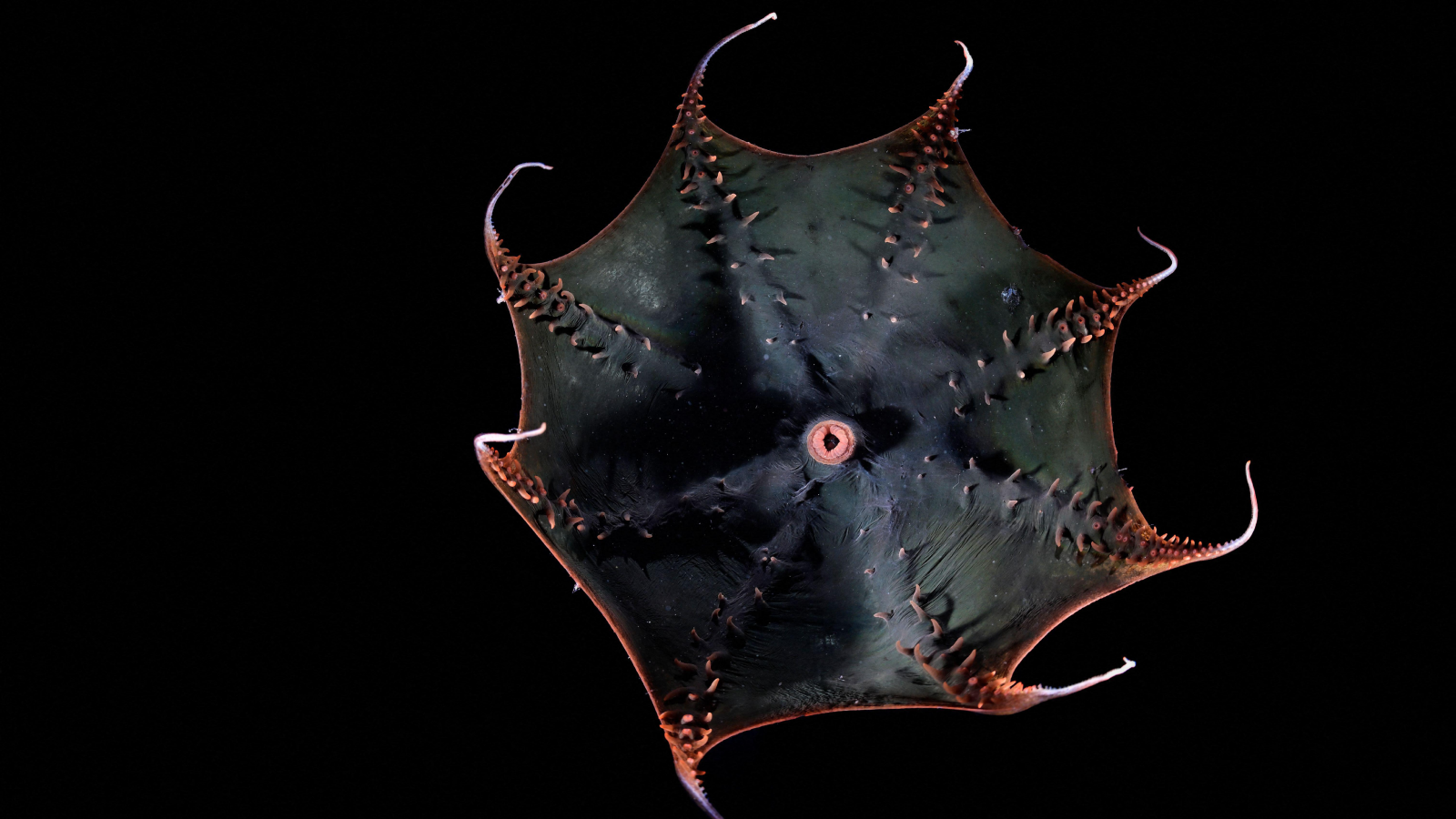
The Vampire Squid’s Ancient Genome Reveals Evolutionary Secrets of the Deep
The enigmatic vampire squid, a creature often misunderstood, is now yielding its genetic secrets. Recent research has fully sequenced the genome of Vampyroteuthis infernalis, revealing a surprising link to the cephalopod’s ancient past and offering valuable insights into the evolution of octopuses and squids. This breakthrough provides a crucial piece in understanding the complex history of these smart invertebrates.
A Genome Unlike Any Other
Researchers discovered the vampire squid possesses a genome considerably larger than that of most other cephalopods - exceeding even the human genome in size. Interestingly,while modern octopuses exhibit considerable chromosomal shuffling,the vampire squid’s genome retains a remarkably squid-like structure. Essentially, you’re looking at an octopod that genetically resembles an ancient squid, a living fossil of the deep sea.
From Misclassification to Unique Order
The vampire squid’s story is one of scientific re-evaluation.Initially discovered in 1903,it was mistakenly classified as a cirrate octopus due to the webbing connecting its arms. Though, by the 1950s, scientists recognized its unique characteristics and established it as a distinct order, Vampyromorphida. This name aptly reflects its appearance, resembling a creature cloaked in darkness.
Why This discovery matters
This fully sequenced genome is a boon for cephalopod scientists.As Bruce Robison, a senior scientist at the Monterey Bay Aquarium Research Institute (MBARI), explains, it’s “nice to have resolved” the reasons behind the vampire squid’s retention of ancestral traits. This finding helps clarify its evolutionary position and provides a foundation for future research.
The Challenges of Studying a Deep-Sea Enigma
Studying vampire squids is notoriously tough. They inhabit a challenging deep-sea surroundings and are solitary, rare creatures. Furthermore, they don’t thrive in captivity, making direct observation and experimentation extremely limited. as robison points out, the idea of easily finding one in the deep ocean is a misconception.
Unlocking the Secrets of the Deep
The vampire squid’s genome is more than just a scientific achievement; it’s a key to unlocking the evolutionary puzzle of cephalopods. Many researchers believe these creatures hold vital clues to understanding the broader history of marine invertebrates. they are fascinating animals, and their unique biology suggests they’ve been quietly guarding secrets for millennia.
here’s what makes the vampire squid genome so significant:
* Large Genome Size: exceeds even the human genome, indicating genetic complexity.
* Ancient Genetic Structure: Retains squid-like chromosomal arrangement, offering a glimpse into the past.
* Unique Evolutionary Position: Confirms its distinct order,Vampyromorphida,separate from octopuses and squids.
* Difficult to Study: Its deep-sea habitat and elusive nature make genomic research particularly valuable.
This research underscores the importance of continued exploration and genomic studies of even the most elusive creatures. The vampire squid, onc a mystery, is now offering invaluable insights into the evolution of life on Earth.