
Venezuela Approves Historic Amnesty Law Amidst Political Transition
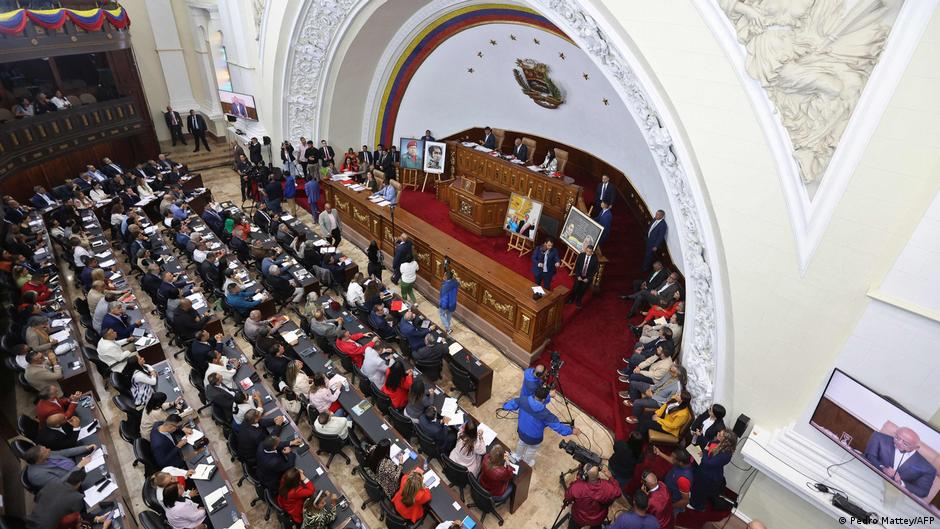
Caracas – In a move hailed by some as a crucial step towards reconciliation and condemned by others as a politically motivated gesture, Venezuela’s National Assembly approved a sweeping amnesty law on Thursday, February 19, 2026. The legislation, swiftly promulgated by interim President Delcy Rodríguez, aims to secure the release of hundreds of political prisoners held over 27 years of Chavismo. This development unfolds against a backdrop of extraordinary circumstances – namely, the recent capture of President Nicolás Maduro and his wife, Cilia Flores, by U.S. Forces in January, leading to Rodríguez’s assumption of the interim presidency. The approval of the amnesty law represents a significant shift in Venezuelan politics, occurring under considerable pressure from Washington and following a period of initial prisoner releases.
The law’s passage, unanimous within the National Assembly, is intended to address a long-standing demand from opposition groups and international human rights organizations for the release of individuals imprisoned on political charges. Rodríguez, speaking from the presidential palace in Caracas, emphasized the require for forgiveness, stating, “Hay que saber pedir perdón y hay que saber también recibir perdón” – “One must know how to ask for forgiveness and one must also know how to receive it.” This sentiment, however, is viewed with skepticism by some who question the sincerity of the gesture given the ongoing political turmoil and the circumstances surrounding Maduro’s removal. Prior to the formal approval of the amnesty, Rodríguez initiated a process of releasing prisoners, with 448 individuals already granted conditional freedom, according to reports. However, concerns remain regarding the fate of the remaining 644 individuals still detained, as reported by the non-governmental organization Foro Penal.
The approval of the law was not without internal debate. Jorge Rodríguez, President of the National Assembly and brother of Delcy Rodríguez, acknowledged the “lamentable and catastrophic” events that led to this moment, expressing hope for “brotherhood, unity, and peace” within the Republic. The legislative session itself was delayed by two and a half hours as lawmakers negotiated the final terms of the bill. A key sticking point, Article 7, which had previously stalled the debate on February 12th, was ultimately modified and approved unanimously. This article clarifies the scope of the amnesty, extending it to individuals accused or convicted of crimes committed during the 27 years of Chavismo, provided they either have legal standing or submit to the jurisdiction of the courts – institutions often criticized for their allegiance to the ruling party.
Scope and Exclusions of the Amnesty
The amnesty law, as approved, aims to cover a broad range of offenses stemming from key events in Venezuelan history, including the 2002 coup attempt against Hugo Chávez and the 2002-2003 oil strike. It also encompasses actions related to protests surrounding the contested 2024 reelection of Nicolás Maduro. The legislation allows individuals in exile to appoint a legal representative to submit an amnesty request on their behalf. According to the text of the law, those requesting amnesty will not be subject to further detention for the covered offenses, but will be required to appear before a competent tribunal to finalize the process. Delcy Rodríguez has also called for a comprehensive reform of the Venezuelan judicial system, signaling a potential broader effort to address systemic issues within the country’s legal framework.
However, the law is not without its limitations. Crucially, it explicitly excludes individuals accused of human rights violations or crimes against humanity, adhering to the stipulations of the Venezuelan Constitution. It excludes those involved in “actions armed or of force against the people, the sovereignty and the integrity territorial of the Bolivarian Republic of Venezuela by States, corporations or foreign persons.” This exclusion is particularly relevant given the recent U.S. Military intervention in Venezuela, which led to Maduro’s capture, and allegations of foreign involvement in attempts to destabilize the country. Opposition leaders, such as María Corina Machado and Leopoldo López, have previously been accused of advocating for foreign intervention, and a special commission established under the law will individually assess such cases.
Machado, currently residing in the United States after a period in hiding within Venezuela, and López, who has been in exile in Spain since 2020, may face scrutiny under these provisions. Independent experts from the United Nations have emphasized that any amnesty should apply to all victims of illegal prosecution and be integrated into a comprehensive transitional justice process. The complexities surrounding these exclusions highlight the delicate balance Rodríguez is attempting to strike between addressing past grievances and maintaining national security.
A Hunger Strike Ends with Legislative Approval
The passage of the amnesty law followed weeks of mounting pressure from families of political prisoners, many of whom have been camping outside prisons since January 8th, when the initial prisoner releases began. A hunger strike initiated on February 14th by a group of ten women, reduced to a single participant by the time of the vote, concluded with the law’s approval. Even as the 448 individuals released thus far have been granted conditional freedom, activists emphasize the need for a full amnesty, guaranteeing complete liberation. The families’ sustained protests and the hunger strike underscore the deep-seated desire for justice and reconciliation within Venezuelan society.
The political context surrounding the amnesty law is undeniably complex. Delcy Rodríguez’s assumption of the presidency occurred after a U.S. Military operation resulted in the capture of Nicolás Maduro and his wife, Cilia Flores, who are now facing drug trafficking charges in the United States. Rodríguez has since engaged in negotiations with U.S. Officials, including CIA Director Jon Ratcliffe, and secured an agreement for the U.S. To purchase up to 50 million barrels of Venezuelan oil. This pragmatic approach, coupled with the amnesty law, suggests a strategy aimed at stabilizing the country and fostering a new relationship with the United States, even while denouncing the “kidnapping” of Maduro and Flores.
Challenges and the Path Forward
The implementation of the amnesty law will undoubtedly face challenges. Concerns remain about the independence and impartiality of the Venezuelan judicial system, and the potential for selective application of the law. The exclusion of certain offenses, particularly those related to human rights violations, may also spark controversy and accusations of impunity. The law’s impact on the broader political landscape remains to be seen. Will it lead to genuine reconciliation and a return to democratic norms, or will it simply be a temporary measure designed to appease international pressure and consolidate Rodríguez’s power?
The coming months will be critical in determining the fate of Venezuela. The release of political prisoners is a positive step, but it is only one piece of a much larger puzzle. A comprehensive reform of the judicial system, as called for by Rodríguez, is essential to ensure the rule of law and protect human rights. Addressing the underlying economic and social issues that have fueled political instability will also be crucial. The international community, particularly the United States, will play a key role in supporting these efforts and ensuring that Venezuela remains on a path towards a more democratic and prosperous future.
The next key development to watch will be the publication of the amnesty law in the Official Gazette, which will trigger its formal implementation. Following this, the establishment of the special commission to review cases involving alleged foreign involvement will be a critical step. The world will be watching to spot whether this historic law truly delivers on its promise of justice and reconciliation for the Venezuelan people.
What are your thoughts on the Venezuelan amnesty law? Share your comments below and share this article with your network.


