
A Viking’s Smile: Newly Identified Portrait Reveals a Nobleman’s Flair
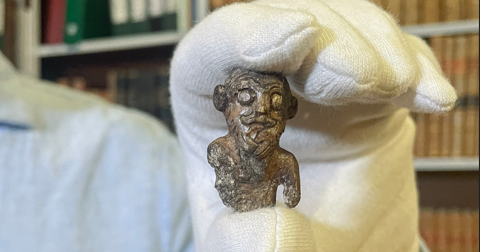
For centuries, it lay hidden within the archives of Denmark’s National Museum - a small, unassuming gaming piece.Now, this artifact is rewriting our understanding of Viking artistry adn offering a remarkably personal glimpse into the life of a high-status individual from over a thousand years ago. It’s being hailed as the first true ”portrait” of a Viking.
Curator Peter Pentz made the stunning discovery a few years ago, describing the moment he felt the figure’s gaze meet his own. This wasn’t just another depiction of a warrior or mythical creature; it was something profoundly different.
A Detailed Depiction of Viking Style
The figurine,originally unearthed in the Oslo fjord in Norway in 1796,showcases an remarkable level of detail rarely seen in Viking-era art. Consider these features:
A meticulously styled center parting extending to the crown.
Neatly trimmed hair at the neck.
A distinct side wave revealing the ear.
A prominent moustache paired with a long, braided goatee and well-defined sideburns.
These aren’t the hallmarks of a commoner. Beautiful, well-maintained hair during the Viking Age signified wealth and social standing. “A hair design like his,which is very neat…suggests this guy is at the top,” Pentz explains.
Could This Be King Harald Bluetooth?
The level of refinement has led to speculation that the figurine represents a figure of immense power. Some believe it could even be King Harald Bluetooth, the 10th-century ruler credited with uniting Denmark and norway.
The artwork, believed to be a piece from an ancient board game, stands in stark contrast to other Viking-era depictions. Coins and other artifacts typically feature simplified figures with minimal facial expression. Viking art is celebrated for its intricate animal motifs, but human portrayals are exceptionally rare.
A Human Face in a World of Symbols
“This is the first thing that comes close to a portrait from the Viking period that I’ve seen,” Pentz stated. what truly sets this piece apart is the expression captured in the carving.
Unlike the stoic or symbolic representations common in Viking art, this figure appears…alive. “He looks devilish, some people say,” Pentz notes, “But I think he looks more like he’s just been telling a joke or something like that. He’s smiling.”
This subtle yet powerful detail offers a captivating connection to a person who lived over a millennium ago. It reminds you that behind the legends of fierce warriors and seafaring explorers were individuals with personality, style, and perhaps, a good sense of humor.
This discovery isn’t just about a beautifully carved piece of wood; it’s about a newfound intimacy with our Viking ancestors. It’s a reminder that history isn’t just a collection of dates and battles, but a tapestry woven with the lives and stories of real people.





