Rachel Hall
2026-01-18 08:00:00
You don’t need to spend your weekends organising a face-off between bloodthirsty orcs and elves to have heard of the game Warhammer.
So popular is the fantasy game that its parent company Games Workshop is valued at a staggering £6bn and is almost ever-present on British high streets.
The fact a niche interest game invented by self-confessed geeks has become a huge global business is a story almost as unbelievable as those played out on its customers’ kitchen tables.
Games Workshop started as a mail order board games company run by three friends from their flat, but is now an FTSE 100 darling, which has grown 10.9% in revenues over the past six months thanks to soaring worldwide demand for its iconic plastic models.
At a time when the high street is struggling and online gaming is booming, what is the secret to the table top gaming company’s enduring appeal?
“Games Workshop was founded by gamers for gamers,” said Sir Ian Livingstone, who co-founded the company alongside Steve Jackson and John Peake in 1975 and sold his shares in 1991.
“Today, all types of gaming, both analogue and digital, have become mainstream in what has become a multi-billion-pound-a-year entertainment industry. There has been a cultural shift and it is now cool to be a gamer, especially since a lot of celebrities proudly admit they are gamers.”
He cited as examples Henry Cavill, the Superman star who has been voted sexiest man in the world, and is slated to star in the upcoming Amazon-produced Warhammer film and TV series. Other famous fans include Ed Sheeran and Fast & Furious actor Vin Diesel.
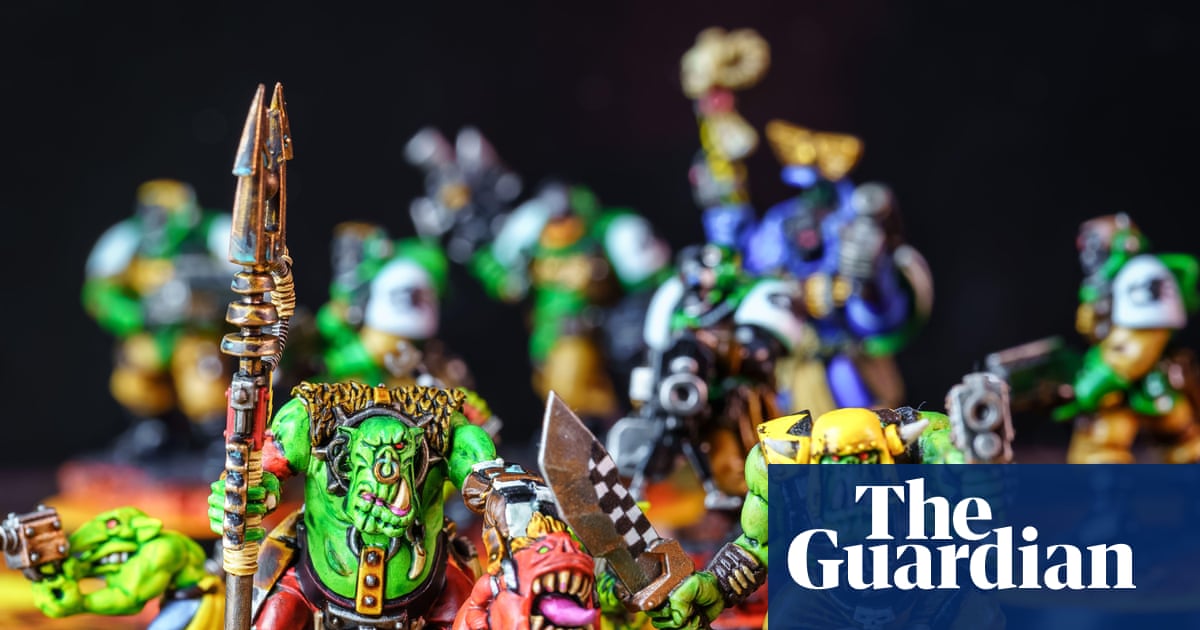
Warhammer collectors build large forces of miniature plastic gaming models, which can cost more than £100 each. Each model is made up of hundreds of pieces, which they glue together and paint. These are used to play out strategic clashes on a tabletop battlefield at home or at events, although some fans prefer to instead show off creative versions of the models.
Warhammer is a hobby, not just a game, encompassing painting detailed figures, reading and learning rules, immersive gameplay, storytelling and community, said Livingstone.
He added that Games Workshop was an experience rather than a shop, with expert staff offering advice to customers and handing out free models for visitors to paint, and gamers forging friendships with fellow gamers through games nights.
The company’s benefits are similarly multifaceted, including a very loyal customer base; high product quality; a vertically integrated business model where Games Workshop owns the entire supply chain; and decades of fiercely defended intellectual property. The company has also pledged to invest in artists and not AI
“It’s a gaming success story – commercially, it’s a very impressive thing, being able to placate shareholders and fans simultaneously. They’ve found a way to monetise geek culture,” said Douglas Brown, professor of games at Falmouth University, who has taught alongside co-founder Steve Jackson.
Games Workshop is the 77th biggest company in the UK by market capitalisation, and worth more than many British businesses such as Burberry, Whitbread and Barratt homes. The fact not many people are aware of its success reflects a wider underestimation of the economic impact of the UK games industry, which is bigger than the fishing and steel industries, Brown added.
Warhammer historian Jordan Sorcery, who has interviewed more than 100 people who have worked for the company, said Games Workshop had made “smart business decisions” over the years, such as creating Warhammer in 1983 as a war game which required people to buy not just a handful of orcs – but entire armies.
This, combined with its emphasis on creativity and world-building, meant that many people would view Games Workshop as “on the precipice of going mainstream”, if it’s not there already, he said.
Though Warhammer remains male-dominated, Mike Ryder, an academic at Lancaster University who co-founded the world’s first Warhammer academic conference, said he had seen “an increasing number of female fans” in recent years.
Its appeal has broadened thanks to popular film and TV franchises such as the Marvel Cinematic Universe, Lord of the Rings and Game of Thrones, which have removed the stigma from being a “geek” or a “nerd”, said Ryder. Equally, product line updates have made it “far easier to get into the hobby, with smaller-scale skirmish games for people who don’t want to collect a full army”.
He anticipated that, along with the Amazon project, plans to open a Warhammer World in the US and had “the potential to open up Games Workshop and Warhammer to a whole new army of fans”, he said.
Games Workshop’s recent success is partly down to this global expansion, said Charles Hall, head of research at Peel Hunt. He added that, paradoxically, hobbies are something that people view as an “essential spend”, and that despite being high margin, models represent affordable luxuries for many.
Many Warhammer players have a deeply emotional relationship with the game. Euan Bennington, treasurer of Derby University’s growing Warhammer Society, said he most valued the “sense of belonging”, and felt this was shared by fellow members, who he has seen become “louder, excitable, confident and happy”. He noted that many are neurodivergent, and appreciate a calmer, alcohol-free space in which to socialise.
“I hate small talk, so long discussions about something I’m passionate about are a lot more rewarding. It settles anxiety when it comes to socialising, because you always have something to fall back on,” he said.