
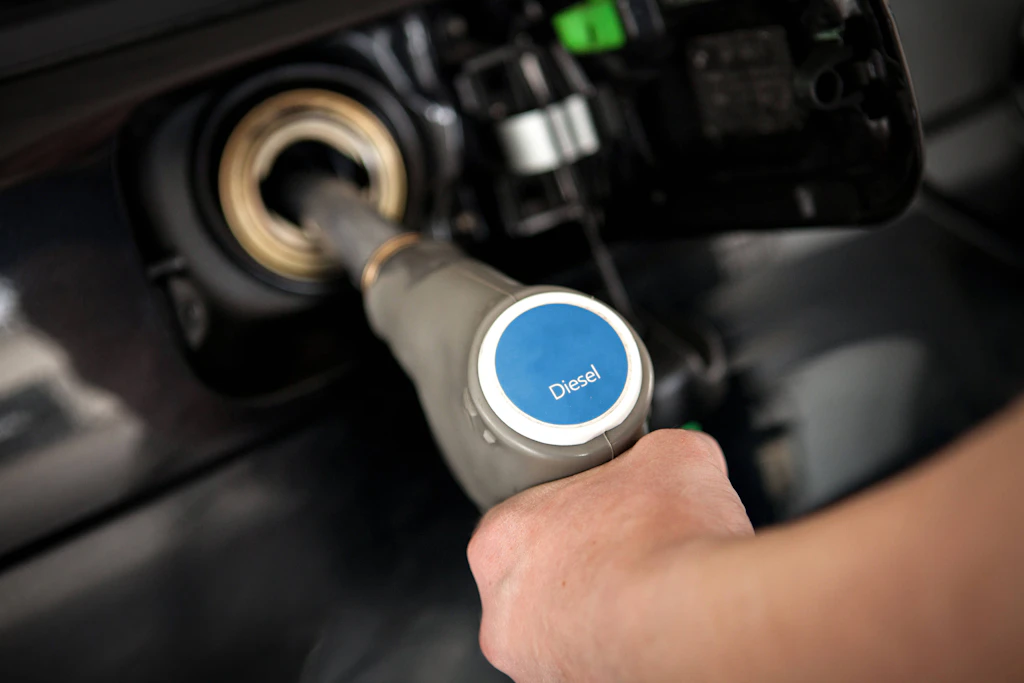
Germany is grappling with a volatile energy market as a modern legislative effort to stabilize fuel costs faces intense scrutiny. Designed to protect consumers from rapid price swings, the government’s recent fuel measures package is now at the center of a debate over whether such regulations actually provide relief or inadvertently contribute to higher costs at the pump.
The fuel measures package was introduced by the German federal government to combat “excessive” fuel prices triggered by geopolitical instability. Specifically, military escalation in the Middle East and the blockade of the Strait of Hormus have caused global oil prices to surge by approximately 30 percent, leaving German drivers facing costs that have, in some cases, risen more sharply than the European average according to the Federal Ministry for Economic Affairs.
Under the leadership of Economics Minister Katherina Reiche, the government has implemented a strategy to increase transparency and limit the frequency of price hikes. Whereas the administration frames this as a market-based response to avoid direct state price-setting in the wholesale sector, critics—including some state leaders—argue that the measures may be insufficient to stop what they describe as “rip-offs” for the average commuter.
The new regulations officially took effect on April 1, 2026, following a decision by the Bundestag on March 26, 2026 as confirmed by the German government. For a global audience, this represents a significant shift in how one of Europe’s largest economies manages retail energy pricing during a geopolitical crisis.
The New Kraftstoffpreisanpassungsgesetz: How it Works
At the heart of the government’s strategy is the Kraftstoffpreisanpassungsgesetz (KPAnG), or the Fuel Price Adjustment Act. This law fundamentally changes how gas stations in Germany can update their pricing. Previously, fuel prices were highly volatile, changing an average of 22 times per day, which the government argued created an intransparent and frustrating environment for drivers.
Under the new KPAnG rules, gas stations are now permitted to increase their fuel prices only once per day, specifically at 12:00 PM (noon). However, the law is designed to be asymmetrical: price reductions remain permitted at any time and can occur as often as the station operator desires per the Ministry’s press release.
The German government explicitly modeled this approach after a similar system introduced in Austria 15 years ago. The goal is to provide “reliability and more transparency” for commuters and professional drivers, removing the incentive for stations to engage in constant, incremental price hikes throughout the day.
To ensure compliance, the government has introduced strict penalties. Gas stations that violate the prohibition on multiple daily price increases face significant fines, with penalties reaching up to 100,000 euros according to official government documentation.
Strengthening Antitrust Enforcement and Competition
Beyond the timing of price changes, the fuel measures package includes two critical amendments to the Gesetz gegen Wettbewerbsbeschränkungen (GWB), Germany’s Act against Restraints of Competition. These changes are intended to give the Federal Cartel Office (Bundeskartellamt) more “teeth” to combat abusive pricing practices.
Minister Katherina Reiche stated that the package aims to strengthen the Federal Cartel Office’s ability to act more easily against “abusive” price increases. By expanding the legal mandates of the regulator, the government hopes to deter stations from taking advantage of the current global supply shock to inflate margins beyond reasonable levels.
Despite these legal upgrades, the effectiveness of the Federal Cartel Office remains a point of contention. Sven Schulze, the CDU Minister President of Saxony-Anhalt, has been vocal in his criticism, suggesting that if the Cartel Office continues to operate as it has in the past, the new powers may be redundant. Schulze has characterized the current prices at the pump as “Abzocke” (a rip-off) and has urged the government to move faster in its decision-making process as reported by Tagesschau.
Economic Impact and Political Friction
The introduction of the fuel measures package has not been without political friction. While the coalition of the Union and SPD pushed the bill through the Bundestag, there is a growing sentiment that these measures do not go far enough to relieve the financial burden on consumers.
One primary point of contention is the role of state taxes. Minister President Sven Schulze pointed to the high level of state levies—including Value Added Tax (VAT) and the CO2 levy—as critical “adjustment screws” that the government could potentially use to lower prices more effectively than by simply regulating the timing of price hikes per Tagesschau.
a majority of German states are reportedly considering the implementation of a windfall profit tax (Übergewinnsteuer) to capture excess profits made by energy companies during this crisis. This suggests a shift toward more aggressive fiscal interventions if the market-based transparency measures fail to dampen the cost of fuel.
Key Takeaways of the Fuel Measures Package
- Price Hike Limit: Fuel prices may only be increased once daily, specifically at 12:00 PM.
- Price Reductions: Stations can lower prices at any time and without limit.
- Enforcement: Fines for non-compliance can reach up to 100,000 euros.
- Regulatory Power: The Federal Cartel Office has expanded powers under the GWB to fight abusive pricing.
- Global Context: The measures respond to a 30% rise in global oil prices following the Iran-Middle East conflict and the blockade of the Strait of Hormus.
What So for the Global Energy Market
Germany’s decision to intervene in the retail pricing mechanism highlights the fragility of the European energy supply chain. By targeting the “transparency” of pricing, the German government is attempting to maintain a market economy while preventing social unrest caused by skyrocketing living costs. However, the reality is that retail regulations cannot offset the fundamental pressure of a 30 percent increase in global crude oil costs.
For international observers, the German experiment with the KPAnG serves as a case study in “price governance.” If the measures fail to lower costs, it may lead to a broader European trend toward windfall taxes or temporary tax suspensions on fuel, as suggested by regional leaders like Sven Schulze.
The German government has stated that it is continuing to monitor price formation in the markets closely. They have explicitly left the door open for “further measures” should the current package prove insufficient in protecting consumers and the economy from the volatility of the Middle Eastern conflict.
The next confirmed action is the ongoing monitoring of market developments by the federal government to determine if additional interventions are required to stabilize fuel costs.
Do you believe government intervention in fuel pricing helps consumers, or does it distort the market? Share your thoughts in the comments below.