
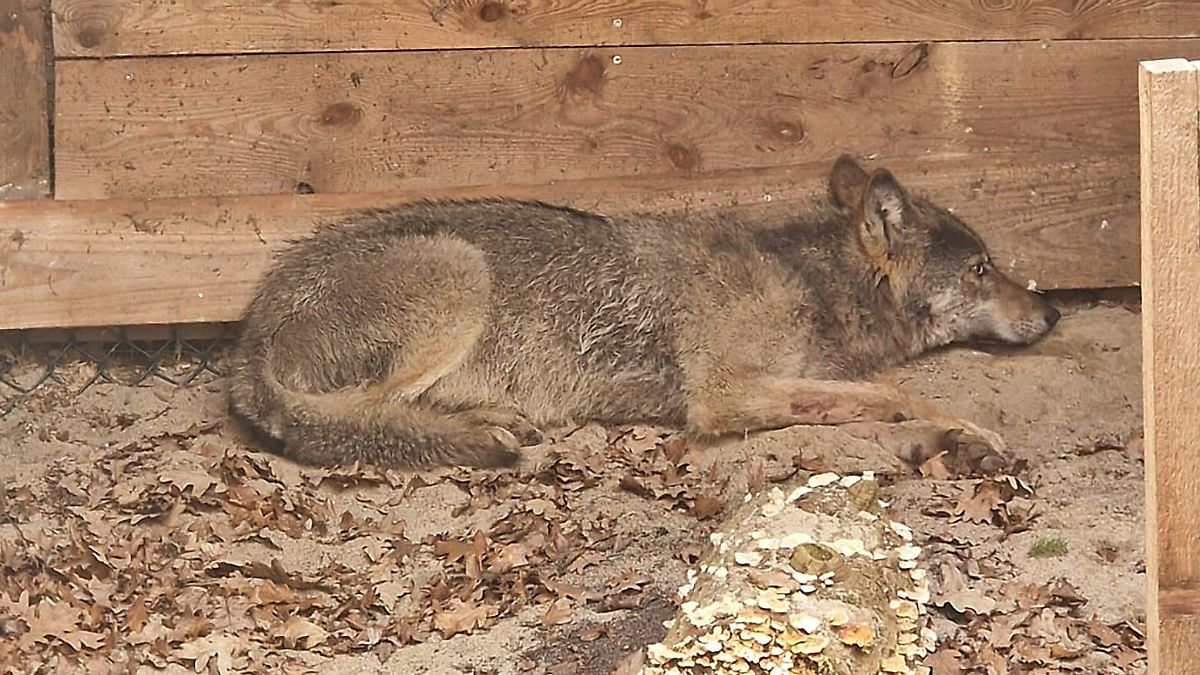
In a startling intersection of urban life and wilderness, a wolf that recently attacked a woman in the heart of Hamburg has been released back into the wild. The animal, which caused panic in one of the city’s busiest shopping districts, was returned to the wild after being fitted with a tracking transmitter—a move officials have described as a form of “probation.”
The wolf attack in Hamburg marks a highly unusual event for the city, occurring not in the remote forests of the German countryside, but on the bustling Grosse Bergstrasse in the Altona district. The incident has sparked a wider conversation about the challenges of wildlife management as endangered predators increasingly venture into human settlements.
The attack took place on a Monday evening near an inner-city Ikea store. According to local reports, a woman encountered the animal, which appeared to be disoriented and had repeatedly run into a glass wall. In an attempt to guide the animal away from the crowded shopping street, the woman was bitten in the face Politico. She was transported to a local hospital where she received stitches before being discharged.
The Capture at Lake Binnenalster
Following the attack, the wolf fled the scene and roamed the city center, leading to several sightings that were reported to the police. The animal was eventually spotted late Monday night in the Binnenalster lake. The capture proved challenging; police officers armed with shields spent approximately an hour attempting to secure the animal, eventually using a rope to pull the wolf out of the water BBC.

Once captured, the wolf was placed under veterinary care. Matthias Hilge, a spokesperson for Hamburg’s Ministry for the Environment, Climate, Energy and Agriculture (Bukea), confirmed that the animal was safe and receiving medical attention while experts consulted on its future.
A Rare Breach of Instinct
Authorities emphasize that this incident is an extreme anomaly. Wolves are typically shy and avoid human contact, making direct attacks on people exceptionally rare. A spokeswoman for the Federal Agency for Nature Conservation stated that there has not been a case of this nature since the reintroduction of wolves began in 1998 BBC.
The return of the wolf to Germany is a long-term ecological process. After being driven to near extinction in the 19th century, the predators began returning via Poland after the fall of the Berlin Wall in 1989. Today, the population has seen a dramatic resurgence, with more than 200 packs recorded in Germany in recent years Politico.
This growth is part of a broader European trend. It is estimated that more than 21,500 wolves currently roam the European continent, representing a 58 percent increase compared to the population recorded a decade ago Politico.
The “Probation” Strategy: Tracking and Management
The decision to release the wolf with a tracking transmitter (Peilsender) reflects a balanced approach between public safety and wildlife conservation. By fitting the animal with a collar, authorities can monitor its movements in real-time to ensure it does not return to densely populated urban areas like Altona.
This strategy of “probationary” release is often used when an animal’s behavior is deemed a result of disorientation or temporary stress rather than inherent aggression. In this case, the wolf’s confusion—evidenced by it running into glass walls—suggests the animal was lost in an unfamiliar urban environment rather than hunting in a city.
Understanding Human-Wildlife Conflict
As wolf packs expand their territories across an increasingly urbanized continent, the likelihood of contact with human settlements grows. While attacks on humans remain rare, conflicts with livestock are more common. For instance, in 2022, a gray wolf in Germany killed a pony belonging to European Commission President Ursula von der Leyen Politico.
The wolf attack in Hamburg serves as a reminder of the demand for public education on how to interact with wildlife. Experts generally advise against attempting to lead or move a wild animal, as disorientation can lead to unpredictable and defensive behavior.
| Event | Detail |
|---|---|
| Initial Attack | Monday evening; woman bitten in face near IKEA, Altona. |
| Capture | Monday night; captured by police at Lake Binnenalster. |
| Intervention | Veterinary care and expert consultation by Bukea. |
| Resolution | Released into the wild equipped with a tracking transmitter. |
The animal’s movements will now be closely watched by environmental authorities to prevent further incursions into the city. The case remains under investigation to fully understand the animal’s origin and the circumstances that led it into the center of Hamburg.
Authorities will continue to provide updates on the wolf’s location and behavior as the tracking data becomes available. Readers are encouraged to follow official guidelines from the Ministry for the Environment, Climate, Energy and Agriculture regarding wildlife encounters.
Do you believe urban areas are becoming too encroached upon by wildlife, or is this a necessary part of ecological restoration? Share your thoughts in the comments below.