
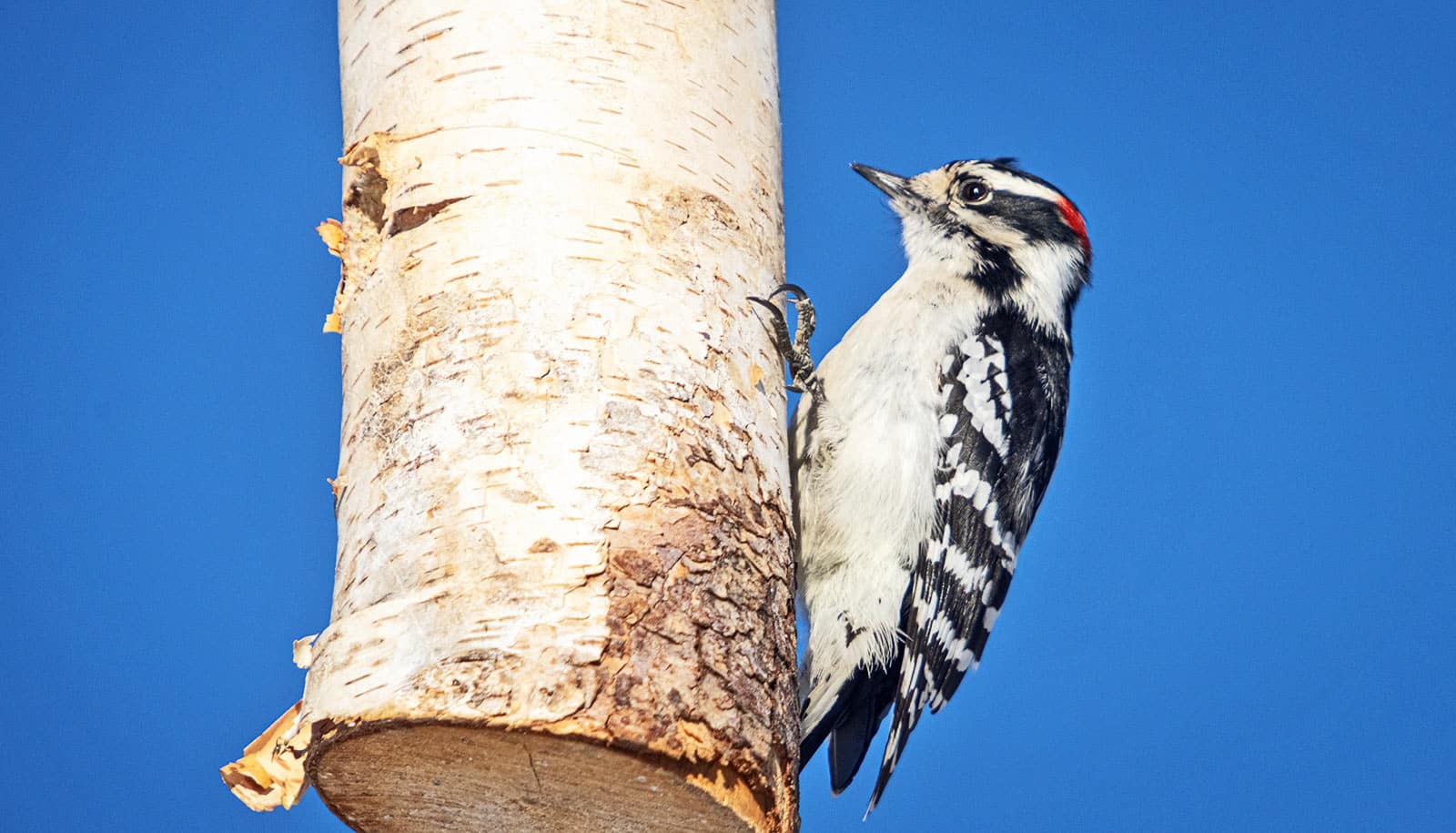
The Astonishing Biomechanics of Woodpecker Drilling: A Whole-Body performance
Woodpeckers are renowned for their incredible ability to drill into trees, enduring forces that would incapacitate most other creatures. But the secret isn’t just in their famously reinforced skulls. new research from a team at Brown University reveals a far more complex picture: woodpeckers leverage a stunning coordination of whole-body movement and precise breathing control to achieve this remarkable feat.
This isn’t simply about powerful neck muscles. For years, scientists focused on the neck as the primary driver of woodpecker drilling. Though, this new study, led by postdoctoral researcher Nicholas Antonson, takes a broader, more holistic approach, uncovering a fascinating interplay between respiration, muscle physiology, and behavior.
The research centered on downy woodpeckers, North America’s smallest woodpecker species. Using high-speed video – capturing movements every 4 milliseconds – and precise measurements of airflow and air pressure,the team meticulously analyzed the birds’ drilling technique. What they discovered challenges previous assumptions.
It’s a Full-Body Effort.
Woodpeckers don’t isolate the force to their necks. Instead, they recruit muscles throughout their entire body – head, neck, hips, abdomen, and tail - to create a coordinated “hammer.” Crucially,the neck stiffens on impact,mirroring the mechanics of a human wrist during a hammer swing.
This full-body engagement is synchronized with a unique breathing pattern. With each strike, woodpeckers actively exhale, a phenomenon reminiscent of the grunts of professional tennis players delivering a powerful backhand.
“Mini-Breaths” and Non-Vocal Dialog.
During rapid-fire tapping, woodpeckers employ “mini-breaths” between each strike. While these short inhalations have been observed in songbirds during complex vocalizations, this is the first evidence of their use in a purely physical, non-vocal context. This suggests a potential role for breathing in communication beyond sound.
The forces involved are staggering. Researchers measured pecking forces reaching 20 to 30 times the woodpecker’s body weight, all while maintaining a breath rate of up to 13 breaths per second.
beyond Drilling: A New Outlook on Animal Communication.
These findings have implications far beyond woodpecker physiology. Study co-author Professor Matthew Fuxjager emphasizes that this research shifts our understanding of how animals use physical displays to communicate.
“These displays - dances, gestures, vocalizations – are all ways to convey information,” Fuxjager explains. “Woodpeckers aren’t just performing a simple action at high speed. They’re orchestrating a complex interplay of muscles and respiration, demonstrating remarkable skill.”
This coordination highlights that physical prowess isn’t just about speed or strength; it’s about refined control and precise timing.
The Human Connection.
The principles at play aren’t exclusive to the avian world. Antonson draws a compelling parallel to human performance. “When we evaluate a singer on a show like American Idol, we’re subconsciously assessing their vocal motor skills - their ability to coordinate body movement and breathing to create a physical display.”
This research,supported by the National Science Foundation,underscores the intricate biomechanics underlying even seemingly simple animal behaviors.It’s a testament to the power of whole-body coordination and a reminder that the natural world continues to hold fascinating secrets waiting to be uncovered.
Source: https://www.brown.edu/news/2025-11-06/woodpeckers-drilling-physiology





![CIOs: Aligning Tech & Business for Success | [Year] Trends](https://i0.wp.com/eu-images.contentstack.com/v3/assets/blt69509c9116440be8/blt67447c792ac58deb/69417806211d3e583ae91b64/IT_leadership.jpg?resize=150%2C100&ssl=1 "CIOs: Aligning Tech & Business for Success | [Year] Trends")