
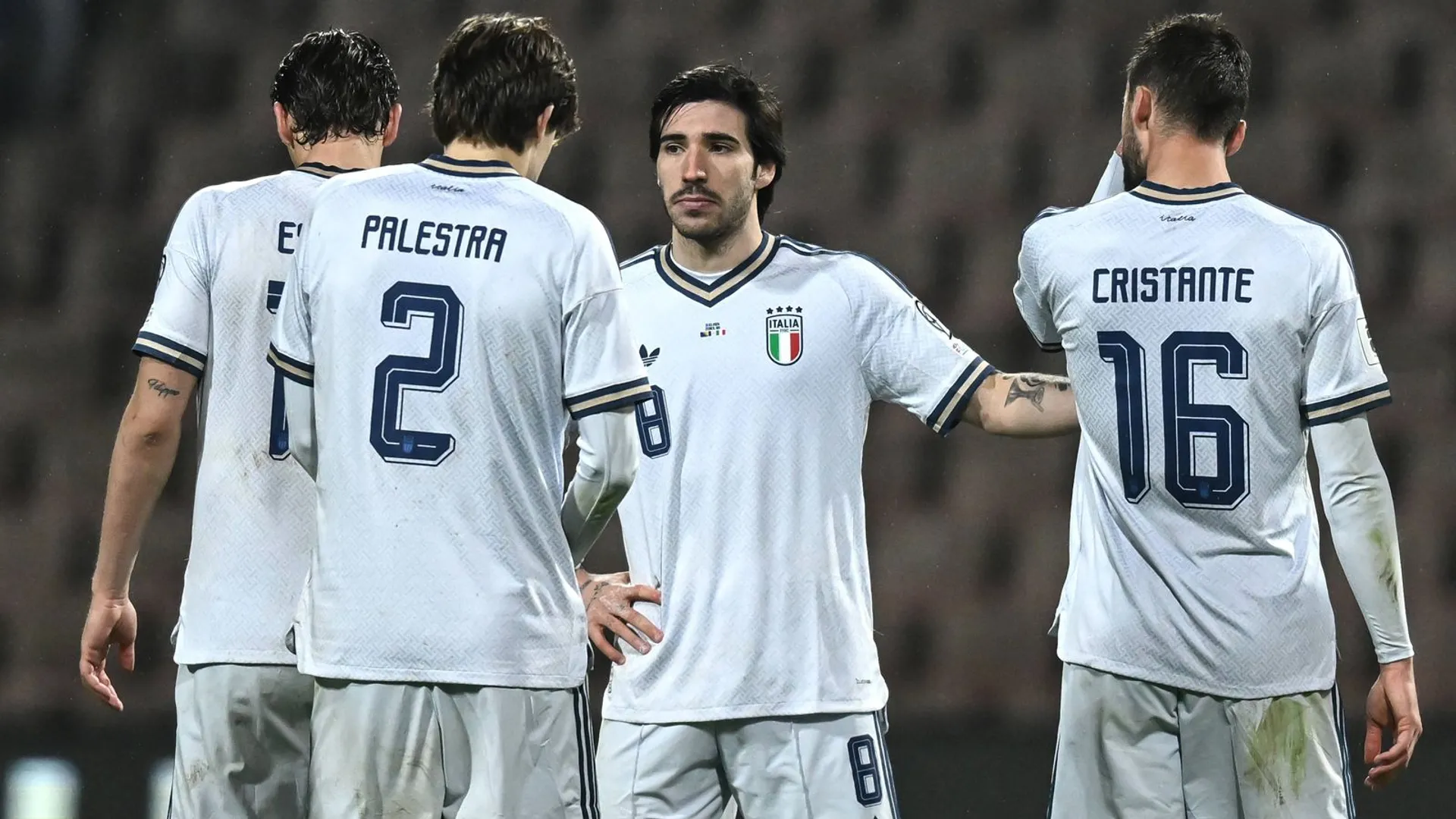
For a nation where football is more than a sport—it is a cultural cornerstone and a source of immense national pride—the current state of the Squadra Azzurra has shifted from a sporting slump to what local media are calling a national catastrophe. Italy, a four-time world champion, has once again failed to qualify for the FIFA World Cup, marking the third consecutive tournament the nation will miss.
The dream of returning to the world stage in the United States, Canada, and Mexico ended in heartbreak during the qualification playoffs. A devastating loss in a penalty shootout against Bosnia-Herzegovina has left the Italian football world in a state of shock and resignation, cementing a decline that many experts argue was inevitable given the systemic issues plaguing the sport within the country.
This latest failure is not merely a sporting disappointment but a catalyst for a leadership collapse. In the immediate aftermath of the defeat in Zenica, both Italian Football Federation (FIGC) President Gabriele Gravina and team coordinator Gianluigi Buffon announced their resignations, signaling a desperate require for a complete overhaul of the national team’s structure according to reports on the playoff exit.
The “Third Apocalypse”: Analysis of the Playoff Failure
The match against Bosnia-Herzegovina was characterized by tension and tactical instability, culminating in a result that has been described by the Gazzetta dello Sport as a continuing nightmare. The turning point of the encounter occurred late in the first half when defender Alessandro Bastoni received a red card for a professional foul, forcing Italy to play a significant portion of the match in numerical inferiority as detailed by Sportschau.
Despite the disadvantage, the match pushed into a penalty shootout, where the pressure finally broke the Italian resolve. The loss has triggered a wave of grief and anger across the country. In Rome, fans have expressed a sense of profound disillusionment, with some describing the experience as a “brutal humiliation” and an “apocalypse” that feels worse than the previous two failures given that the element of surprise has vanished, replaced by a heavy sense of resignation.
The emotional toll is evident in the public discourse. While the 2018 and 2022 absences were met with anger and bewilderment, the 2026 failure is being viewed through a lens of mourning. The Corriere della Sera noted that the prevailing mood is no longer one of shock, but of deep sadness, as the reality of Italy’s descent from footballing royalty becomes impossible to ignore.
A Legacy in Freefall: From Berlin 2006 to the Present
To understand the gravity of this moment, one must look at the timeline of Italy’s World Cup history. The Squadra Azzurra is a four-time title winner, yet the gap between its last moment of global glory and the current crisis is staggering. The last time Italy played a knockout-stage match at a World Cup was nearly 20 years ago, during the 2006 tournament in Germany, where they defeated France in the final in Berlin per ZDF analysis.
The subsequent decade saw a steady erosion of dominance. While Italy managed to qualify for the 2010 and 2014 tournaments, they were eliminated in the group stages of both. The true collapse began in 2018, when Italy failed to qualify for the tournament in Russia. This was followed by another failure to reach the 2022 World Cup in Qatar, and now the 2026 failure, creating an unprecedented streak of three consecutive absences for a nation of Italy’s stature.
Sporting analysts and journalists, including Valentina Maceri, suggest that this is the logical conclusion of a long-term negative development. The consensus among experts is that Italy cannot simply wait for a new star player to emerge; instead, the country requires a “revolution” in how football is developed, coached, and managed at the institutional level.
Institutional Collapse and the Search for a “Backdoor”
The resignations of Gabriele Gravina and Gianluigi Buffon mark a pivotal moment of accountability. The departure of Buffon, a legendary figure in the sport and a key coordinator for the team, underscores the depth of the crisis. The leadership vacuum leaves the FIGC in a precarious position as they attempt to navigate the fallout of the “sporting Super-GAU” (greatest possible disaster).

Despite the official qualification failure, a sliver of hope remains. You’ll see reports of a potential “backdoor” or alternative route that could theoretically allow Italy to participate in the 2026 tournament in the USA, Canada, and Mexico despite their playoff exit as noted by Ran. While the specific mechanisms of this possibility remain unconfirmed and speculative, the mere mention of such a route provides a desperate lifeline for a fanbase in mourning.
Key Takeaways of the Italian Football Crisis
- Historic Failure: Italy has missed three consecutive World Cups (2018, 2022, 2026), a first for the four-time champions.
- The Final Blow: A penalty shootout loss to Bosnia-Herzegovina in the playoffs, compounded by a red card for Alessandro Bastoni, sealed the exit.
- Leadership Vacuum: Both Federation President Gabriele Gravina and Team Coordinator Gianluigi Buffon have resigned.
- Long-term Decline: Italy has not reached a World Cup knockout stage since winning the title in 2006.
- Potential Hope: Unconfirmed reports suggest a theoretical “backdoor” for participation, though sporting qualification has officially failed.
What Happens Next for the Squadra Azzurra?
The immediate priority for Italian football is the appointment of new leadership. The FIGC must now find a president and a technical direction capable of implementing the “revolution” called for by journalists and former players. The focus will likely shift toward youth development and a departure from the tactical rigidity that some critics argue has held the team back.
For the players, the psychological impact of three missed tournaments will be a significant hurdle. The current generation has spent years under the shadow of the 2006 victory, facing an increasingly hostile press and a disillusioned public. The challenge for any future coach will be to rebuild the confidence of a squad that has become synonymous with “the nightmare.”
As the world looks toward the 2026 tournament, the absence of Italy leaves a void in the competition’s prestige. For the fans in Rome and beyond, the focus remains on whether the footballing authorities have the courage to speak the truth about the system’s failures and enact the structural changes necessary to ensure that the 2030 World Cup does not become a fourth consecutive absence.
The next critical checkpoint for the Italian Football Federation will be the official process to appoint a successor to Gabriele Gravina and the subsequent announcement of a long-term strategic plan for the national team’s reconstruction.
Do you believe the Italian national team can recover from this historic slump, or is a complete systemic overhaul the only way forward? Share your thoughts in the comments below.