
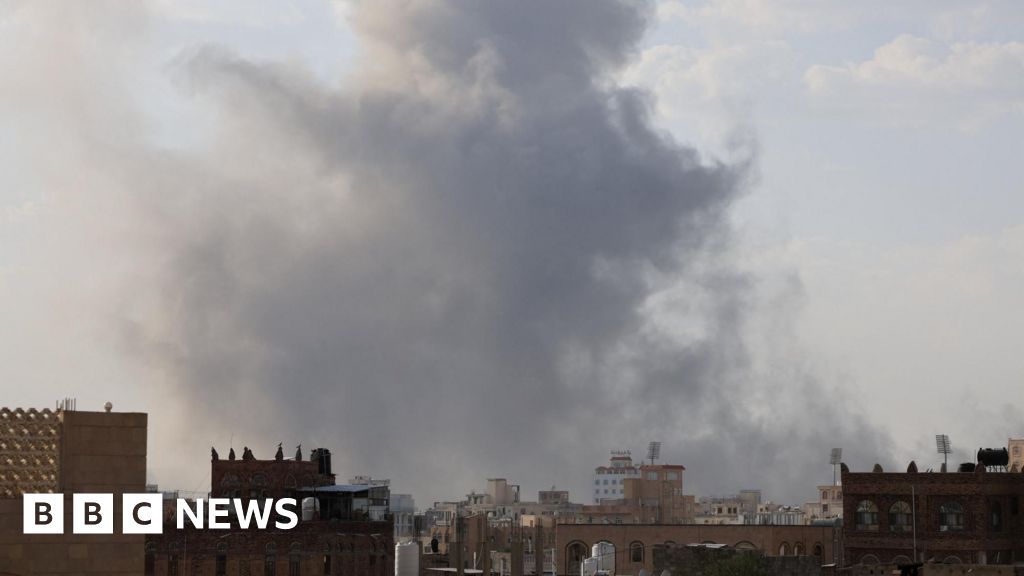
Escalation in Yemen: Israel Responds to Houthi Attacks with Strikes in Sanaa
Recent days have witnessed a significant escalation in the conflict involving Yemen’s Houthi movement and Israel, marked by retaliatory airstrikes and continued drone/missile launches. This situation, deeply intertwined with the ongoing war in Gaza, is raising concerns about regional stability and humanitarian impact. Here’s a detailed breakdown of the events,context,and implications.
The cycle of Attack and Retaliation
The current surge in hostilities stems from the Houthis’ repeated attacks on Israel, launching hundreds of drones and missiles. These attacks are presented by the Houthis as a presentation of solidarity with Palestinians in gaza and a response to the conflict there.
Israel has responded with a series of airstrikes targeting Houthi infrastructure within Yemen, most recently focusing on the capital city, Sanaa. These strikes are intended to degrade the Houthis’ ability to launch further attacks against Israel.
recent Events: Sanaa Under Fire
On Thursday, Israeli forces conducted a “powerful strike” on multiple targets in Sanaa. Reports indicate:
* Targets Hit: The strikes focused on Houthi military command centers, security and intelligence compounds, public relations headquarters, and weapons storage facilities. Specifically mentioned were locations in the Maain and Sabaeen districts, and also the Dhahban power station.
* Visual Evidence: Videos circulating online show ample plumes of black smoke rising from at least three locations within Sanaa. Photographs depict damaged and destroyed buildings.
* Casualties Reported: The Houthi-run health ministry claims eight people were killed and 142 injured, including civilians. First responders are still working to recover casualties from the rubble.
* Timing: The attack occurred just before a scheduled speech by Houthi leader Abdul Malik al-Houthi, potentially aiming to disrupt interaction and leadership coordination.
Israel’s Justification and Future Intentions
Israeli Defense Minister Israel Katz stated the strikes were a direct response to Houthi “terror targets.” The IDF issued a statement confirming its commitment to continued offensive operations against the Houthis, citing their “ongoing and repeated attacks” against Israel.
furthermore, an IDF inquiry into a recent Houthi drone attack on Eilat revealed a delay in detection. Corrective measures have been implemented to improve early warning systems. Despite these challenges, the IDF claims to have intercepted over 98% of Houthi drones launched towards Israel since the start of the Gaza conflict.
Houthi Response and Motivations
The Houthis frame their attacks as a direct response to Israel’s actions in gaza,describing them as “crimes of genocide and dangerous escalation.” This rhetoric underscores their alignment with the Palestinian cause and their willingness to escalate tensions in the region.
A Devastating Toll: The September 26th Attack & Impact on Journalists
A previous series of Israeli strikes on September 10th, targeting Sanaa and al-Jawf province, resulted in a notably tragic outcome. The Houthi-run health ministry reported 35 fatalities.
Critically, this attack resulted in the deaths of 31 journalists and media workers – the deadliest single attack on the press globally in 16 years. The Committee to Protect Journalists (CPJ) has condemned the incident, noting that most of the victims were affiliated with Yemen’s September 26 newspaper and the government’s Moral Guidance Directorate.The IDF stated the target was the “Houthi Public Relations Department.”
Broader Context and Implications
This escalation is occurring against the backdrop of Yemen’s ongoing civil war, a complex conflict with regional implications. the Houthis control significant territory in Yemen and are backed by Iran, adding another layer of geopolitical complexity.
* Regional Instability: The conflict risks widening the scope of the Israel-Gaza war, potentially drawing in other regional actors.
* Humanitarian Crisis: Yemen is already facing a severe humanitarian crisis, and further escalation will undoubtedly exacerbate the suffering of the Yemeni people.
* Shipping Disruptions: Houthi threats to shipping in the Red Sea are also raising concerns about global trade and maritime security.
Looking Ahead
The situation remains highly volatile. Continued attacks and retaliations are likely, and the potential for miscalculation and further escalation is significant. Diplomatic efforts to de-escalate tensions and address the underlying causes of the conflict are urgently needed. A comprehensive solution requires addressing the humanitarian crisis in Yemen, resolving


