
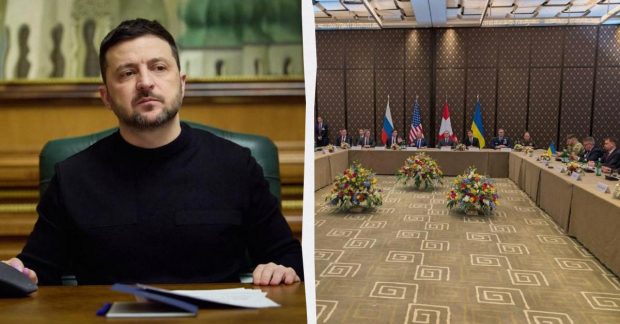
President Volodymyr Zelensky has expressed a willingness to engage in direct negotiations with Russian President Vladimir Putin, signaling a potential opening for diplomatic dialogue despite the ongoing conflict. While recent reports indicate that specific negotiations scheduled for today have been postponed, the Ukrainian leader has maintained that he remains open to any format of a meeting to discuss a resolution to the war.
This openness comes amid a complex geopolitical landscape where both sides remain entrenched in their core demands. Zelensky’s readiness to meet Putin is framed by a strategic insistence on Ukrainian sovereignty and the rejection of concessions that would compromise the nation’s territorial integrity. The move suggests a tactical shift toward diplomatic signaling, even as military operations continue on the ground.
The prospect of a direct meeting between the two leaders is complicated by a series of conflicting narratives regarding the terms of a potential ceasefire. Recent reports suggest a stark divide: while Ukraine seeks a victory that ensures long-term security, Russian leadership has proposed conditions that include the withdrawal of Ukrainian forces from specific regions as a prerequisite for peace.
The Conditions for Diplomatic Engagement
Zelensky has clarified that while he is ready for a direct encounter, the venue and terms are critical. He has indicated that such a meeting would not take place in Moscow or Kyiv, suggesting instead neutral ground. Potential locations mentioned for these high-level talks include the United States or various sites in the Middle East, reflecting a desire for international mediation and a neutral environment to ensure the safety and legitimacy of the proceedings.
However, the path to a summit is fraught with tension. In a recent interview with the BBC, Zelensky emphasized his resolve, stating that Ukraine is not losing the war and intends to end it with a victory. He has voiced strong opposition to meeting the demands of Vladimir Putin, specifically those regarding the withdrawal of Ukrainian troops from strategic areas that Russia has failed to capture despite significant losses BBC News.
The Ukrainian president has characterized the current conflict as part of a broader global crisis, asserting that Putin has already initiated what he describes as a “Third World War.” According to Zelensky, the only effective response to this aggression is the intensification of military and economic pressure to force a Russian retreat BBC News.
Conflicting Timelines and Peace Terms
Adding to the volatility of the situation are contradictory claims regarding deadlines for peace. On April 2, 2026, reports surfaced that Zelensky claimed Russia had given Kyiv a two-month window to withdraw the Armed Forces of Ukraine (AFU) from the Donbas region, warning that failure to do so would result in a change to the conditions of any future peace treaty RIA Novosti.
The Kremlin, however, has reacted with skepticism to these claims. Dmitry Peskov, the spokesperson for the Russian presidency, responded to the reports of a two-month deadline by suggesting that the position of the Russian leadership remains consistent, contrasting this with what he described as the “gelatinous” shifts in the position of the Ukrainian side RIA Novosti.
This disconnect highlights the primary obstacle to a successful summit: the lack of a shared baseline for negotiation. Russia continues to demand territorial concessions, while Ukraine maintains that any peace agreement must be based on the full restoration of its borders and the cessation of Russian aggression.
Key Takeaways on Current Negotiation Status
- Zelensky’s Position: Ready for direct talks with Putin in any format, provided the venue is neutral (e.g., USA or Middle East).
- Russian Demands: Reported pressure for the withdrawal of Ukrainian forces from the Donbas, with threats to alter peace terms if deadlines are not met.
- Ukraine’s Strategy: Combining diplomatic openness with a demand for increased international military and economic pressure on Russia.
- Current Status: Immediate negotiations are postponed and there is no agreed-upon date or location for a presidential summit.
What This Means for the Global Community
The willingness of both leaders to potentially meet—even if currently postponed—places a significant burden on international mediators. The mention of the United States and the Middle East as potential venues suggests that the outcome of these talks will depend heavily on the diplomatic leverage of third-party nations. For the global community, the primary concern remains the prevention of further escalation and the establishment of a sustainable ceasefire that does not reward territorial aggression.
The divergence in narratives—where one side speaks of a “Third World War” and the other discusses specific deadlines for troop withdrawals—indicates that both leaders are currently using diplomatic channels as much for domestic and international signaling as for actual negotiation. The “readiness” to meet serves as a diplomatic tool to maintain support from allies and project a willingness to seek peace, even while the military reality on the ground remains the primary driver of the conflict.
As the international community monitors these developments, the focus remains on whether a “neutral” venue can actually bridge the gap between the demand for total victory and the demand for territorial surrender. Without a fundamental shift in the requirements of either party, a meeting between Putin and Zelensky may remain a theoretical possibility rather than a practical reality.
The next critical checkpoint will be the official response from the Kremlin regarding the proposed neutral venues in the U.S. Or Middle East, and any further updates on the status of the postponed negotiations. We will continue to track official statements from the Ukrainian and Russian presidencies as they emerge.
Do you believe a neutral venue can facilitate a breakthrough in these negotiations? Share your thoughts in the comments below.