
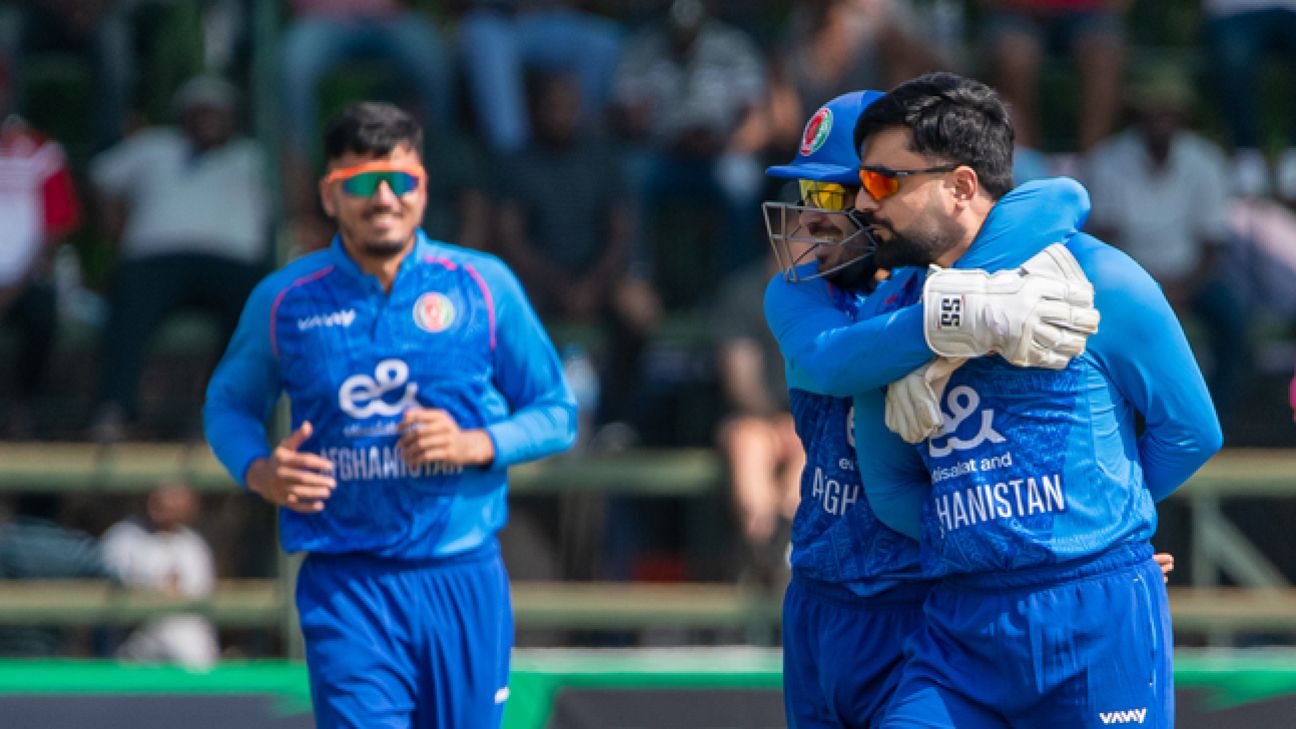
Afghanistan Overcome Zimbabwe in T20I Clash, Questions Remain Despite Victory
Afghanistan secured a comfortable victory over Zimbabwe in their recent T20I encounter, but the match wasn’t without its complexities. While Afghanistan’s batting proved too strong for zimbabwe, concerns linger regarding their middle-order performance. Let’s break down how the match unfolded and what it reveals about both teams.
Zimbabwe’s Struggles and Raza’s Lone Stand
Zimbabwe’s innings quickly faltered, losing early wickets that put them firmly on the back foot. Sikandar Raza, a key figure for Zimbabwe, fell victim to a well-directed short ball from Afghanistan’s Abdollah. This left Zimbabwe reeling at 57 for 4, struggling to build any notable momentum.
They found it difficult to score at a consistent pace, failing to exceed a run-a-ball rate in seven of the first ten overs.Raza attempted to anchor the innings, showcasing his ability to find boundaries even amidst the collapse.
* He dispatched two early fours, capitalizing on overpitched deliveries.
* His standout shot was a powerful, one-bounce four over extra cover, punishing a misdirected yorker.
Though, Raza’s resistance was ultimately cut short by Rashid Khan, Afghanistan’s captain, who returned to the field after tending to a hand injury. His dismissal at 104 for 6 effectively ended zimbabwe’s hopes of a competitive total, with their highest partnership yielding only 24 runs.
Afghanistan’s Powerplay Blitz and Ibrahim’s Steady Hand
Afghanistan came out firing, smashing nine boundaries in the powerplay – a stark contrast to Zimbabwe’s limited scoring. This aggressive start was a combination of skillful strokeplay and exploiting favorable batting conditions. Zimbabwe’s bowlers offered width and opportunities for Afghanistan’s batters to get under the ball, something every batter craves on a sluggish pitch.
Ibrahim Zadran continued his impressive form, notching his second consecutive T20I fifty. Although this innings required more grit than his previous one, it provided a solid foundation for Afghanistan’s chase. They maintained a steady pace after the powerplay, having already established a significant advantage with a score of 54 after the initial six overs.
Ultimately, they needed just 12 more overs to complete the job, highlighting their dominance in the early stages of the innings.
Middle-Order Concerns for Afghanistan
Despite the victory, Afghanistan’s middle order raised some questions. sediqullah Atal, hampered by a twisted ankle sustained during fielding, and darwish Rasooli struggled to accelerate the scoring rate.
* Together, they managed just 25 runs from 32 balls.
* This slow period could be a point of concern for Afghanistan as they progress in the tournament.
Addressing this middle-order fragility will be crucial for maintaining consistency and maximizing their potential.
This match demonstrated Afghanistan’s strength in both batting and bowling, but also highlighted areas for betterment. For Zimbabwe, it underscored the need for greater consistency in their batting lineup and a more disciplined approach to their bowling. As both teams move forward, addressing these key areas will be vital for success in future encounters.
Alagappan Muthu is a sub-editor at ESPNcricinfo.

![Narwhal DNA Request: The Science Behind the Legendary Tusk | [Your Publication Name]](https://i0.wp.com/feeds.science.org/rss/images/science/824fdd77a5.jpg?resize=150%2C150&ssl=1 "Narwhal DNA Request: The Science Behind the Legendary Tusk | [Your Publication Name]")



