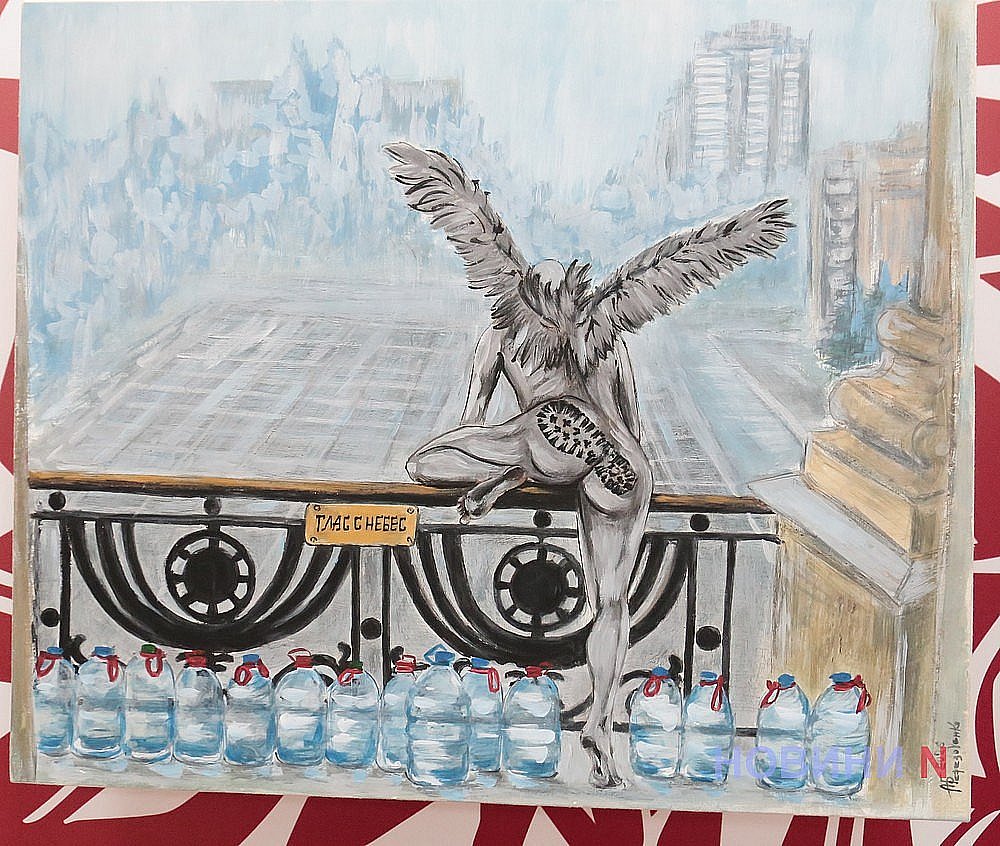
Residents of Mykolaiv, Ukraine, have engaged in a public naming contest for a mural depicting a nude angel, which has become a focal point of local discussion regarding the art adorning the Mykolaiv City Council balcony. The initiative, which invited citizens to provide creative titles for the artwork, reflects broader ongoing debates about public space, urban aesthetics, and the role of artistic expression in municipal buildings during wartime.
The mural, situated on the balcony of the city’s administrative headquarters, has drawn attention due to its unconventional subject matter and placement. Local observers and municipal representatives have noted that the artwork serves as a visual contrast to the formal architecture of the city council building, prompting a variety of reactions ranging from aesthetic appreciation to questions about the appropriateness of the imagery in an official government setting, according to reports from local civic observers.
The Context of Public Art in Mykolaiv
Public art projects in Mykolaiv have taken on new significance since the full-scale invasion of Ukraine in 2022. According to the Mykolaiv City Council official portal, municipal authorities have increasingly sought to maintain civic morale through cultural initiatives, though the balance between traditional administrative decorum and modern artistic freedom remains a subject of negotiation. The mural of the angel, while intended as a decorative or symbolic installation, has highlighted the challenges of curating public space in a city that has faced frequent infrastructure damage and significant socio-economic shifts.
The decision to hold a naming contest was framed by local organizers as an attempt to democratize the perception of the mural. By allowing the public to define the piece, the city aimed to transition the artwork from a static, potentially controversial image into a community-owned symbol. This approach is consistent with broader efforts by local authorities to engage citizens in the governance and aesthetic development of the city, as outlined in the Mykolaiv City Development Strategy 2030, which emphasizes the role of community participation in urban renewal.
Community Reaction and the Naming Process
The naming process attracted a wide array of submissions, ranging from the humorous to the poignant. Participants in the discussion often referenced the angel’s placement on a government balcony, with some suggesting titles that reflect the angel’s role as a silent observer of municipal policy, while others opted for titles focusing on the themes of peace, protection, and endurance. The engagement underscores the high level of civic activity in Mykolaiv, where residents frequently participate in local digital forums and social media polls to influence municipal decisions.
Sociologists observing the trend suggest that such contests act as a form of social release. In a city that has endured prolonged stress, the lighthearted act of naming a piece of art provides a necessary outlet for civic discourse that is not strictly related to military or economic survival. The Council of Europe’s framework for cultural participation notes that such grassroots engagement is a vital component of resilient urban environments, allowing citizens to reclaim their public spaces through shared meaning-making.
What Happens Next for the Mural
As of the current update, the city council has not issued a formal directive on whether the winning title will be officially displayed or if the mural will remain in its current location indefinitely. The administrative process for permanent public art installations typically requires approval from the municipal architecture and urban planning department, as mandated by local regulations governing the Law of Ukraine on the Protection of Cultural Heritage. Any decision to alter or remove the mural would likely follow a review by these oversight bodies.
Residents interested in the outcome of the naming contest or future urban art initiatives are encouraged to monitor the official Mykolaiv City Council website, where minutes from urban planning meetings and updates on cultural projects are published. The city continues to navigate the complexities of wartime administration, and public feedback remains a key component of how municipal officials prioritize cultural projects moving forward.
How do you interpret the role of provocative art in official municipal spaces? Share your thoughts in the comments below or join the ongoing discussion on local civic forums.
Worth a look