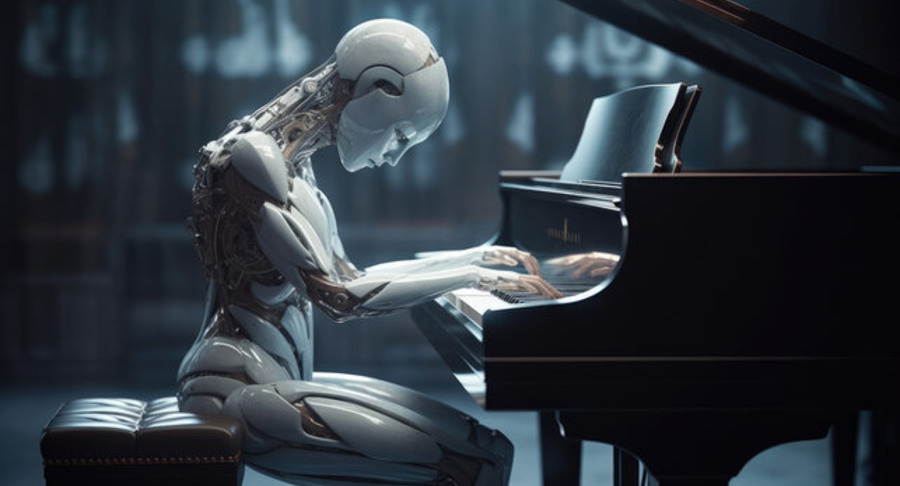
As artificial intelligence continues to reshape the landscape of music production, a growing divide has emerged between algorithmic composition and the enduring appeal of live classical performance. While AI can now mimic complex orchestral structures and harmonic patterns with increasing accuracy, industry experts and concert performers observe that these systems often fail to capture the nuanced “form”—the emotional and structural narrative—that defines human-led classical music. Recent data indicates that despite the ubiquity of streaming and AI-generated playlists, interest in live classical music remains a distinct human experience that technology has yet to replicate.
The Algorithmic Limitation: Why Pattern Is Not Presence
Modern AI tools, such as those developed by companies like Google with its MusicLM or OpenAI’s Jukebox, function by analyzing vast datasets of existing compositions to predict the next note or sequence. According to research published in Nature, while these models excel at mimicry, they lack an underlying understanding of intentionality. In classical music, the “form” involves a long-term architecture that requires a performer to balance tension and release over the course of a 40-minute symphony.
Musicologists argue that the “liveness” of a concert is a participatory act. When an audience gathers in a hall, the acoustic environment and the collective presence of listeners influence the performer’s delivery. An algorithm, by contrast, operates in a vacuum where every playback is identical. This distinction is central to why younger audiences are increasingly returning to concert halls; they are seeking an unmediated experience that cannot be generated by a prompt.
Neoclassicism and the Human Connection
The rise of the “neoclassical” genre—which blends traditional instrumentation with minimalist electronic sensibilities—has served as a gateway for younger listeners to discover the broader classical canon. According to data from the IFPI’s 2023 Engaging with Music report, classical music consumption has seen a steady uptick among Gen Z and millennial demographics, often spurred by social media discovery and film scores. This demographic shift is not merely about listening habits but about the desire for a tactile, “analog” experience in an increasingly digital world.

Performers emphasize that the physical act of playing an instrument—the breath required for a woodwind or the tension in a violinist’s bow—is an essential component of the musical message. When a human plays a piece by Bach or Beethoven, they are interpreting historical scores through their own lived experience. AI can replicate the sound of a violin, but it cannot replicate the physical sacrifice or the deliberate stylistic choices that a human musician makes in real-time.
Why Live Performance Remains Irreplaceable
The economic impact of live performances remains significant, with global concert revenues for classical and orchestral events showing resilience post-2020. According to industry analysis provided by Statista, the demand for high-quality, in-person orchestral experiences continues to outpace the growth of digital-only music platforms in this sector. This trend suggests that as AI becomes more proficient at generating background music, the value of “authentic” human performance actually increases.
The distinction between “content” and “art” is becoming more pronounced. If music is treated as a utilitarian commodity—something to fill the silence while working or commuting—AI is highly effective. However, when music is treated as a communal event requiring deep focus and emotional engagement, the concert hall becomes a sanctuary. The limitation of AI is not its inability to write a melody, but its inability to participate in the shared vulnerability of a live performance.
The Future of Musical Authenticity
As we look toward the next season of orchestral programming, the focus is shifting toward emphasizing the human element. Major international festivals are increasingly highlighting the biography of the composer and the specific history of the instruments being played, areas where AI remains purely extractive rather than creative. The next official updates on the impact of generative models on the music industry are expected in the upcoming World Intellectual Property Organization (WIPO) consultations regarding AI and creative rights.

For those interested in how these trends are affecting local institutions, keep an eye on upcoming season announcements from major philharmonic societies, which often provide the most accurate barometer for how the industry is balancing technology with tradition. We invite readers to share their thoughts on whether they believe AI will eventually evolve to capture the “human form” of music, or if the concert hall will remain a strictly human domain. Join the conversation in the comments section below.