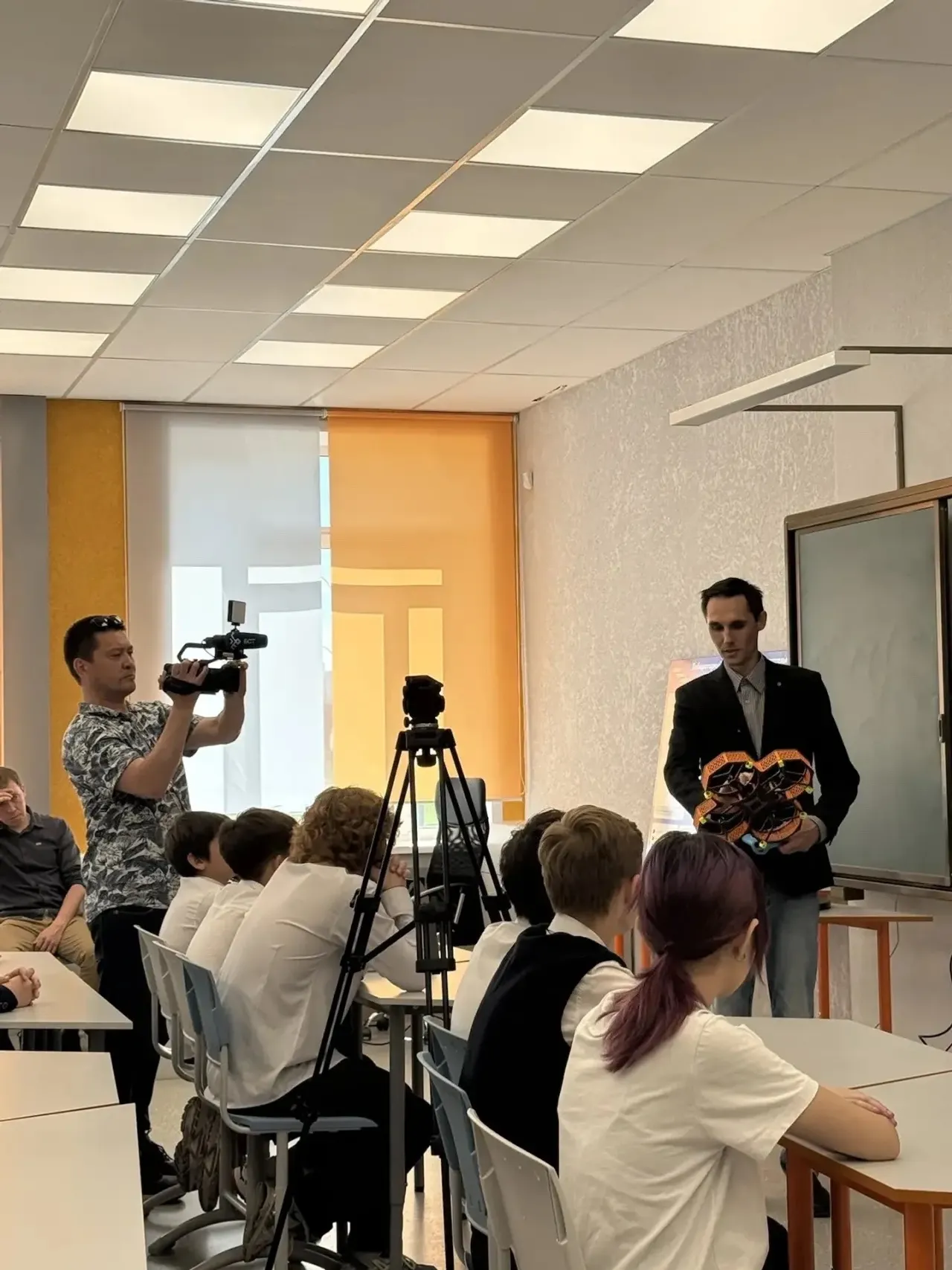
As the global aerospace and technology sectors pivot toward autonomous systems, the Republic of Bashkortostan is making a calculated move to integrate drone technology into its secondary education curriculum. The initiative, centered on the implementation of specialized unmanned aerial system (UAS) training modules, represents a strategic effort to bridge the gap between theoretical classroom learning and the practical demands of the modern robotics industry.
The recent launch of the “Pchelka” (Little Bee) training complex at Education Center No. 164 in Ufa marks a significant milestone in this regional educational strategy. By introducing students to the mechanics and software environments of unmanned systems, authorities aim to cultivate a pipeline of skilled young professionals capable of navigating the complexities of aerial robotics, data analysis, and remote vehicle operation.
Building a Pipeline for Autonomous Technology
The “Pchelka” complex serves as a sophisticated simulator designed to provide students with a controlled environment to master the fundamental principles of flight physics, navigation, and mission planning. The pedagogical approach focuses on moving beyond basic hobbyist drone operation toward a technical understanding of how autonomous systems function in industrial, agricultural, and surveillance contexts.

This development aligns with broader efforts by the Russian Ministry of Education and regional authorities to implement the federal “Unmanned Aerial Systems” project. According to official government directives, the initiative aims to expand the network of specialized classes and educational centers across the country to address the growing demand for specialized technical expertise in the aviation and robotics sectors. Detailed information on the federal implementation of these educational standards can be found through the Ministry of Education of the Russian Federation.
Why Drone Education Matters
The integration of drone technology into school syllabi is not merely an exercise in technical training; it is an economic necessity. As industries increasingly rely on autonomous aerial vehicles for tasks ranging from precision agriculture to infrastructure monitoring, the workforce of the future requires a hybrid skillset. Students participating in these programs are exposed to:
- Programming and Software Development: Writing scripts for autonomous flight paths and sensor data processing.
- Mechanical Maintenance: Understanding the hardware components, battery management, and repair protocols.
- Regulatory Literacy: Navigating the legal frameworks and safety protocols governing airspace usage.
By establishing these competencies at the secondary school level, the Republic of Bashkortostan is positioning itself to become a regional hub for autonomous technology innovation. This long-term investment aims to reduce the transition time for graduates entering specialized university programs or technical vocational paths.
Integrating Theory with Practice
The transition from a simulator-based environment to real-world application remains the primary hurdle for technical educators. The “Pchelka” system is designed to act as a bridge, allowing students to test complex flight scenarios—such as navigating obstacles or performing search-and-rescue simulations—without the financial and safety risks associated with full-scale equipment. This pedagogical model is increasingly common in European and North American STEM programs, where simulators are used to standardize training outcomes across varying school districts.
For parents and students looking to understand the trajectory of these programs, local educational authorities in Ufa continue to release updates regarding the expansion of the curriculum. The goal is to ensure that the hardware and software used in schools remain relevant as the underlying technology evolves at a rapid pace. Updates on regional educational initiatives and the rollout of new technical equipment are periodically published by the Ministry of Education and Science of the Republic of Bashkortostan.
Looking Ahead: The Future of the UAS Curriculum
The success of the “Pchelka” pilot program will likely influence how other schools in the region adopt similar technologies. As the curriculum matures, officials are expected to assess the program’s impact on student engagement in STEM subjects and the subsequent enrollment rates in technical disciplines at the university level. While the current focus is on operational training, future iterations of the program may include advanced modules on artificial intelligence (AI) integration and swarm technology, reflecting the current research and development trends in the global aerospace industry.
For those tracking the development of autonomous systems education, the next phase involves the standardization of these training modules across a wider network of schools. Stakeholders are encouraged to monitor official announcements regarding the procurement of additional simulators and the training of specialized instructors, which remain the primary drivers of the program’s scalability.
What are your thoughts on integrating drone technology into secondary schools? Share your perspectives in the comments section below, and stay tuned for further updates on the evolution of technical education in the region.
Keep reading