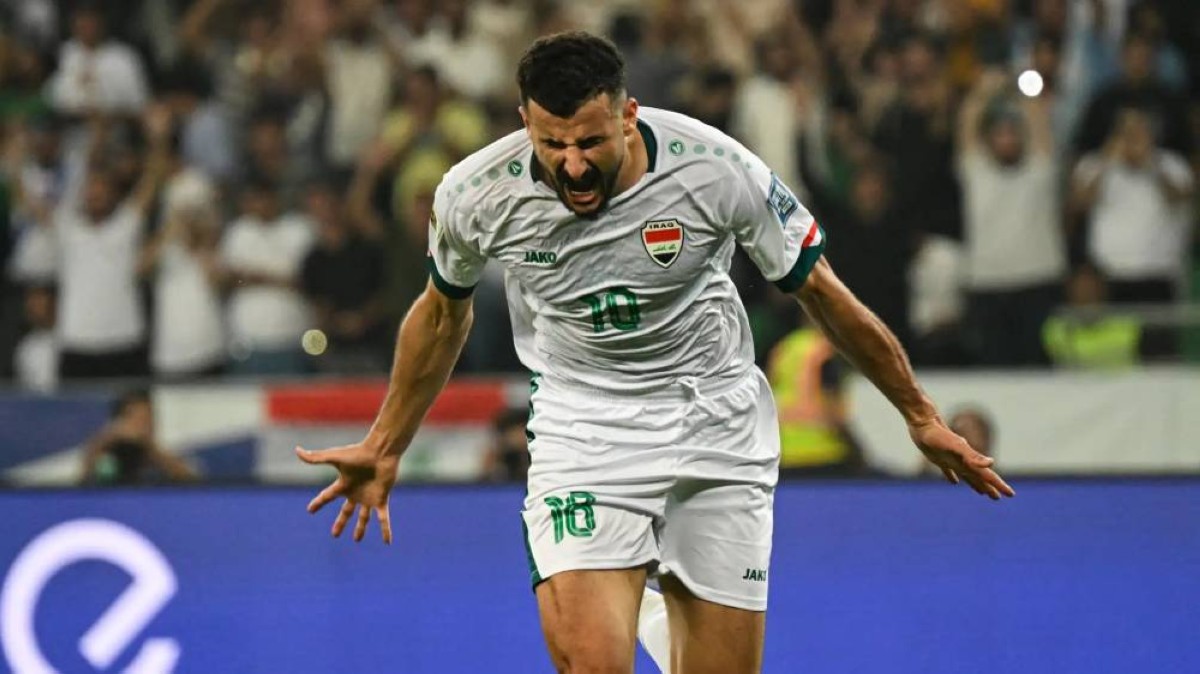
For the millions of supporters who follow the Lions of Mesopotamia, the dream of returning to football’s greatest stage has never felt more tangible. As the qualification cycle for the 2026 FIFA World Cup intensifies, Aymen Hussein has emerged not merely as a striker, but as the focal point of a national resurgence. Leading Iraq’s new generation, Hussein carries the weight of a nation eager to transcend the lingering shadows of the 1986 Mexico World Cup—the only time Iraq has previously qualified for the tournament.
The narrative surrounding Iraqi football has long been defined by that singular appearance in Mexico, where a resilient squad faced heavyweights like Belgium, Paraguay and the host nation. Now, four decades later, the current team, bolstered by the clinical finishing and leadership of Aymen Hussein, is attempting to rewrite the history books. This isn’t just about qualifying; it is about establishing a legacy that can finally stand independent of the memories from 1986.
A Legacy Reimagined: The Weight of 1986
The 1986 FIFA World Cup remains the benchmark for Iraqi football. Under the guidance of coach Evaristo de Macedo, the team’s participation was a landmark moment for the region. However, the four decades that followed have been marked by political instability, infrastructure challenges, and the persistent difficulty of maintaining a consistent pipeline of talent. According to official FIFA records, Iraq’s sole appearance ended in the group stage, yet the pride associated with that achievement remains a cornerstone of the country’s sporting identity.
Today, the landscape is different. With the expansion of the World Cup to 48 teams in 2026, the pathway for Asian Football Confederation (AFC) nations has widened significantly. This structural change has provided a genuine opportunity for Iraq to move beyond the “one-hit wonder” narrative. The current squad, managed by Jesús Casas, has been meticulously built to leverage both domestic talent and players emerging from the diaspora, creating a competitive environment that has been notably absent for years.
Aymen Hussein: The Spearhead of a New Era
Aymen Hussein has become the definitive figure of this movement. His physical presence, aerial prowess, and composure under pressure have made him the most recognizable face of Iraqi football. His contribution extends beyond goal-scoring; he has become a symbol of resilience for a population that views the national team as a rare, unifying force in a complex socio-political climate.
In recent qualifying matches, Hussein’s ability to find the net in high-stakes moments has been critical. His performances in the AFC Asian Qualifiers have consistently demonstrated his growth as a modern forward. He is no longer just a target man; he is a leader who understands the tactical demands of contemporary football, often dropping deep to link play before surging into the box to finish.
The reliance on Hussein is significant, but it is also a testament to his durability. As noted in analyses of the current qualification campaign, the team’s offensive strategy is heavily predicated on his ability to hold up the ball and bring teammates into play. This tactical reliance is a calculated risk by the coaching staff, one that has yielded positive results in the current third round of AFC qualifying.
The Path to 2026: Tactical Evolution and Challenges
The road to the 2026 World Cup is arduous. Iraq finds itself in a competitive group that includes regional heavyweights like South Korea and Jordan. The tactical evolution under Jesús Casas has focused on defensive stability—a departure from the more reactive styles of the past. By prioritizing possession and controlled transitions, the team is attempting to modernize its approach to the game.

Key statistics from the current qualifying window highlight the progress:
- Iraq’s improved defensive structure has led to cleaner sheets compared to previous cycles.
- The integration of younger players from the Iraqi youth system has increased the squad’s overall depth.
- A significant increase in international friendly matches has helped the team gain experience against diverse tactical styles from outside the Middle East.
These developments are supported by the Asian Football Confederation’s official updates on the qualification standings, which show Iraq remaining in a strong position to contend for one of the automatic spots or a playoff berth. The transition from the “Mexico generation” to the current squad is not merely a change of personnel; it is a shift in professional culture.
What Lies Ahead
As the qualification campaign continues, the focus remains on the upcoming matches in the final round of the AFC qualifiers. The next significant checkpoint for the team will be the next international break, where they face crucial fixtures that will likely determine their fate in the race for North America 2026. Official schedules and match updates can be monitored through the official FIFA World Cup 2026 portal.
For Aymen Hussein and his teammates, the goal is clear: to ensure that when the next generation of Iraqi children looks back at the history of their national team, they see more than just a single, distant memory from 1986. They are playing to create a new chapter—one defined by consistency, tactical maturity, and the grit that has always characterized Iraqi football. The journey is far from over, but for the first time in four decades, the path forward is firmly in their own hands.
What are your thoughts on Iraq’s chances of securing a spot in the 2026 World Cup? Join the conversation in the comments section below and share your predictions for the upcoming qualifiers.
Worth a look