
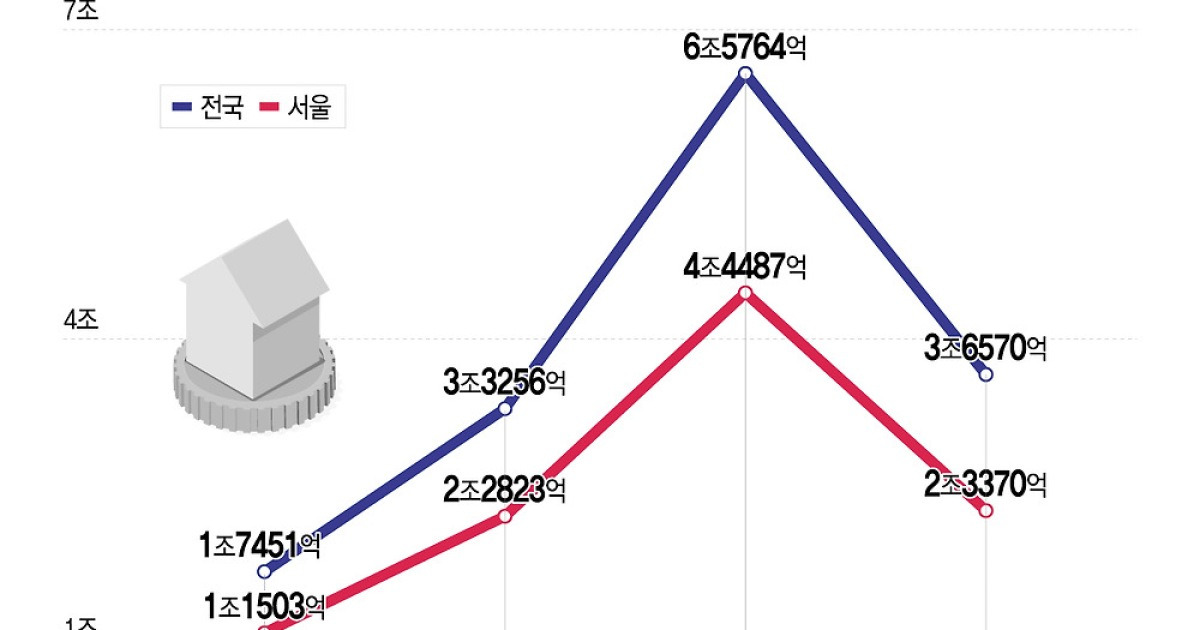
As South Korean financial authorities tighten mortgage lending criteria to curb household debt, an increasing number of homebuyers are relying on family financial support—often referred to as “parental assistance”—to bridge the funding gap. Data from recent parliamentary audits suggest that the proportion of property acquisition funds sourced through gifts or inheritance has risen significantly, reflecting a shift in how buyers manage down payments in a high-interest, restricted-credit environment.
The reliance on private family capital comes as the Financial Services Commission (FSC) and the Financial Supervisory Service (FSS) have implemented stricter Debt Service Ratio (DSR) regulations. These measures, designed to stabilize the housing market and prevent excessive leverage, have effectively reduced the maximum loan amounts available to many prospective homeowners, forcing a reliance on alternative liquidity sources, according to reports from the Financial Supervisory Service.
The Impact of Tightened Lending Standards
The core of the current housing finance trend lies in the interplay between government-mandated lending caps and the rising cost of capital. Throughout 2024, South Korean regulators have moved to limit the growth of household debt by applying more stringent DSR requirements, which cap total debt repayments at a specific percentage of an individual’s annual income. As noted by the Financial Services Commission, these policies are intended to mitigate systemic risks, yet they have simultaneously created a barrier for younger buyers and those without significant existing assets.
When bank loans become harder to secure, the “family bank” often steps in. This phenomenon, colloquially termed the “parental chance” in South Korea, involves parents or relatives providing cash gifts or interest-free loans to help descendants meet the mandatory down payment requirements for property purchases. While this allows families to secure housing, it also raises questions regarding the sustainability of wealth transfer and the potential for increased intergenerational economic inequality.
Regulatory Scrutiny on Wealth Transfers
Because these intra-family transactions can sometimes be used to circumvent tax obligations, the National Tax Service (NTS) has intensified its monitoring of real estate acquisitions. Under current South Korean tax law, gifts exceeding specific thresholds are subject to progressive taxation, and failure to report these transfers correctly can lead to significant penalties, as outlined in the guidelines provided by the National Tax Service.

Auditors have pointed out that in many cases, the “loans” provided by parents to their children lack formal documentation or interest-rate agreements. Tax authorities have signaled that they will continue to conduct rigorous audits on property transactions that appear to be funded by suspicious sources of capital. For the buyer, this means that while “parental assistance” may solve an immediate liquidity issue, it brings the long-term risk of tax investigations if the funds are not documented as legitimate loans or taxed as gifts.
Market Dynamics and Future Outlook
The reliance on family wealth is not merely a reflection of individual choice but a structural response to the current economic environment. With mortgage rates remaining elevated compared to the lows seen in previous years, the threshold for qualifying for a standard mortgage has moved beyond the reach of many middle-income households. The Bank of Korea continues to maintain a cautious stance on monetary policy, balancing the need to control inflation with the desire to avoid a sharp contraction in the housing market.


Looking ahead, market analysts expect that the trend of utilizing family capital will persist as long as the current lending restrictions remain in place. Prospective buyers are advised to keep detailed records of all financial transactions related to home purchases, including loan agreements and proof of repayment, to ensure compliance with financial and tax regulations. As the government prepares for its next review of housing finance policies, expected in the coming quarter, potential buyers should monitor official releases from the Ministry of Land, Infrastructure and Transport for any adjustments to property acquisition regulations.
For those navigating the current market, staying informed on the latest regulatory changes is essential. We encourage our readers to participate in the discussion below and share their perspectives on how these lending shifts are impacting local housing markets.