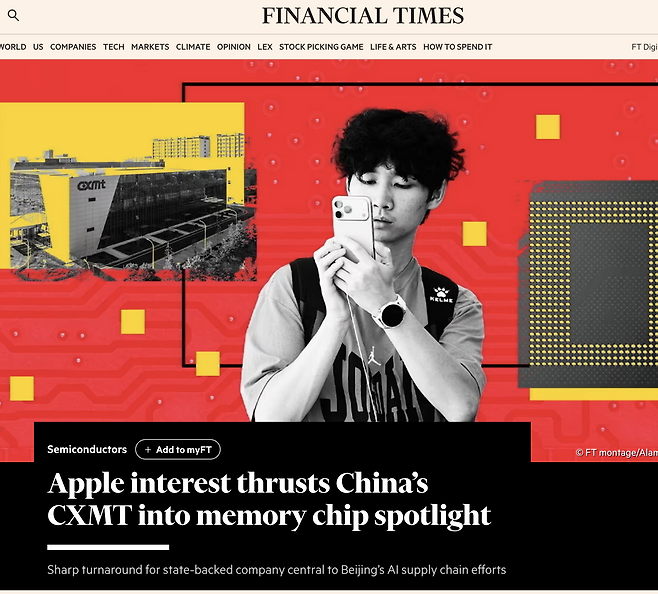
The global semiconductor industry is currently navigating a period of intense volatility, defined by both record-breaking demand for artificial intelligence hardware and complex geopolitical trade restrictions. At the center of this tension is the role of Chinese memory manufacturers, such as ChangXin Memory Technologies (CXMT), and the hypothetical impact that major Western technology firms—specifically Apple—could have on their development trajectories if supply chains were to integrate or shift.
Industry analysts and government officials are increasingly scrutinizing how state-backed semiconductor firms in China maintain market viability despite international sanctions. The question of whether companies like CXMT could achieve technological parity with global leaders like Samsung or Micron is not merely a matter of internal engineering, but a reflection of how global corporate partnerships and supply chain dependencies dictate the pace of innovation in the memory sector.
CXMT Market Position and the Sanctions Landscape
ChangXin Memory Technologies, headquartered in Hefei, China, has emerged as a significant, if controversial, player in the DRAM (Dynamic Random Access Memory) market. According to reports from Reuters, the United States government has placed pressure on Chinese chipmakers by restricting access to advanced semiconductor manufacturing equipment. Despite these hurdles, CXMT has continued to expand its production capacity, aiming to reduce China’s reliance on foreign-made memory chips.

The firm’s resilience has prompted debate among policymakers regarding the efficacy of existing trade controls. While some observers argue that these companies would have struggled to survive without significant state subsidies and domestic market protection, their current output suggests a growing capability in legacy and mid-tier DRAM production. The U.S.
The Apple Factor: Hypothetical Integration and Impact
Speculation regarding potential partnerships between Apple and Chinese memory suppliers often surfaces when discussing the diversification of the global supply chain. However, Apple’s procurement strategy is strictly governed by rigorous quality standards and, more recently, adherence to international trade regulations. As noted by Bloomberg, Apple has previously explored the possibility of sourcing memory chips from Chinese suppliers to mitigate costs and geographic risk, though such plans have historically faced intense scrutiny from U.S. lawmakers.

If Apple were to officially incorporate CXMT components into its consumer electronics, the impact on the firm’s standing would be transformative. Integration into the Apple supply chain requires a level of technical validation that would effectively signal that a supplier has reached global standards in both yield and reliability. For a company like CXMT, such a partnership would provide not only capital but also the technical feedback loops necessary to compete with established incumbents like SK Hynix or Micron. Currently, no such widespread integration exists, and Apple remains heavily reliant on its established network of suppliers in South Korea, Japan, and the United States.
Technological Sovereignty and Global Semiconductor Trends
The semiconductor industry is currently defined by a move toward “technological sovereignty,” where nations prioritize domestic control over critical chip architectures. This shift has created a bifurcated market. On one side, the U.S. and its allies, including South Korea and Japan, are focusing on high-bandwidth memory (HBM) and advanced lithography. On the other, China is investing heavily in scaling production to capture the broader market for consumer-grade electronics.
Data from the Semiconductor Industry Association (SIA) indicates that global chip sales reached over $520 billion in 2023, highlighting the immense stakes involved in these trade policies. As companies like CXMT push to scale, the global industry must contend with the reality that memory chip manufacturing is no longer just a commercial endeavor but a central pillar of national industrial policy. The ability of a firm to survive “market failure” through state support, as mentioned in recent policy discussions, remains a primary point of contention in trade negotiations between Washington and Beijing.
Outlook for the Semiconductor Sector
As of late 2024, the industry is awaiting the next round of updates regarding export control regulations from the U.S. Bureau of Industry and Security. These updates are expected to further clarify which types of advanced memory manufacturing equipment will be permitted for export to Chinese entities. For observers and investors, the next major checkpoint will be the release of annual fiscal reports from major memory producers, which will provide concrete data on how current trade restrictions are impacting market share and technological advancement across the sector.
The evolution of companies like CXMT will likely remain a focal point for global trade analysts. Whether these firms can close the gap with global leaders remains to be seen, but their presence has already fundamentally altered the landscape of the semiconductor market. Readers interested in the latest regulatory filings and export control updates are encouraged to monitor the official announcements from the Bureau of Industry and Security.
What are your thoughts on the future of global chip supply chains? Join the conversation in the comments section below to share your perspective on how trade policies are shaping the next generation of consumer electronics.