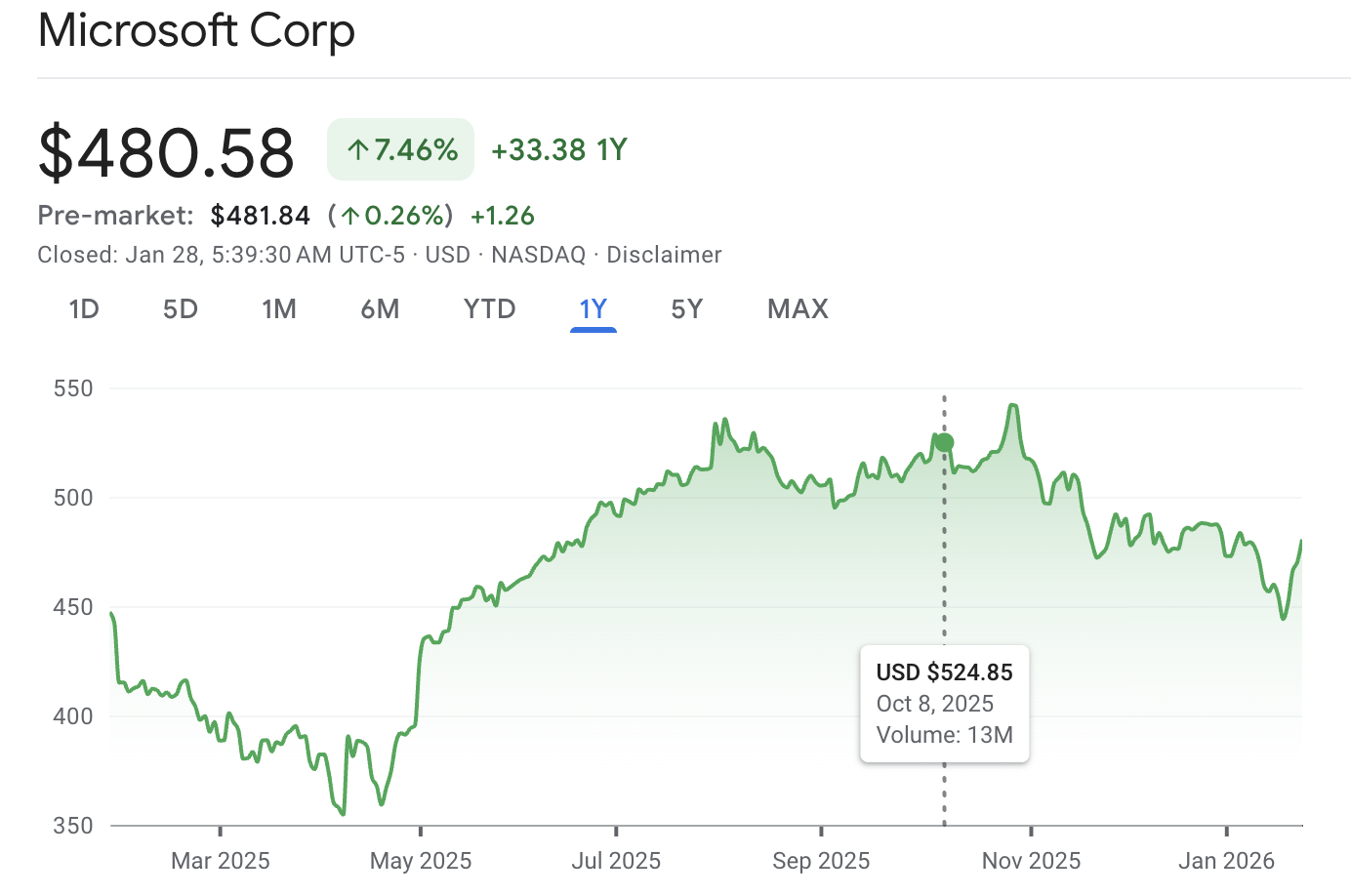
Microsoft’s stock price surged today as investors responded to a confluence of factors—ranging from strong financial performance to broader market dynamics—that have reshaped the tech giant’s valuation in 2026. While cybersecurity and enterprise software stocks had underperformed earlier this year, the company’s latest earnings report, combined with a broader market rebound fueled by geopolitical developments, has positioned Microsoft as a standout performer. Analysts and traders are now closely watching whether this momentum will translate into sustained growth or if the rally is part of a short-term correction tied to macroeconomic trends.
At the heart of the rally is Microsoft’s Q3 2026 earnings report, released on April 29, which delivered robust financial results. According to the company’s official filings, revenue grew by 18% year-over-year to $82.9 billion, while operating income climbed by 20%. These figures reflect strong demand across Microsoft’s core businesses, including cloud computing, enterprise software, and AI-driven productivity tools. The earnings beat expectations, reinforcing investor confidence in the company’s ability to navigate a competitive and rapidly evolving tech landscape.
Yet the surge isn’t solely driven by Microsoft’s internal performance. Broader market conditions—particularly the recovery of major indices like the Dow Jones and S&P 500—have played a critical role. After a period of volatility tied to geopolitical tensions, including the recent escalation in U.S.-Iran relations, investors appear to be rotating back into large-cap tech stocks as a hedge against uncertainty. Microsoft, with its diversified revenue streams and global enterprise footprint, has emerged as a beneficiary of this shift.
Why Microsoft’s Stock Is Rising: The Key Drivers
Microsoft’s stock rally can be attributed to three primary factors: financial strength, market sentiment, and strategic positioning. Each of these elements has contributed to the company’s improved valuation, but their interplay is what has caught the attention of Wall Street.
1. Strong Financial Performance
Microsoft’s Q3 2026 earnings report was a standout moment for the company. The $82.9 billion in revenue marked a significant increase from the previous year, driven by continued growth in its Azure cloud computing platform and its Microsoft 365 suite. The 20% rise in operating income further underscored the company’s ability to convert revenue into profitability, a critical metric for investors.
Microsoft’s AI investments, particularly through its Copilot suite and integration with enterprise tools, have begun to show tangible returns. While AI-related revenue is still a fraction of Microsoft’s total, the rapid adoption of these tools among businesses has positioned the company as a leader in the next wave of digital transformation.
2. Broader Market Recovery
The tech sector, and Microsoft in particular, has benefited from a broader market recovery. After a period of underperformance in early 2026, driven by concerns over global economic slowdown and geopolitical risks, major indices began to rebound in May. The Nasdaq, for instance, rose by 0.56% today, reflecting a broader trend of risk-on sentiment as investors sought exposure to growth stocks.
Microsoft’s stock has been a key beneficiary of this trend. As a blue-chip tech stock with a history of resilience, Microsoft has attracted capital flows from both institutional and retail investors looking to capitalize on the market’s upturn. The company’s strong balance sheet and diversified revenue streams make it an attractive holding in an uncertain environment.
3. Strategic Positioning in a Shifting Economy
Beyond financials and market sentiment, Microsoft’s strategic positioning has also played a role in its stock rally. The company’s focus on cybersecurity and enterprise solutions has positioned it well to capitalize on the increasing demand for digital infrastructure. As businesses prioritize cloud migration, AI integration, and data security, Microsoft’s suite of products has become indispensable.

Microsoft’s foray into government and defense contracts has provided a stable revenue stream amid economic fluctuations. With governments worldwide investing in digital modernization, Microsoft’s partnerships with agencies and defense contractors have added a layer of stability to its earnings.
What’s Next for Microsoft’s Stock?
While today’s rally is a positive sign, the question on many investors’ minds is whether Microsoft’s stock will continue to climb or if this is a temporary correction. Analysts suggest that the company’s long-term growth prospects remain strong, particularly in cloud computing and AI. However, external factors—such as geopolitical developments, interest rate decisions, and macroeconomic trends—could influence Microsoft’s stock price in the coming months.
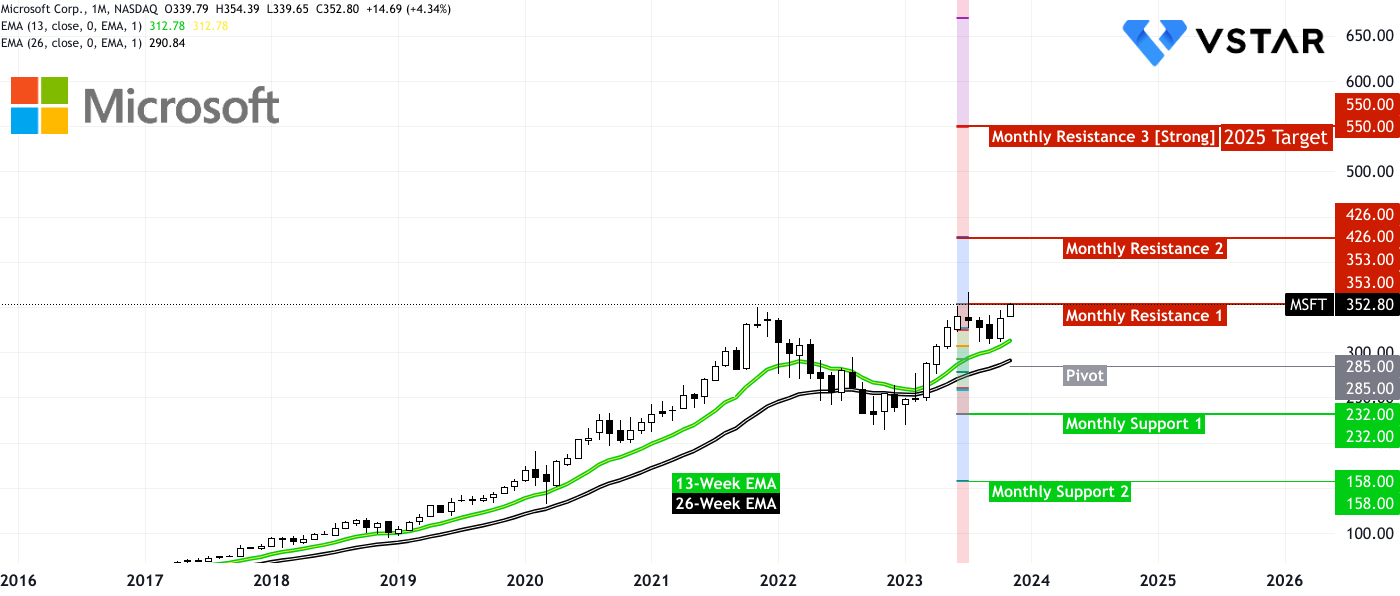
The next major catalyst for Microsoft’s stock will likely be its Q4 2026 earnings report, expected in late July. Investors will be closely watching for updates on revenue growth, particularly in Azure and AI-driven products, as well as guidance for the full year. Any developments in Microsoft’s acquisition strategy, particularly in the AI and semiconductor spaces, could further shape investor sentiment.
Key Takeaways
- Financial Strength: Microsoft’s Q3 2026 earnings report showed 18% revenue growth and 20% higher operating income, outperforming expectations.
- Market Recovery: Broader tech sector gains, including a 0.56% rise in the Nasdaq, have boosted Microsoft’s stock price.
- Strategic Positioning: Investments in AI, cloud computing, and cybersecurity are driving long-term growth.
- Geopolitical Factors: The stock rally is also tied to a broader market rebound following recent geopolitical tensions.
- Next Steps: Investors will focus on Microsoft’s Q4 earnings in July and any updates on AI and cloud expansion.
As Microsoft continues to navigate a complex and evolving tech landscape, today’s stock rally serves as a reminder of its resilience and adaptability. For investors, the company’s strong fundamentals and strategic investments make it a compelling long-term hold. However, as with any stock, external factors will play a role in determining whether this rally is just the beginning or part of a larger trend.
What are your thoughts on Microsoft’s stock surge? Do you think the rally will continue, or is this a temporary correction? Share your insights in the comments below.
Keep reading