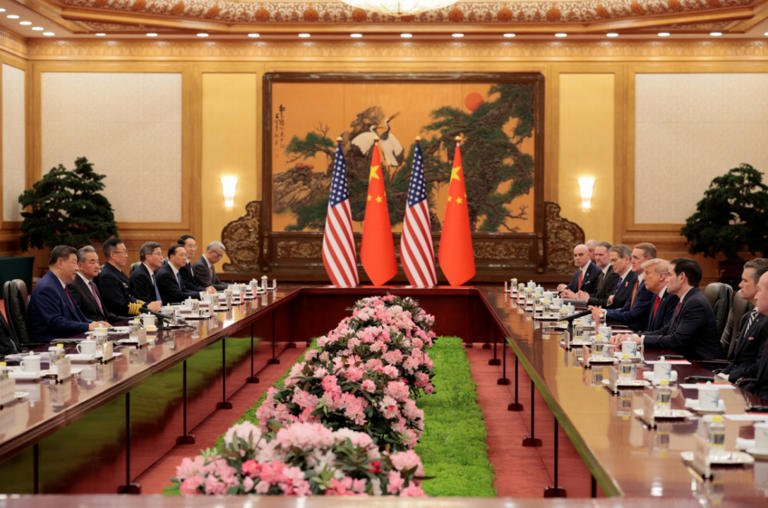
The United States’ intensifying economic strategy toward China, characterized by broadened export controls and investment restrictions, has entered a new phase as the incoming administration signals a potential shift in trade policy. These measures, often described by policymakers as “de-risking” or “strategic competition,” aim to limit Beijing’s access to sensitive technologies, specifically in the semiconductor and artificial intelligence sectors, according to the White House Executive Order 14105, which restricts certain U.S. investments in Chinese technology sectors.
As international markets adjust to these policies, the focus has turned to the long-term impact on the Chinese economy and the specific mechanisms by which the U.S. intends to restrict capital flows. The evolving nature of these sanctions—ranging from entity lists to outright bans on specific high-end chip exports—reflects a bipartisan consensus in Washington to prioritize national security over traditional market integration.
The Mechanics of U.S. Export Controls
The core of the current U.S. strategy lies in the systematic restriction of dual-use technologies. By utilizing the Commerce Department’s Entity List, the U.S. government has effectively barred numerous Chinese firms from purchasing advanced semiconductors, manufacturing equipment, and software essential for modern computing. According to the Bureau of Industry and Security (BIS), these rules were updated in October 2023 to close loopholes that previously allowed for the export of high-end AI chips to Chinese entities.

These restrictions are not merely trade barriers but are designed to impede the development of China’s military and surveillance capabilities. By limiting access to the most advanced lithography machines—such as those produced by the Dutch firm ASML—the U.S. and its allies have created a bottleneck in China’s ability to manufacture sub-7nm chips. This coordination with international partners, including Japan and the Netherlands, has been a key pillar of the strategy to ensure that export controls remain effective on a global scale, as reported by the Reuters reporting on ASML supply chains.
Economic Implications for Beijing
The impact of these financial and technological constraints on the Chinese economy is multifaceted. Beijing has responded by accelerating its efforts toward “technological self-reliance,” pouring billions of dollars into its domestic semiconductor industry. However, analysts note that the transition from imported technology to domestic alternatives is fraught with structural challenges, including lower yields and the difficulty of replicating proprietary Western innovations.

According to data from the International Monetary Fund (IMF), China’s economic growth has faced downward pressure due to a combination of real estate instability and reduced foreign direct investment (FDI). While the Chinese government has launched stimulus measures to bolster domestic consumption, the structural shift in global supply chains—often referred to as “friend-shoring”—continues to influence capital movement away from the Chinese market and toward Southeast Asia and India.
The Incoming Administration and Future Policy
With the transition of power in Washington, market observers are closely watching for potential escalations in trade policy. During the campaign, the incoming administration emphasized a “tough on China” stance, suggesting that existing tariffs might be increased and that investment screening processes could become more rigorous. This approach is rooted in the belief that unchecked capital flow to Chinese tech companies directly threatens U.S. technological hegemony.
The Committee on Foreign Investment in the United States (CFIUS) remains the primary body for overseeing these risks. According to the U.S. Department of the Treasury, CFIUS has the authority to review and potentially block transactions that involve critical infrastructure, technology, or sensitive data. Future developments are likely to see this authority expanded to cover a broader range of venture capital and private equity flows into Chinese artificial intelligence and quantum computing sectors.
What Happens Next
The next major checkpoint for these policies will involve the legislative review of the “Outbound Investment Transparency Act,” which, if passed, would require U.S. firms to notify the government of investments in certain Chinese industries. Observers expect congressional hearings on this matter to resume in the coming legislative session, as the debate over the balance between national security and business interests continues to unfold.
For further updates on international trade regulations and economic policy, readers are encouraged to monitor official announcements from the U.S. Department of Commerce and the Office of the United States Trade Representative. We welcome your thoughts on these developments in the comments section below.