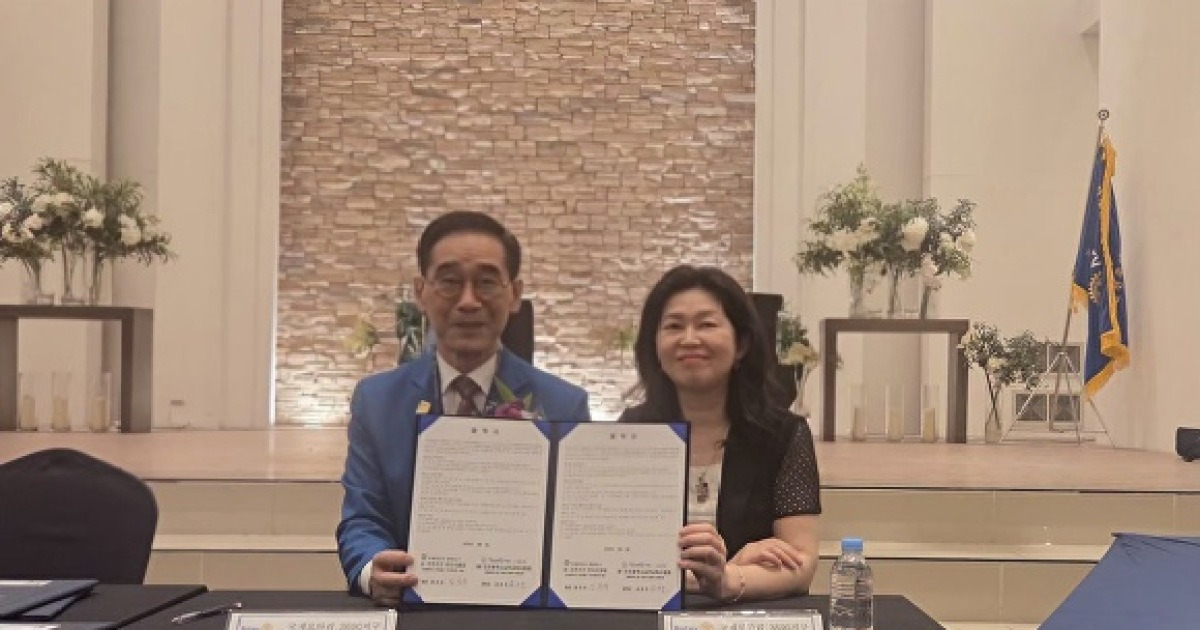
The Incheon Nambu Office of Education and the Incheon Juan Rotary Club have formalized a partnership to provide essential hygiene products to adolescent students, according to recent administrative reports. The agreement, finalized on May 2, 2024, at the Grand Ostium in Incheon, aims to address health equity by ensuring that female students from vulnerable backgrounds have consistent access to necessary sanitary supplies.
As a physician and health journalist, I recognize that access to reproductive and menstrual health products is a critical determinant of public health and educational stability for adolescents. This collaboration represents a targeted intervention in public health policy, specifically addressing the “period poverty” that can lead to school absenteeism and psychological stress among young women. By formalizing this support, the local education office and the Rotary Club are moving toward a more structured, sustainable distribution model rather than relying on ad-hoc assistance.
The Scope of the Partnership
The memorandum of understanding (MOU) establishes a framework for the Incheon Juan Rotary Club to supply feminine hygiene products to students under the jurisdiction of the Incheon Nambu Office of Education. This initiative is designed to complement existing government-led welfare programs. According to the Incheon Metropolitan City government, public health initiatives for youth in the region have increasingly focused on integrated welfare services that involve both private sector partnerships and municipal support.
The collaboration specifically targets students who may face financial barriers to accessing high-quality sanitary products. By leveraging the logistical network of the Rotary Club, the education office aims to streamline the delivery of these items to school sites, ensuring they remain discreetly and readily available to those in need. This model of “community-supported education” is becoming a common strategy in South Korea’s regional education offices to fill gaps in social safety nets.
Why This Matters for Adolescent Health
Menstrual health is not merely a personal issue but a significant public health factor that influences school attendance and academic performance. Research from the Korea Disease Control and Prevention Agency (KDCA) consistently emphasizes that the physical and mental well-being of students is foundational to their academic development. When basic hygiene needs are unmet, students often report higher rates of anxiety and social withdrawal.
The partnership in Incheon addresses these concerns through three primary channels:
- Accessibility: Reducing the financial burden on families by providing products at no cost.
- Continuity: Ensuring that the supply chain remains stable throughout the academic year.
- Destigmatization: Normalizing the conversation around menstrual health within the school environment.
By engaging a civic organization like the Rotary Club, the Nambu Office of Education is also fostering a culture of community responsibility. This approach aligns with broader national policies in South Korea that encourage private-public cooperation to enhance the quality of life for the younger generation.
The Role of Civic Organizations in Regional Health
The Incheon Juan Rotary Club has historically participated in charitable work, but this specific focus on adolescent health marks a shift toward specialized, health-oriented philanthropy. Similar initiatives have been observed in other districts, where local chapters of global service organizations provide everything from vision screenings to nutritional support. The Rotary International organizational framework encourages local clubs to identify specific, localized needs that align with their mission of humanitarian service.
In this context, the Incheon Nambu Office of Education serves as the critical bridge, identifying the schools and student populations most in need of support. This ensures that the resources provided by the Rotary Club are distributed efficiently, avoiding the inefficiencies often associated with decentralized charity efforts.
Future Outlooks and Next Steps
Following the signing of the agreement, the next phase involves the implementation of the distribution logistics. While the specific timeline for the first delivery of products has not been publicly released, the office of education is expected to provide internal guidance to school administrators regarding the storage and discreet distribution of the supplies. Parents and students interested in learning more about available welfare programs are encouraged to monitor the Incheon Metropolitan City Office of Education official website for updates and notices regarding student support services.
As this program progresses, the effectiveness of the initiative will likely be measured by the consistency of supply and the feedback from school health counselors. This partnership serves as a template for how regional educational bodies can utilize community partnerships to mitigate social inequities affecting student health. We will continue to monitor the implementation of this agreement and provide updates as further details regarding the distribution schedule are confirmed by the education office.