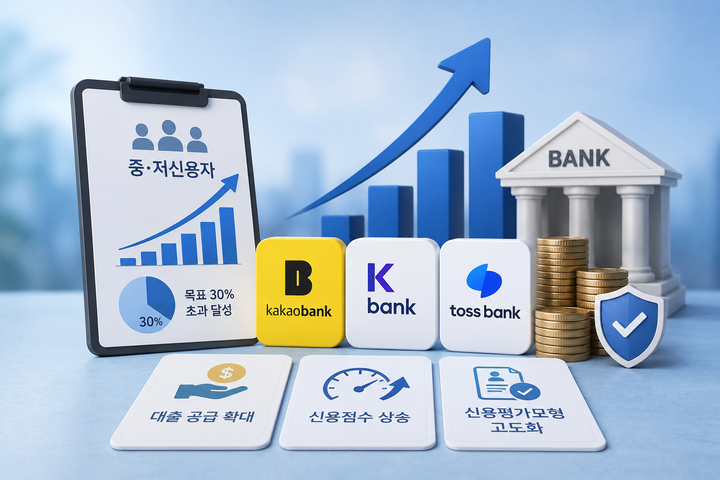
South Korea’s digital banking sector continues to play a pivotal role in the nation’s financial landscape, particularly regarding the expansion of inclusive finance. As of the most recent reporting period, South Korea’s three major internet-only banks have successfully maintained their commitment to providing credit access to mid-to-low credit score borrowers, consistently exceeding the targets set by financial regulators.
This commitment to inclusive finance is part of a broader regulatory framework designed to ensure that digital financial institutions contribute to the stability and accessibility of the national credit market. By prioritizing loans for those who may not qualify for traditional banking services, these institutions are reshaping how personal credit is managed and accessed in a digital-first economy.
Regulatory Targets and Industry Performance
The South Korean financial authorities have established a clear mandate for internet-only banks, requiring them to maintain a specific proportion of their loan portfolios for mid-to-low credit borrowers. For the period spanning 2024 to 2026, regulators set a benchmark requiring these banks to ensure that at least 30% of their average loan balance is allocated to this demographic, as reported in industry performance data.
Recent analysis indicates that all three major internet banks—Toss Bank, K-Bank, and Kakao Bank—have successfully met and surpassed this 30% threshold. This collective performance underscores a sustained effort to bridge the gap between traditional banking and the needs of credit-constrained individuals who increasingly rely on mobile-based financial platforms for their daily transactions and liquidity needs.
Understanding the Impact of Inclusive Finance
The push for inclusive finance is not merely a regulatory exercise; it represents a strategic shift in how banks assess creditworthiness. By utilizing alternative data and sophisticated risk management models, these digital banks have been able to offer competitive products to a wider range of customers. This shift is essential for financial stability, as it allows individuals to build or repair their credit scores through disciplined borrowing and repayment cycles.
For many consumers, the availability of these loans serves as a critical lifeline, providing access to credit that might otherwise be unavailable through commercial banks with more rigid underwriting standards. As these digital institutions continue to refine their algorithms and lending criteria, the focus on sustainable credit growth remains a primary objective.
Key Takeaways on Digital Banking Trends
- Regulatory Mandates: Financial authorities have set a 30% average balance target for mid-to-low credit loans through 2026.
- Consistent Performance: Major internet-only banks have consistently exceeded these government-mandated targets, demonstrating a commitment to financial inclusion.
- Risk Management: Banks are leveraging advanced analytics to maintain portfolio health while expanding access to credit for underserved populations.
- Market Evolution: The sector continues to adapt to broader economic conditions and household debt management policies.
Challenges and Future Outlook
Despite the successes in hitting lending targets, the sector faces ongoing challenges. The broader economic environment, including government efforts to manage total household debt levels, has led to tighter limits on individual borrowing capacities. Industry observers note that these macroeconomic conditions contribute to fluctuations in the overall proportion of mid-to-low credit lending, as banks balance growth with risk mitigation and regulatory compliance.
As we look toward the remainder of 2026, the focus for these institutions will likely shift toward maintaining this balance. The ability to continue providing inclusive credit while navigating volatile market conditions will be the ultimate test for the sustainability of the internet-only banking model in South Korea.
Regulators are expected to continue monitoring these ratios closely, with periodic disclosures serving as the primary mechanism for accountability. For consumers and market analysts alike, these ongoing reports provide a transparent view into the health of the digital banking ecosystem and its role in fostering long-term financial inclusivity across the country.
We invite our readers to share their thoughts on the evolution of digital banking. Have you utilized mobile-first lending services in your own financial planning? Join the conversation in the comments below.
Related reading