
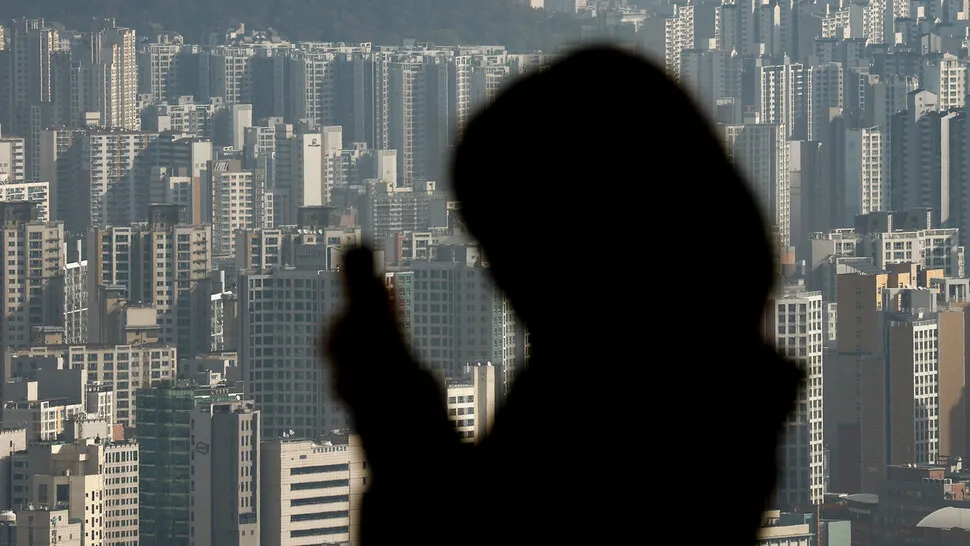
Individual investors in South Korea have shifted approximately 3.7 trillion won from equity markets into the residential real estate sector during the first half of this year, a trend that has prompted government officials to reconsider current housing demand management policies. This capital rotation, characterized by a move from the KOSPI and KOSDAQ exchanges toward physical property assets, coincides with rising concerns regarding household debt levels and the potential for an overheated housing market, according to data monitored by the Financial Services Commission (FSC).
The movement of liquidity into real estate comes as regulators monitor the interplay between stock market volatility and property price appreciation. While the equity market saw significant retail participation earlier in the year, the subsequent cooling of certain sectors has led investors to seek the perceived stability of Seoul’s apartment market. This shift has drawn the attention of the National Assembly’s Land, Infrastructure and Transport Committee, which is currently evaluating the necessity of tighter macro-prudential regulations to prevent speculative bubbles, as reported by legislative oversight records.
Market Dynamics and Investor Sentiment
The primary driver behind the 3.7 trillion won outflow is a combination of profit-taking from equity portfolios and a growing appetite for tangible assets in the capital region. Historically, South Korean retail investors have viewed Seoul apartments as a primary hedge against inflation. According to the Bank of Korea (BOK), household debt remains a critical vulnerability, with a significant portion of that debt tied to mortgage loans. When stock market returns fluctuate, capital often migrates toward residential real estate, which has shown historical price resilience in prime districts.
Market analysts note that the recent influx is not merely a result of portfolio rebalancing but a response to expectations of constrained supply in the Seoul metropolitan area. As investors liquidate stock positions, they are increasingly leveraging these funds to meet down-payment requirements for apartment purchases. This behavior mirrors trends observed in previous market cycles, where retail liquidity followed a “stocks-to-bricks” trajectory during periods of low interest rates, despite the current tighter monetary policy environment maintained by the BOK.
Regulatory Oversight and Policy Responses
Government agencies are now tasked with balancing the need for market liquidity with the risks of excessive leverage. The Ministry of Land, Infrastructure and Transport, in coordination with the Financial Supervisory Service (FSS), is reviewing the implementation of stricter Debt Service Ratio (DSR) rules. These regulations are designed to limit the amount a borrower can take on relative to their annual income, thereby curbing speculative demand in high-growth housing zones.

Legislators have expressed concern that the current flow of capital into housing could undermine broader financial stability. During recent committee sessions, members of the National Assembly emphasized that the government must remain vigilant against “herd behavior” among retail investors. The Financial Supervisory Service has signaled that it will continue to monitor lending practices at major commercial banks to ensure that mortgage approvals align with existing risk management guidelines, preventing a further acceleration of household debt growth.
What This Means for the Housing Market
For prospective homebuyers and investors, the current environment suggests a period of heightened regulatory scrutiny. The government’s focus on demand-side controls implies that future credit expansion for real estate may become more difficult to obtain. This policy shift is intended to decouple stock market profits from real estate speculation, protecting the banking sector from potential shocks should property values face a correction.
The impact of these measures will likely be felt most acutely in the Seoul apartment market, where price growth has been most aggressive. While the influx of 3.7 trillion won has provided short-term momentum, the sustainability of this trend depends heavily on the effectiveness of the government’s cooling measures. Observers suggest that if the DSR regulations are strictly enforced, the pace of investment migration from equities to real estate may stabilize by the fourth quarter of the year.
Future Monitoring and Official Updates
The next major checkpoint for market participants will be the upcoming parliamentary audit of the Ministry of Land, Infrastructure and Transport, where officials are expected to present further analysis on the correlation between equity outflows and real estate transaction volumes. Additionally, the Bank of Korea’s next Monetary Policy Board meeting will provide updated guidance on interest rate trajectories, which remain a decisive factor in mortgage affordability.
Investors and stakeholders are encouraged to monitor official disclosures from the Ministry of Land, Infrastructure and Transport for updates on potential new cooling measures or adjustments to existing property taxes. As the financial landscape continues to evolve, maintaining a diversified strategy remains the standard recommendation for navigating the current volatility in both equity and real estate markets.
We invite our readers to share their perspectives on the current market climate in the comments section below. Stay tuned to World Today Journal for ongoing coverage of global economic policy and market trends.