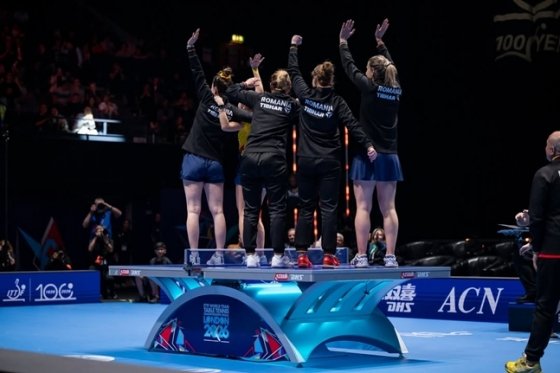
The euphoria of ending a quarter-century medal drought has been overshadowed by a storm of international criticism for the Romanian women’s table tennis team. What should have been a historic milestone for the nation’s sporting legacy at the 2026 World Table Tennis Championships in London has instead ignited a global debate over sportsmanship, professional conduct, and the sanctity of athletic equipment.
The controversy erupted following a high-stakes quarterfinal match on May 8, where the Romanian squad secured a dramatic 3-1 comeback victory against France. Under the current tournament regulations, which omit a separate bronze medal match, reaching the semifinals automatically guarantees a third-place finish. For Romania, this victory marked their first medal in the women’s team event since the championships held in Malaysia in 2000—a 26-year hiatus that had left a generation of players longing for the podium.
However, the celebration that followed the final point has left the sporting community reeling. In a moment of uncontrolled exuberance, five members of the Romanian delegation, including their star player Bernadette Szőcs, climbed onto the professional competition table with their shoes still on to wave to the cheering crowd at the OVO Arena Wembley. The images, subsequently shared via the official social media channels of the International Table Tennis Federation (ITTF), have sparked widespread indignation among fans and professionals alike.
For many in the table tennis world, the act was not merely an over-enthusiastic celebration but a profound breach of etiquette. The competition table is more than just a piece of furniture; it is a precision-engineered instrument where the slightest imperfection can alter the trajectory of a ball moving at incredible speeds. To treat such equipment as a victory podium is seen by critics as a sign of disrespect toward the game and the opposing competitors.
A Historic Win Marred by ‘Thoughtless’ Celebrations
The emotional weight of the victory cannot be understated. For the Romanian team, the win over France was the culmination of years of struggle to return to the global elite. The 26-year gap since their last medal in 2000 had created an immense amount of pressure, and anticipation. When the victory was sealed, the players rushed from the bench in a surge of adrenaline, leading to the now-infamous decision to mount the table.
Bernadette Szőcs, the 31-year-old ace of the team, was among those seen on the table. While Szőcs has long been the face of Romanian table tennis, this particular moment of triumph has cast a shadow over her professional image. The reaction from the global community was swift, with fans on social media questioning whether the players had forgotten the basic tenets of sportsmanship.
The ITTF’s decision to post the photos on their official platforms acted as a catalyst for the backlash. Rather than being viewed as a candid moment of joy, the images served as evidence of what many described as “thoughtless” behavior. The consensus among critics is that while victory should be celebrated, the physical boundaries of the court—specifically the playing surface—should remain inviolable.
The Clash Between Passion and Professionalism
The tension surrounding the Romanian table tennis controversy highlights a growing divide in modern sports: the line between authentic, raw emotion and the expected decorum of international competition. In many field sports, such as football, players frequently slide across the grass or climb fences. However, table tennis is a sport defined by discipline, precision, and a deep-seated respect for the equipment.
Critics argue that the Romanian team’s actions were a “failure of manners” that outweighed their athletic success. The sentiment echoing across online forums is that the team “lost in manners” even as they won on the scoreboard. This perspective suggests that the prestige of a World Championship medal is diminished when the athletes fail to uphold the dignity of the sport.
The OVO Arena Wembley, a venue known for hosting world-class events, provided a grand stage for the victory, but the subsequent fallout suggests that the setting only amplified the perceived arrogance of the act. For a sport that prides itself on a “gentlemanly” image, the sight of five athletes trampling the playing surface was a jarring departure from tradition.
From Quarterfinal Triumph to Semifinal Reality
The distraction of the celebration controversy coincided with the team’s most challenging match of the tournament. On May 9, Romania faced the powerhouse Chinese team in the semifinals. The gap in skill and composure was evident, as Romania suffered a comprehensive 0-3 defeat, ending their hopes of a gold medal.
While the loss to China is a common occurrence given the nation’s dominance in the sport, the timing of the defeat added a layer of irony to the situation. The team had celebrated their bronze medal with an intensity usually reserved for a championship win, only to be swiftly reminded of the hierarchy of international table tennis. The contrast between the “podium-like” celebration on the table and the stark reality of the semifinal loss has become a point of discussion among analysts.
Despite the controversy, the bronze medal remains a significant achievement for Romania. It validates the growth of the sport within the country and provides a foundation for future athletes. However, the legacy of the 2026 London championships for this squad will likely be inextricably linked to the images of their footwear on the competition table.
Key Takeaways of the Controversy
- The Act: Five Romanian players, including Bernadette Szőcs, climbed onto the competition table with shoes on after defeating France 3-1.
- The Context: The victory secured a bronze medal, the first for the Romanian women’s team in 26 years (since Malaysia 2000).
- The Backlash: Global fans and the ITTF community condemned the act as a violation of sportsmanship and disrespect toward precision equipment.
- The Outcome: Romania subsequently lost 0-3 to China in the semifinals on May 9.
The Role of the ITTF and Equipment Sanctity
The International Table Tennis Federation ITTF maintains strict standards for the quality of tables used in World Championships. These tables are designed to provide a perfectly consistent bounce, and any physical deformation or scratching caused by footwear can theoretically impact the integrity of the surface.
While it is unlikely that the celebration caused permanent structural damage to the table, the symbolic weight of the act is what truly offended the community. In table tennis, the table is the “sacred” space of the match. By treating it as a platform for visibility, the Romanian team was perceived as prioritizing their own image over the respect due to the game’s infrastructure.
This incident may prompt the ITTF to issue clearer guidelines or penalties regarding post-match celebrations to ensure that the dignity of the equipment is maintained. As the sport continues to grow in popularity and commercial appeal, the balance between “viral moments” and traditional etiquette becomes increasingly precarious.
Looking Forward: Redemption and Lessons
For the Romanian team, the path forward involves more than just training for the next tournament. There is now a social and professional debt to pay. A formal apology or a gesture of respect toward the sport’s traditions may be necessary to move past the “thoughtless” label currently attached to their victory.

The 2026 World Table Tennis Championships in London were meant to be a celebration of global talent. While Romania’s return to the medal standings is a positive story for Eastern European sports, it serves as a cautionary tale for athletes worldwide. The lesson is clear: the manner in which one wins is often as important as the win itself.
As the sporting world reflects on the events at the OVO Arena Wembley, the conversation shifts from the scorelines to the spirit of the game. The Romanian women have proven they have the skill to compete with the best in the world; now, they must prove they possess the maturity and respect that the podium truly demands.
The next official update regarding any potential disciplinary actions or statements from the Romanian Table Tennis Federation is expected following the conclusion of the tournament’s final ceremonies. We will continue to monitor the situation as it develops.
What are your thoughts on the Romanian team’s celebration? Was it an innocent expression of joy or a genuine lack of respect for the sport? Share your views in the comments below.
Related reading