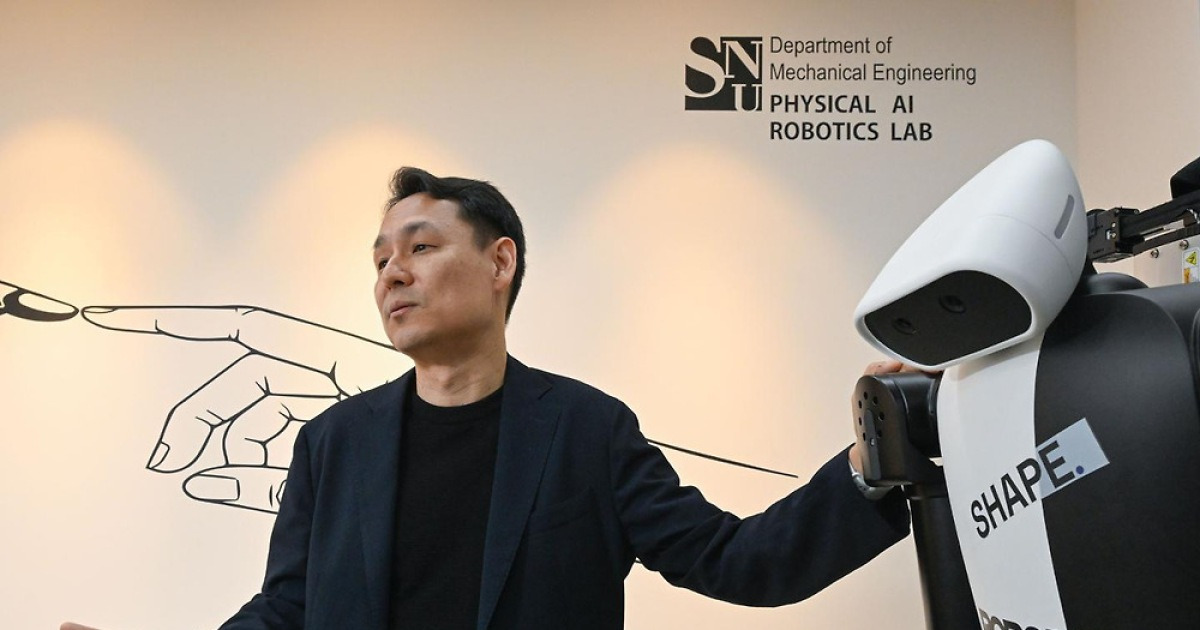
Bio-inspired robotics, specifically the study of water striders, represents a significant frontier in soft robotics and environmental monitoring technology. By mimicking the unique surface tension-dependent locomotion of the Gerridae insect family, researchers are developing micro-robots capable of traversing aquatic surfaces with minimal energy expenditure. This research bridges biology and mechanical engineering, offering a glimpse into how small-scale, “seemingly useless” mechanical designs are becoming foundational components of future industrial and surveillance applications.
The pursuit of biomimicry in robotics is not merely an academic exercise; it is a calculated effort to solve complex mobility challenges that traditional, rigid-body robots struggle to navigate. According to research published by the American Association for the Advancement of Science, these water-walking robots utilize sophisticated leg structures that distribute weight across the water’s surface, preventing submersion—a feat that has immediate implications for water quality monitoring and search-and-rescue operations.
The Engineering of Biomimicry
Why focus on a creature as small as a water strider? The answer lies in the physics of surface tension. Traditional robots often rely on propellers or heavy flotation devices, which increase their physical footprint and energy requirements. By contrast, water strider robots employ lightweight, hydrophobic materials that interact with the water’s surface layer. This allows for high-speed, agile movement that is extremely energy-efficient.
As noted by the IEEE Robotics and Automation Society, these devices can carry sensors to detect chemical pollutants in real-time, providing data that would be difficult to capture with larger, more disruptive equipment.
The Ecosystem of Innovation
The development of these technologies does not happen in isolation. It relies on an ecosystem where rapid prototyping—the ability to turn an idea into a functional product—is prioritized. In global technology hubs, the speed of iteration is often the deciding factor in whether a research project remains a prototype or becomes a commercially viable tool. This “idea-to-product” cycle is a hallmark of modern robotics development, particularly in regions where academic research is tightly coupled with industrial application.
The focus on “seemingly useless” designs is, in fact, a strategic hedge against future industrial needs. Many of the most successful robotic innovations began as curiosities. By investigating how insects navigate complex environments, researchers are building a library of movement patterns that can be scaled to larger, more robust machines. This methodology is currently influencing how engineers think about swarm robotics—where hundreds of small, simple robots act in concert to perform tasks that would be impossible for a single, complex machine.
Industrial Applications and Future Impact
The potential for these bio-inspired robots extends far beyond the laboratory. Environmental agencies are increasingly looking toward autonomous, small-scale robotics to monitor water health in reservoirs and sensitive ecosystems. Because these robots move like their biological counterparts, they do not alarm local wildlife and can navigate narrow or shallow channels that are inaccessible to human-operated vessels.
Furthermore, the manufacturing techniques required to create these micro-robots—such as soft lithography and advanced material deposition—are directly applicable to other industries, including medical device manufacturing and wearable electronics. The research suggests that the “water strider” model is not just a study of an insect; it is a study of how to navigate the physical world with maximum efficiency and minimal impact. As these technologies mature, their integration into broader industrial supply chains is expected to increase, providing new ways to monitor and protect critical infrastructure.
The next phase of this development involves increasing the autonomy of these robots, enabling them to navigate changing water conditions without constant human intervention. Researchers are currently focusing on developing long-lasting, low-power energy sources that can sustain these micro-robots for extended periods in the field. Updates on these developments are expected as part of ongoing research initiatives at major robotics research universities worldwide. We welcome your thoughts on the future of biomimetic robotics; please share your insights in the comments section below.