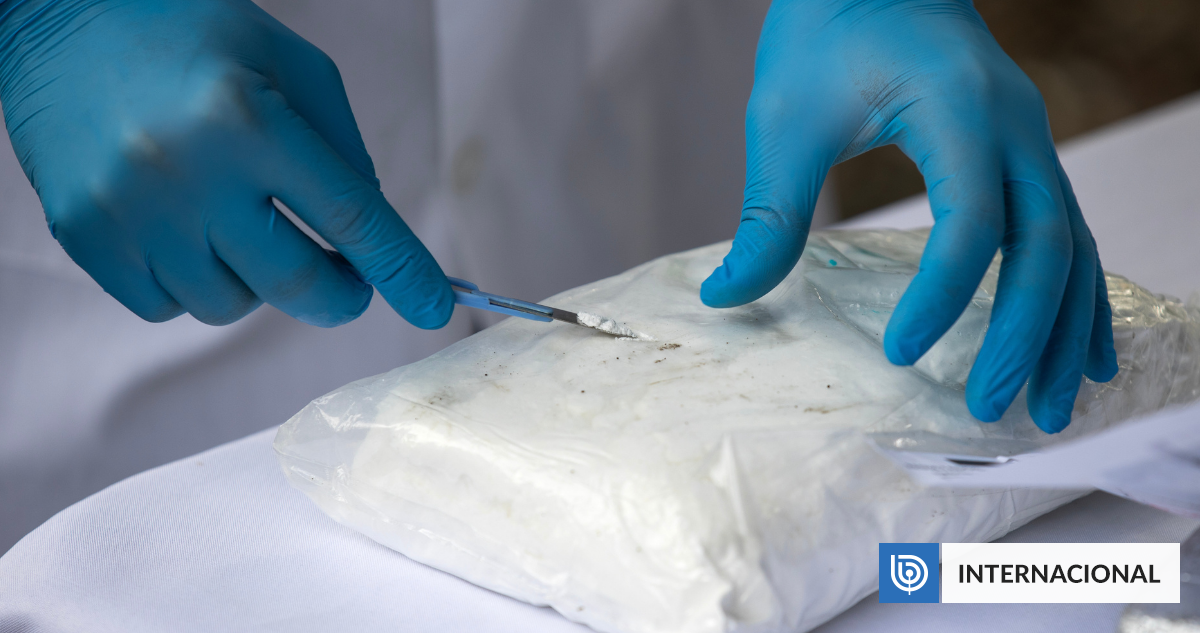
Acandí, Colombia – Authorities in Colombia have seized nearly two tons of cocaine near the border with Panama, marking a significant blow to the operations of the Clan del Golfo, the country’s largest criminal gang. The operation, conducted in the municipality of Acandí in the Chocó department, highlights the ongoing struggle against drug trafficking in the strategically crucial Gulf of Urabá region. This latest seizure underscores the persistent challenges Colombia faces in combating the illicit drug trade and disrupting the financial networks of powerful criminal organizations.
The cocaine, weighing approximately 1.9 tons, was discovered hidden in a storage facility strategically located in the Gulf of Urabá, according to a statement released by the Colombian National Police. The drug is believed to be connected to the Juan de Dios Úsuga block of the Clan del Golfo, a faction within the larger organization. The seizure involved a coordinated effort between the Dijín (Directorate of Criminal Investigation and Analysis) of the National Police, the Public Prosecutor’s Office, and the Colombian Army and Navy. The operation demonstrates a unified front in tackling the complex issue of drug trafficking within the country.
President Gustavo Petro shared a video of the operation on his social media channels, showcasing law enforcement personnel landing on a beach in the area, apprehending a suspect, and displaying the seized cocaine.
Más de dos toneladas de cocaína incautadas en el Chocó pic.twitter.com/0G47ySVohY
— Gustavo Petro (@petrogustavo) March 14, 2026
The public display of the operation by the President underscores the government’s commitment to addressing the drug trade and its impact on the nation.
Strategic Location and Criminal Networks
Acandí’s location on the northern edge of the Chocó department, bordering Panama, places it within the challenging terrain of the Darién Gap. This region has turn into a key transit point for both irregular migration towards Central America and the United States, and for the movement of illicit drugs. According to Blu Radio, the area’s proximity to the Caribbean Sea and the presence of armed groups further complicate efforts to control drug trafficking routes. The Clan del Golfo, also known as the Gaitanist Self-Defense Forces of Colombia, has a significant presence in the region, utilizing it for the storage and shipment of cocaine to international markets.
Authorities have identified a suspect, known by the alias Kiriki, as being in control of the location where the cocaine was seized. Kiriki is allegedly responsible for coordinating the shipment of drugs to North America and Europe, directly funding the operations of Jobanis de Jesús Ávila Villadiego, alias Chiquito Malo, the current leader of the Clan del Golfo. El Universal reports that the seized cocaine belonged to the Juan de Dios Úsuga block of the Clan del Golfo, indicating a targeted operation against a specific faction within the organization. The disruption of this network is expected to have a significant impact on the Clan del Golfo’s ability to move cocaine internationally.
The Clan del Golfo and Colombia’s Drug Trade
The Clan del Golfo emerged as a powerful force following the demobilization of paramilitary groups in Colombia. The organization has expanded its operations to include drug trafficking, illegal mining, extortion, and forced displacement. The group controls significant portions of territory in several Colombian departments, including Chocó, Antioquia, and Córdoba. Their involvement in the cocaine trade generates substantial revenue, allowing them to maintain their influence and expand their criminal activities.
The Colombian government, under President Petro, has adopted a more assertive approach to combating drug trafficking, focusing on disrupting the financial networks of criminal organizations and addressing the root causes of the drug trade. This includes efforts to provide alternative economic opportunities for communities involved in coca cultivation and to strengthen law enforcement capabilities in key regions. However, the challenges remain significant, as the Clan del Golfo continues to adapt and find new ways to operate.
The Gulf of Urabá, where the cocaine was seized, is a particularly vulnerable area due to its strategic location and complex geography. The region’s dense jungle terrain and extensive coastline provide cover for illicit activities, making it difficult for law enforcement to effectively monitor and control the area. The presence of multiple armed groups, including the Clan del Golfo and remnants of the Revolutionary Armed Forces of Colombia (FARC), further complicates the security situation.
International Implications and Regional Security
The cocaine seized in Acandí was destined for markets in North America and Europe, highlighting the international reach of the Clan del Golfo and the global impact of Colombia’s drug trade. The flow of cocaine to these markets fuels organized crime and contributes to public health crises. The United States and European countries have been working with Colombia to combat drug trafficking, providing financial assistance and technical support to law enforcement agencies.
The Darién Gap, through which much of the cocaine transits, is also a major route for migrants attempting to reach the United States. The presence of criminal groups in the area poses a significant threat to migrants, who are often subjected to violence, extortion, and exploitation. The intersection of drug trafficking and migration flows creates a complex humanitarian and security challenge for the region.
The recent seizure of nearly two tons of cocaine represents a significant victory for Colombian authorities in their efforts to disrupt the operations of the Clan del Golfo. However, the fight against drug trafficking is far from over. Continued cooperation between Colombia and international partners, along with a comprehensive approach that addresses the root causes of the drug trade, will be essential to achieving lasting success.
¡𝗚𝗢𝗟𝗣𝗘 𝗔𝗟 𝗖𝗢𝗥𝗔𝗭𝗢́𝗡 𝗗𝗘𝗟 𝗡𝗔𝗥𝗖𝗢𝗧𝗥𝗔́𝗙𝗜𝗖𝗢 𝗘𝗡 𝗡𝗔𝗥𝗜𝗡̃𝗢: 𝗣𝗢𝗟𝗜𝗖Í𝗔 𝗜𝗡𝗛𝗔𝗕𝗜𝗟𝗜𝗧𝗔 𝗟𝗔𝗕𝗢𝗥𝗔𝗧𝗢𝗥𝗜𝗢 𝗤𝗨𝗘 𝗣𝗥𝗢𝗗𝗨𝗖Í𝗔 𝗗𝗢𝗦 𝗧𝗢𝗡𝗘𝗟𝗔𝗗𝗔𝗦 𝗗𝗘 𝗖𝗢𝗖𝗔𝗜́𝗡𝗔 𝗔𝗟 𝗠𝗘𝗦!
En desarrollo de la estrategia Esmeralda Plus, la… pic.twitter.com/gjI9YOpCTd
— General William Oswaldo Rincón Zambrano (@DirectorPolicia) March 14, 2026
Key Takeaways
- Nearly two tons of cocaine were seized in Acandí, Colombia, in an operation targeting the Clan del Golfo.
- The seizure highlights the strategic importance of the Gulf of Urabá and the Darién Gap as transit points for illicit drugs.
- The Clan del Golfo remains a significant threat to regional security, controlling territory and engaging in various criminal activities.
- International cooperation is crucial to combating drug trafficking and addressing its global impact.
Colombian authorities are expected to continue their operations against the Clan del Golfo in the coming weeks and months, focusing on disrupting the organization’s financial networks and dismantling its infrastructure. Further updates on the investigation and any subsequent arrests are anticipated as the authorities continue to gather intelligence and pursue leads.
This is a developing story. Check back for updates.
Do you have insights into this story? Share your thoughts in the comments below, and please share this article with your network.
Worth a look