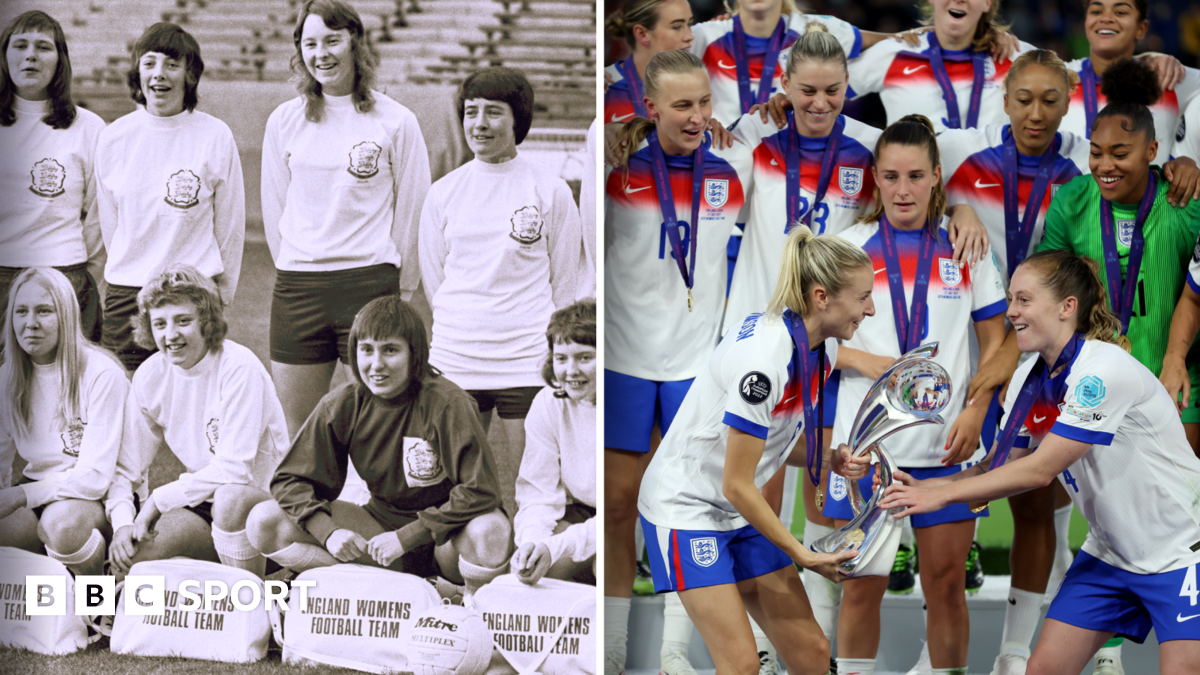
The England women’s national football team, known as the Lionesses, reached a historic milestone on Saturday 18 April 2026 by playing their 500th official international match. The fixture against Iceland in Reykjavik marked half a millennium of competitive football since the team’s first recognised game in 1972. This landmark occasion comes after decades of growth, overcoming early bans and societal barriers to become one of the most successful women’s national teams in world football.
The journey to 500 matches reflects a profound transformation in the perception and support of women’s football in England. From the Football Association’s infamous 1921 ban that deemed the sport “most unsuitable for females” to the present day, where the Lionesses regularly fill Wembley Stadium and compete for major trophies, the evolution has been significant. The ban, which lasted until 1971, forced women’s football onto park pitches and restricted its development for half a century.
When the ban was lifted, the path to official international recognition began. According to verified historical records, England’s first official women’s international took place in November 1972 against Scotland at Ravenscraig Stadium in Greenock. In front of just 400 spectators, the Lionesses secured a 3-2 victory after coming from behind, establishing the foundation for future generations. This match is now recognised as the first in the team’s official 500-match chronology.
The early years saw gradual progress, with the team building experience through fixtures against home nations and occasional European opponents. A significant early milestone came on 23 June 1973 when England faced Scotland again, this time at their first official home fixture in Nuneaton, West Midlands. The Lionesses dominated that encounter, winning 8-0 in what remains one of their largest victories. The Football Association has since unveiled a commemorative plaque in Nuneaton to permanently recognise this historic venue.
Throughout the 1970s and 1980s, the Lionesses competed primarily in the Home Nations Championship and occasional friendlies, laying groundwork despite limited resources and publicity. The 1990s brought increased participation in UEFA qualifiers for the newly established European Championship, though England often struggled to advance beyond the qualifying stages during this period.
The turn of the millennium marked a gradual shift in fortunes. Improved funding, better coaching structures, and growing grassroots participation began to yield results. England qualified for their first FIFA Women’s World Cup in 1995 in Sweden, though they exited in the group stage. Subsequent appearances in 2007 and 2011 showed incremental progress, with the 2015 tournament in Canada representing a breakthrough as the Lionesses secured third place – their best ever World Cup finish at that time.
European Championship success proved more elusive in the early years, with England failing to reach a final until 2009. Hosted in Finland, that tournament saw the Lionesses lose 6-2 to Germany in the final. However, the appointment of Sarina Wiegman as head coach in September 2021 heralded a transformative era. Under her leadership, England won UEFA Women’s Euro 2022 on home soil, defeating Germany 2-1 in the final at Wembley Stadium before a record crowd of 87,192.
The success continued into 2023 as England defended their European title, becoming only the second nation in history to win consecutive Women’s European Championships. The Lionesses retained the trophy with a 1-0 victory over Germany in the Euro 2023 final, cementing their status as Europe’s dominant force. These back-to-back triumphs represent the pinnacle of the team’s achievements to date and form a central part of their 500-match legacy.
Beyond trophies, the Lionesses’ impact extends to cultural and social realms. Their success has inspired unprecedented growth in women’s and girls’ football participation across England. Record attendances at Women’s Super League matches and increased commercial investment reflect the changing landscape. The team’s visibility has also contributed to broader conversations about gender equality in sport, with players using their platforms to advocate for equal pay and improved conditions.
The 500th match against Iceland carried particular significance as a FIFA Women’s World Cup qualifier for the 2027 tournament in Brazil. England entered the game needing to secure top spot in Group A3 to guarantee automatic qualification. A narrow 1-0 victory over Spain at Wembley three days earlier had positioned them favourably, but the Icelandic fixture remained crucial given that only group winners earn direct passage to the finals.
Historically, matches against Iceland have been competitive, with the Lionesses holding a strong edge in recent encounters. England had defeated Iceland 2-0 in March 2026 during the qualifiers, though the home side had since secured a 1-0 win over Ukraine to boost their own hopes. The atmospheric conditions in Reykjavik often present challenges, with visiting teams needing to adapt to the unique environment.
As the Lionesses stepped onto the Laugardalsvollur pitch for their 500th match, they carried the weight of history while looking forward to future challenges. The milestone serves not just as a numerical achievement but as a testament to the perseverance of countless players, coaches, administrators, and supporters who have contributed to the team’s journey over more than five decades. From those early pioneers who played in front of hundreds to the modern stars who perform before tens of thousands, each match has added to the rich tapestry of England women’s football history.
Related reading
- Gallagher Premiership 2024/25: Fixtures, TV Schedule and How to Watch
- Highlights of the 15th Xinjiang Uygur Autonomous Region Games: Top Athletes and Event Updates
- Cliff Vesting vs. Graded Vesting: What Your 401(k) Match Pays (daybreakwire.com)
- Maryland Lawmakers Clash Along Partisan Lines In Special Legislative Session (news-usa.today)