
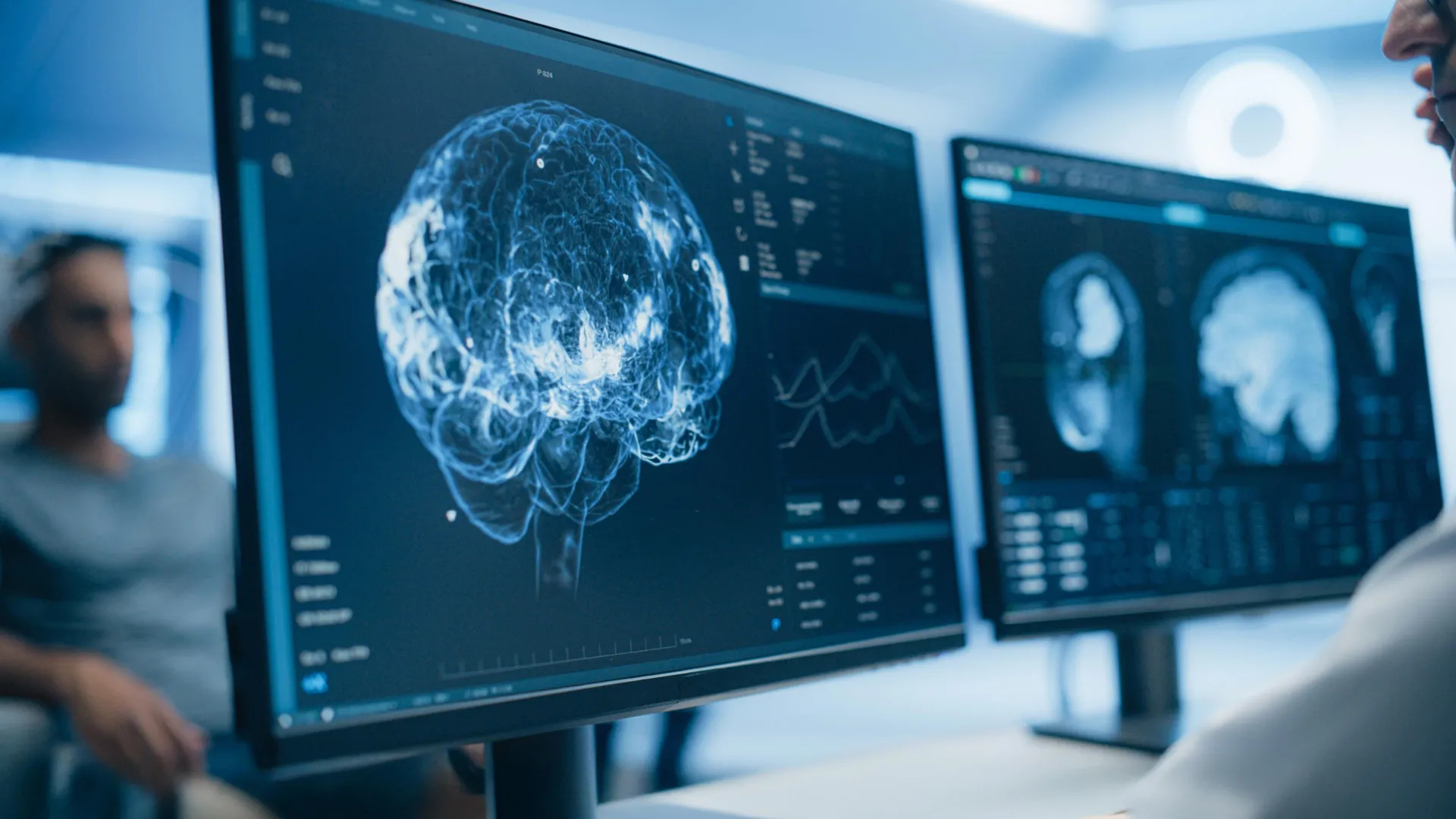
Beyond Structure and Function: New MRI Technique Reveals the Brain’s Metabolic Secrets
For decades, Magnetic Resonance Imaging (MRI) has been the cornerstone of neurological diagnosis, providing unparalleled views of brain structure. Functional MRI (fMRI) then added another layer, mapping brain activity by tracking blood flow. But what if we could see beyond these – to visualize the very metabolism driving brain function and, crucially, the subtle shifts that signal disease before structural changes even appear? A team at the University of Illinois Urbana-Champaign has brought that vision substantially closer to reality with a groundbreaking new MRI technique, detailed recently in Nature Biomedical Engineering.
This isn’t simply an incremental advancement; it’s a paradigm shift in our ability to understand and address neurological disorders. Led by Professor Zhi-Pei Liang, a veteran in the field and a protégé of Nobel laureate Paul Lauterbur – the pioneer of MRI – the team has developed a method for non-invasive, high-resolution metabolic imaging of the whole brain, achievable in a remarkably short timeframe. Patients spend just minutes in the scanner,yet the insights gleaned are profound.
The Missing Piece: Why Metabolic Imaging Matters
Traditional MRI and fMRI are powerful,but incomplete. While fMRI detects activity correlated with neural firing, it doesn’t reveal the underlying metabolic processes fueling that activity. “Metabolic and physiological changes frequently enough occur before structural and functional abnormalities are visible on conventional MRI and fMRI images,” explains Yibo Zhao, postdoctoral researcher and first author of the study. This early detection capability is critical. Imagine identifying the earliest stages of Alzheimer’s disease, or predicting the progression of Multiple Sclerosis, before irreversible damage occurs.
The key lies in detecting signals not just from water molecules - the basis of standard MRI – but also from brain metabolites and neurotransmitters. This is achieved thru Magnetic Resonance Spectroscopic Imaging (MRSI). However,previous attempts at MRSI have been hampered by two major hurdles: excruciatingly long scan times and signals overwhelmed by noise.
Overcoming technical Barriers with Speed and Intelligence
Liang’s team has elegantly overcome these challenges. Their innovation lies in a synergistic combination of “ultrafast data acquisition” – dramatically reducing scan time – and sophisticated “physics-based machine learning methods” for data processing.This allows them to capture a whole-brain metabolic map in just 12.5 minutes,a feat previously considered unattainable.
“Our technology overcomes several long-standing technical barriers to fast high-resolution metabolic imaging,” Liang states. “It’s about not just collecting the data, but intelligently extracting meaningful facts from it.”
Early Results: A Window into Disease
The potential of this new technique is already becoming clear.In healthy subjects, the team mapped variations in metabolic activity across different brain regions, demonstrating that brain metabolism isn’t uniform. More significantly, they’ve demonstrated its power in disease detection:
Brain Tumors: the MRSI technique revealed metabolic alterations – elevated choline and lactate – within tumors, even when those tumors appeared identical on conventional MRI.This could be crucial for more accurate grading and treatment planning.
Multiple Sclerosis (MS): Perhaps most strikingly, the technique detected molecular changes associated with neuroinflammation and reduced neuronal activity up to 70 days before these changes were visible on standard clinical MRI. This opens the door to earlier intervention and perhaps slowing disease progression.The Future of Neurological Care: Personalized and Predictive
The implications for clinical practice are substantial. This technology isn’t just about diagnosis; it’s about personalized medicine. By tracking metabolic changes over time, clinicians can assess treatment effectiveness with unprecedented precision. Furthermore, metabolic profiles could be used to tailor treatments to individual patients, maximizing their chances of success.
Liang, carrying forward the legacy of his mentor, Paul Lauterbur, believes this is a crucial step towards a future of “personalized, predictive and precision medicine.” He envisions a world where non-invasive metabolic imaging is a routine part of neurological care, providing a timely and effective tool for addressing the urgent need for early detection and targeted treatment of brain diseases.
This work was supported by the Arnold and Mabel Beckman Foundation.
Key Takeaways:
Beyond Traditional MRI: This new technique adds a crucial metabolic dimension to brain imaging.
Early Detection: Identifies disease-related changes before structural damage occurs. Faster Scans: Achieves whole-brain metabolic imaging in just 12.5 minutes.
Personalized Medicine: Enables tailored treatments based on individual metabolic profiles.
* A Legacy Realized: Fulfills a long-held vision of MRI pioneer Paul Lauterbur.





