As a physician who has spent over a decade navigating the complexities of internal medicine and infectious diseases, I have seen firsthand the devastating impact of recurrent Clostridioides difficile infection (rCDI). For many patients, the cycle of antibiotic treatment followed by relapse is not just physically exhausting—it is a significant challenge to their overall quality of life. The search for more refined, standardized alternatives to conventional fecal microbiota transplantation (FMT) has become a primary focus of modern gastroenterology and public health innovation.
Recent clinical research has brought us one step closer to understanding how we might shift away from donor-derived stool preparations toward more controlled, laboratory-grown therapies. A randomized, single-blind, phase 1b clinical trial has recently provided data comparing a 15-strain live biotherapeutic product, known as MTC01, against traditional fecal microbiota transplant for the management of recurrent Clostridioides difficile infection. The findings suggest that this engineered approach holds significant promise for patients who require a reliable alternative to traditional FMT.
For those living with the persistent burden of C. Difficile, the development of a standardized, 15-strain live biotherapeutic product for recurrent infection represents a potential milestone in how we restore gut health. By isolating specific bacterial consortia that mimic the protective effects of a healthy microbiome, researchers are aiming to reduce the variability and safety concerns often associated with whole-stool donations. This trial marks a critical step in verifying whether a defined bacterial product can achieve the same therapeutic outcomes as the broader, less-defined FMT approach.
Understanding the Shift Toward Live Biotherapeutic Products
The standard of care for recurrent C. Difficile—an opportunistic pathogen that thrives when the gut’s natural flora is disrupted by antibiotics—has long relied on the transfer of fecal material from healthy donors to restore microbial diversity. While FMT has demonstrated high efficacy, it remains a complex procedure with inherent challenges regarding donor screening, standardization, and patient acceptance. The concept behind a live biotherapeutic product (LBP) is to identify the specific microbial communities that are essential for colonization resistance against the pathogen.
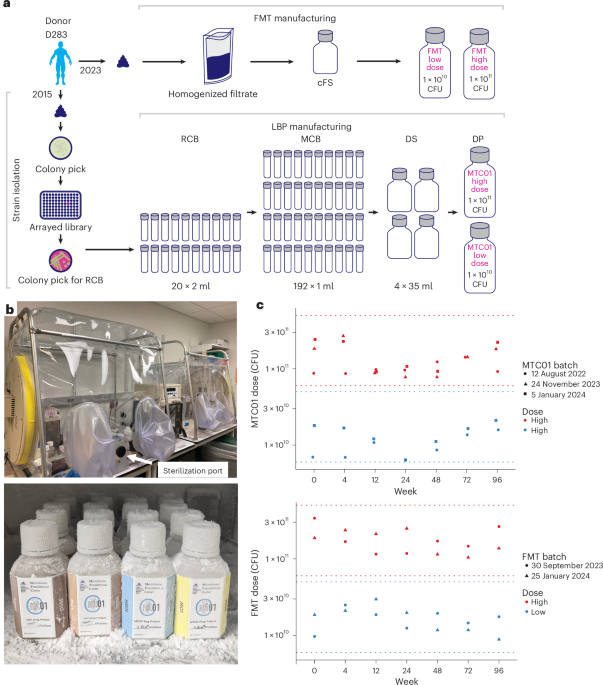
In this phase 1b study, the researchers focused on MTC01, a product composed of 15 distinct bacterial strains derived from the same donor source used for the comparative FMT arm. By using the same donor material as a baseline, the investigators were able to isolate the performance of the 15-strain consortium against the “gold standard” of whole-stool transfer. The primary endpoints centered on safety, efficacy in preventing recurrence, and the successful engraftment of the beneficial bacteria into the patient’s intestinal tract.
According to the latest guidance from the U.S. Food and Drug Administration (FDA) regarding the regulation of fecal microbiota-based products, the industry is moving toward products that are manufactured under strict quality control measures. This transition is essential for ensuring that therapies for C. Difficile are not only effective but also consistent across different patient populations, minimizing the risk of adverse events or the transmission of unintended pathogens.
Key Findings: Efficacy and Engraftment
The data from this trial indicates that the 15-strain LBP, MTC01, achieved clinical outcomes comparable to those of the traditional fecal microbiota transplant. For clinicians and patients alike, “similar efficacy” is a high bar, as FMT has historically shown success rates often exceeding 80% to 90% in preventing recurrence after multiple episodes of C. Difficile. The ability of a defined bacterial product to match this performance is a significant advancement in the field of microbiome therapeutics.
Engraftment—the process by which the introduced bacteria successfully colonize the host’s gut and begin to function as a stable community—was also found to be consistent between the two groups. This suggests that the 15-strain consortium contains the necessary “keystone” species required to outcompete C. Difficile and restore the metabolic environment of the colon. These results provide a robust foundation for larger, phase 2 and phase 3 clinical trials, which are necessary to confirm these findings in broader, more diverse patient populations.
while these results are encouraging, they are derived from a phase 1b trial, which is primarily designed to assess safety and preliminary activity. As reported by the Centers for Disease Control and Prevention (CDC), C. Difficile remains a major public health threat, causing hundreds of thousands of infections in the United States annually. Continued research into these biotherapeutic products is vital to provide safe, accessible, and standardized treatment options for the most vulnerable patients.
What This Means for Patients and Providers
For patients suffering from recurrent C. Difficile, the prospect of a pill-based or standardized liquid LBP is a welcome change. The “yuck factor” associated with traditional FMT can be a significant barrier to treatment, and the logistics of donor screening and processing can limit access to the procedure. An LBP could eventually be stored in hospitals and clinics, ready for administration, much like any other medication.
However, we must remain cautious and follow the science as it evolves. The transition from donor-derived material to a 15-strain consortium is a move toward “precision microbiome medicine.” By knowing exactly which strains are being administered, we can better monitor how the therapy interacts with individual patient profiles, potentially reducing the risk of immune-mediated reactions or other unforeseen complications.
Key Takeaways for the Health Community
- Standardization: Live biotherapeutic products offer a path toward consistent, laboratory-manufactured treatments for rCDI.
- Comparable Outcomes: Early trial data suggests that defined consortia (like MTC01) can achieve efficacy levels similar to traditional FMT.
- Safety First: As with all clinical trials, long-term safety and durability of the microbial engraftment remain key areas for future investigation.
- Accessibility: Future regulatory approval of these products could simplify the administration of microbiome-based therapies, making them more widely available in clinical settings.
The Road Ahead: Future Clinical Milestones
As we look to the future, the medical community awaits further updates from the researchers regarding the long-term durability of the bacterial engraftment observed in this trial. While the initial results are promising, standard medical practice requires that we observe patients over an extended period to ensure that the protective effect against C. Difficile persists and that no late-onset adverse effects emerge.
The next phase of development will likely involve multi-center trials to test these findings in a larger cohort of patients with varying comorbidities and antibiotic histories. For those interested in tracking the progress of these therapies, information on clinical trials is publicly available through the U.S. National Institutes of Health (NIH) ClinicalTrials.gov registry. We encourage patients to speak with their gastroenterologists or infectious disease specialists about ongoing research opportunities and the current landscape of FDA-approved treatments for recurrent C. Difficile.
As we continue to monitor the evolution of microbiome science, I am reminded of how far we have come in just the last decade. From the early, experimental days of FMT to the sophisticated, strain-specific biotherapeutics of today, our understanding of the human gut ecosystem is transforming the way we treat disease. I look forward to your thoughts on these developments—please feel free to share your perspectives or questions in the comments below.
Keep reading