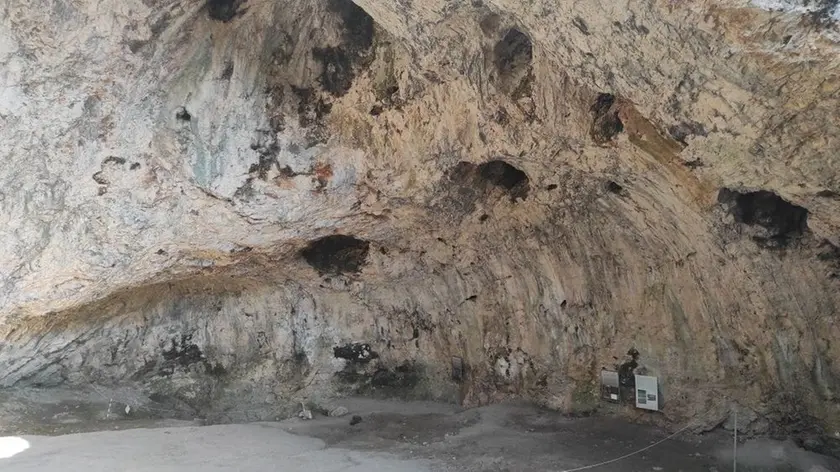
Archaeological excavations on the Croatian island of Korčula have uncovered delicate ceramic figurines dating back 17,000 years, pushing back established timelines for Upper Paleolithic artistic expression and pyrotechnology in prehistoric Europe. Researchers working at the Vela Spila cave site recovered the fragile fired-clay artifacts, which provide physical evidence that Gravettian hunter-gatherers living along the Adriatic coast possessed advanced pyrotechnological capabilities long before the advent of settled agriculture.
The discovery shifts the baseline for when human communities manipulated high temperatures to transform raw materials into durable artistic objects. According to archaeological analyses conducted on the finds from Vela Spila, the inhabitants of the Dalmatian coast mastered controlled clay firing techniques during the Last Glacial Maximum, an era previously associated primarily with stone, bone, and antler carving rather than ceramic sculpture.
Vela Spila, a large limestone cave situated above the town of Vela Luka on Korčula’s western coast, has long served as a key archive for prehistoric human occupation in the Mediterranean. Excavation campaigns led by international and Croatian archaeological teams have systematically peeled back stratified deposits spanning tens of thousands of years. The deepest layers of the cave preserve rich assemblages left by Upper Paleolithic groups who adapted to shifting climatic conditions as glacial ice sheets expanded across northern Europe.
Excavations at Vela Spila Reveal Upper Paleolithic Pyrotechnology
The newly analyzed ceramic artifacts consist of small, intentionally shaped figurines and fragments formed from local clay sources and subjected to controlled thermal hardening. Radiocarbon dating of associated organic remains within the same stratigraphic layers places the objects firmly in the Upper Paleolithic, approximately 17,000 years ago.
Specialists in prehistoric materials note that transforming raw clay into ceramic requires sustained temperatures exceeding 500 degrees Celsius, a process demanding intentional hearth construction and draft management. The Vela Spila specimens demonstrate that Pleistocene foragers possessed sophisticated pyrotechnological knowledge well before the Neolithic period, an era traditionally credited with the invention of pottery for food storage and cooking.
Beyond technical proficiency, the figurines offer rare insight into the symbolic world of Ice Age Europeans. While cave paintings and Venus figurines carved from stone or ivory are well-documented across the continent, fired-clay sculptures from this early epoch remain exceptionally scarce, making the Dalmatian assemblage a significant benchmark for understanding prehistoric ritual and aesthetic behavior.
Climatic Context and Human Adaptation in the Adriatic
During the era when the Vela Spila figurines were crafted, the Adriatic basin looked drastically different than it does today. Lower sea levels exposed vast coastal plains, connecting islands to the mainland and creating diverse ecological niches that supported herds of migratory game alongside resilient human populations.
Prehistoric communities using the Vela Spila cave functioned as highly mobile hunter-gatherers who maintained extensive social and exchange networks across the Mediterranean region. Archaeologists suggest that periods of environmental stress during the Last Glacial Maximum may have encouraged these groups to intensify symbolic production, using portable art to reinforce social cohesion, territorial identity, and ritual practices.
The preservation of such fragile artifacts in a cave setting stems from the unique sediment accumulation dynamics at Vela Spila. Thick layers of wind-blown dust, ash, and fallen rock sealed the ancient living floors, protecting the delicate ceramic pieces from subsequent disturbance until modern excavation methods brought them to light.
Future Research and Preservation of Dalmatian Heritage
Current research efforts at Vela Spila focus on micro-morphological analysis of the sediment layers and advanced residue testing on the ceramic surfaces to determine the exact firing temperatures and organic additives used by the Paleolithic artisans. Specialists aim to reconstruct the operative chain—from clay prospecting and preparation to shaping and firing—employed by the cave’s ancient inhabitants.
Local cultural authorities and academic institutions continue to collaborate on safeguarding the Vela Spila site and curating its extensive artifact collections for public exhibition at the Vela Luka Cultural Centre. Future scientific publications and scheduled academic symposia will provide further data on the chronology and technical characteristics of Europe’s earliest known ceramic art.
Researchers encourage those interested in following ongoing developments in Dalmatian archaeology to consult updates issued by the Croatian Ministry of Culture and Media and participating university research portals. Readers are welcome to share their thoughts or join the discussion on these findings in the comments section below.
Related reading