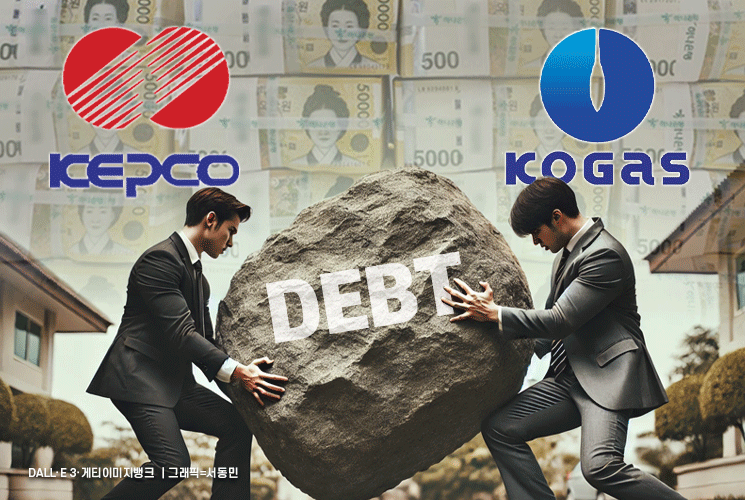
Concerns regarding the financial stability of major South Korean media conglomerates have intensified following reports of liquidity pressures linked to internal debt structures. Analysts tracking corporate debt cycles have raised alarms over the reliance on inter-company lending and lease liabilities, which, when aggregated, suggest a significant debt burden for entities associated with the JoongAng Group and its affiliates. These financial obligations, reportedly reaching approximately 2.8 trillion won, have prompted broader discussions regarding the sustainability of current capital management strategies within the media sector.
The situation centers on the interconnected nature of debt within large business groups, often referred to in domestic financial circles as “debt cycling.” This practice involves shifting funds between subsidiaries to meet short-term obligations, a strategy that regulators and market observers warn can lead to systemic risk if underlying cash flows fail to stabilize. As of the latest fiscal disclosures, the transparency of these internal transactions remains a focal point for institutional investors and credit rating agencies monitoring the South Korean media landscape.
Understanding the Mechanics of Corporate Debt Cycling
Corporate debt cycling, or the practice of using revolving credit lines and inter-company loans to service existing debt, is a common but high-risk financial maneuver. According to analysis from the Financial Services Commission (FSC), such practices are particularly scrutinized when they involve non-financial subsidiaries taking on liabilities to support parent media organizations. When these entities face a downturn in advertising revenue—a primary income stream for media firms—the ability to maintain these “revolving” payments decreases, potentially triggering a liquidity crisis.
The reported 2.8 trillion won figure encompasses a variety of liabilities, including lease obligations and internal cross-guarantees. These figures are typically found in the consolidated financial statements filed with the Financial Supervisory Service (FSS). For investors, the primary concern is not just the absolute level of debt, but the quality of the assets backing these loans. If the internal transfers are based on inflated valuations of inter-company assets, the risk of a technical default rises significantly.
Regulatory Oversight and Market Implications
The South Korean regulatory environment has become increasingly stringent regarding the disclosure of internal transactions among large business groups, known locally as *chaebols* or their affiliates. Under the Fair Trade Commission (FTC) guidelines, companies must report large-scale internal trading to prevent the unfair subsidization of struggling units. Any indication that a media conglomerate is utilizing these channels to mask operational losses can lead to intense regulatory scrutiny and potential fines.

Market analysts note that the media industry is currently navigating a structural shift. With the migration of advertising budgets from traditional print and broadcast platforms to digital and social media, legacy media companies are facing sustained downward pressure on profitability. This sector-wide contraction makes the management of high debt levels increasingly difficult. When a company’s debt-to-equity ratio exceeds industry benchmarks, lenders often tighten credit terms, which can serve as a catalyst for the “chain-reaction defaults” that market participants now fear.
Current Financial Landscape for Media Conglomerates
To understand the current state of these firms, one must look at the divergence between their historical market influence and their contemporary financial health. While media organizations often maintain significant social and political capital, their financial health is governed by the same market forces as any other corporation. Recent reports suggest that some entities are looking to divest non-core assets to improve liquidity, a move that credit analysts generally view as a necessary step toward deleveraging.
The following table outlines the key risk factors currently associated with the media sector’s debt management:
| Risk Factor | Description | Potential Impact |
|---|---|---|
| Inter-company Loans | Movement of cash between subsidiaries. | Contagion risk if one unit fails. |
| Lease Liabilities | Long-term obligations for facilities. | Reduced operational flexibility. |
| Advertising Revenue | Primary source of cash flow. | Sensitivity to economic cycles. |
What Happens Next?
The next major checkpoint for stakeholders will be the release of the upcoming quarterly earnings reports, which are filed through the Data Analysis, Retrieval and Transfer System (DART). These filings will provide the first concrete look at whether the companies have successfully reduced their reliance on short-term debt instruments. Investors are particularly watching for announcements regarding asset sales or capital restructuring plans that could alleviate the current liquidity strain.

Furthermore, the Financial Supervisory Service may initiate targeted audits if they detect irregularities in the reporting of inter-company liabilities. For the general public and those following the industry, monitoring these official filings remains the most reliable way to assess the accuracy of ongoing reports regarding the companies’ financial solvency. As this situation develops, the focus will remain on whether these media giants can pivot toward a sustainable business model in an era of declining traditional media revenues.
We encourage our readers to stay informed through official regulatory disclosures and to share their insights on how this shift in the media landscape may impact the broader economy. For further analysis on global market trends and corporate policy, continue following our reporting here at World Today Journal.